 EN
EN

Introduction
In today’s fast-paced logistics environment, one of the most critical decisions for warehouse managers and procurement teams is how to maximize operational efficiency through an informed forklift purchase. Warehouses are no longer simple storage spaces—they are complex operations where throughput, safety, and total cost of ownership are directly influenced by material handling equipment. According to industry studies, over 70% of warehouse operational costs are linked to equipment selection, utilization, and management. A poorly considered forklift purchase can result in reduced productivity, higher maintenance costs, and potential safety hazards, while a strategically executed forklift purchase can significantly improve cycle times, minimize damage, and enhance overall operational efficiency.
Shandong Nuote Machinery Co., Ltd. has observed that the most common inefficiencies arise when the forklift’s rated capabilities do not align with real-world load characteristics or warehouse constraints. Therefore, a forklift purchase should not rely solely on rated capacity figures. Instead, procurement decisions must integrate load geometries, aisle configurations, mast types, and maneuverability requirements. By analyzing these factors in depth, organizations can ensure that each forklift acquisition maximizes value over its operational life.
Warehouse and Product Context
Modern warehouses are increasingly constrained by limited floor space and higher storage densities, driven by e-commerce fulfillment, just-in-time inventory, and high SKU variation. In this environment, the implications of an incorrect forklift purchase are immediate: excessive travel time, inefficient handling, damaged pallets or racks, and increased labor requirements.
A fundamental factor in forklift performance is the load-center distance—the horizontal distance from the load’s center of gravity to the fork face. Standard manufacturer specifications assume a typical load center (e.g., 24 inches), but in practice, pallets, bundles, and long materials often extend beyond this assumption. Choosing a forklift without verifying true load-center requirements can result in a reduced effective lifting capacity. For procurement teams, understanding this relationship is essential to ensure the forklift purchase aligns with actual operational demands.
Similarly, mast configuration—the number of stages and free-lift capability—determines whether a forklift can navigate low-clearance environments like containers or trailers while still reaching high rack positions. If this factor is overlooked during the forklift purchase, the operation may require additional re-handling or secondary lifts, undermining efficiency.
Finally, minimum turning radius dictates maneuverability within tight aisles. A forklift purchase that prioritizes a smaller turning radius allows for narrower aisles and higher storage density, directly affecting throughput. However, tighter turning radius forklifts must maintain stability under typical load conditions, highlighting the importance of careful specification during the forklift purchase process.
Product Features
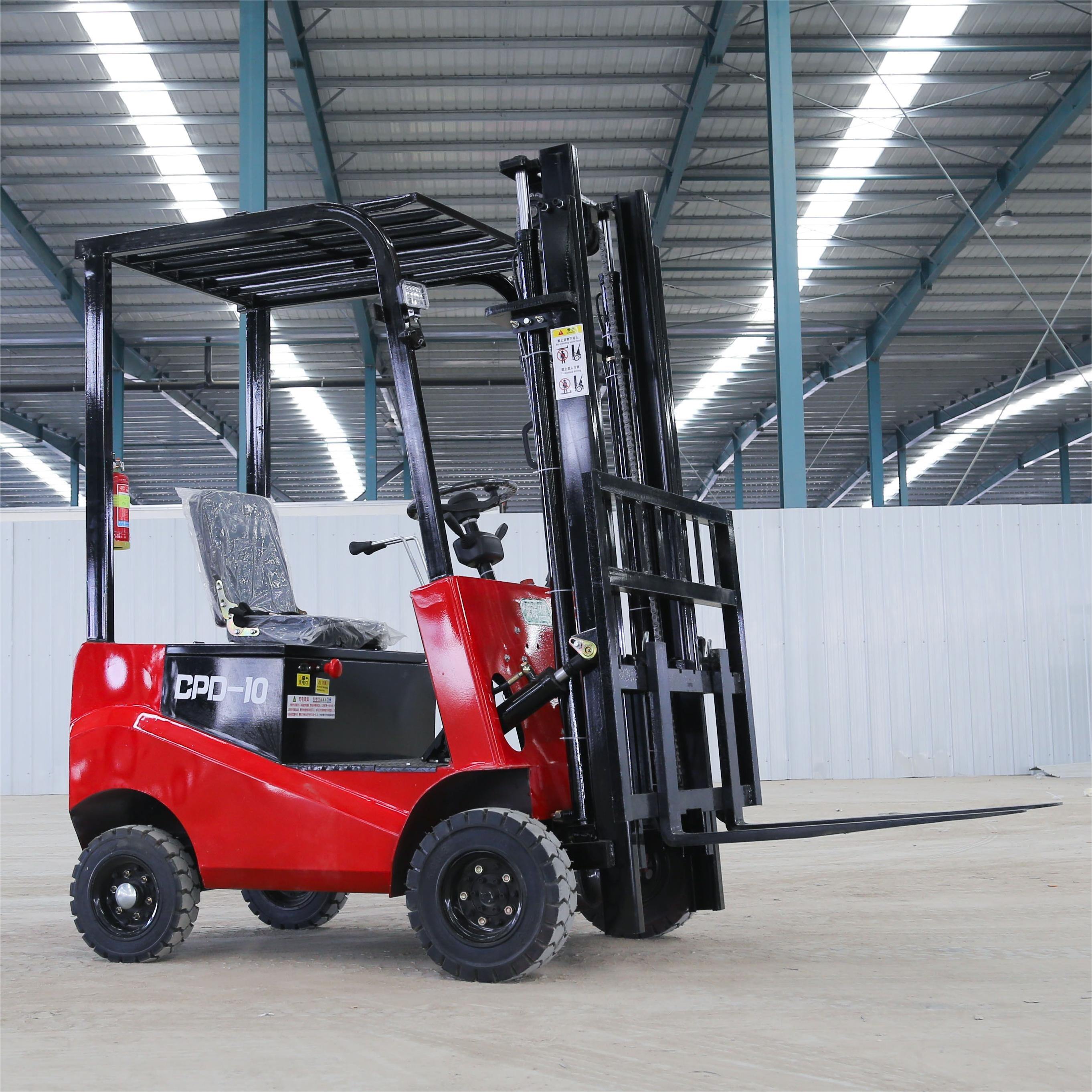
When advising clients on a forklift purchase, three technical aspects deserve careful analysis: load-center distance, mast configuration, and turning radius. These factors are not independent; they interact to influence real-world performance, safety, and long-term costs.
Load-Center Distance
The load-center distance is critical because it affects the forklift’s effective lifting capacity. For example, a truck rated at 2.5 tonnes at a 24-inch load center might see a substantial reduction in capacity when handling 36-inch pallets or bundles. During the forklift purchase, it is essential to compare manufacturer derating curves against typical warehouse loads. Selecting a forklift whose load-center performance aligns with operational reality ensures maximum lifting efficiency and reduces the risk of overloading, equipment wear, or unsafe handling.
Mast Configuration
Mast type and number of stages determine both reach and clearance requirements. Two-stage full-free masts enable fast lifting in low-clearance zones, while three-stage free-lift masts provide extended reach without increasing collapsed height. When considering a forklift purchase, procurement teams should align mast choice with the warehouse layout, racking height, and dock operations. A carefully matched mast reduces unnecessary hydraulic cycles, decreases travel distance, and enhances operator productivity.
Minimum Turning Radius
The turning radius affects maneuverability in confined spaces. For a high-density warehouse, a smaller turning radius allows tighter aisle layouts, improving storage capacity and reducing travel distances. During a forklift purchase, analyzing aisle width, rack spacing, and expected travel paths ensures that the selected forklift can navigate the facility safely while maintaining load stability. Selecting the wrong turning radius compromises both efficiency and safety.
By carefully evaluating these features, a forklift purchase decision goes beyond basic specifications and ensures the equipment will perform effectively under actual operating conditions. This analytical approach reduces operational risk and supports higher throughput, lower maintenance costs, and a better return on investment.
How a Forklift Purchase Improves Warehouse Efficiency
A thoughtfully executed forklift purchase has a measurable impact on operational efficiency. Proper alignment of load-center capability, mast design, and turning radius directly influences cycle times, order accuracy, and overall warehouse throughput.
When forklifts are matched to true load-center requirements, operators can lift full pallets without derating, reducing the number of lifts per pallet and eliminating intermediate handling. This optimization decreases cycle time and energy consumption, especially in high-volume operations. A correct forklift purchase ensures that trucks operate at full rated capacity safely, preventing productivity loss due to underutilized equipment or overloading risk.
Mast selection also plays a pivotal role. Free-lift masts allow trucks to handle containers or trailers without fully extending the mast, reducing unnecessary re-handling. A forklift purchase that accounts for the interplay between mast height and warehouse clearance optimizes vertical reach without compromising safety. This consideration minimizes hydraulic wear and improves the overall speed of pallet placement, critical in multi-shift operations.
Turning radius directly influences warehouse design. A forklift purchase emphasizing tight maneuverability allows narrower aisles, increasing storage density without adding square footage. Enhanced maneuverability reduces travel distance per pick and improves cycle efficiency. Importantly, a forklift must maintain stability under expected load conditions; therefore, turning radius must be analyzed in conjunction with load-center distance during the forklift purchase.
Operational cost savings also stem from reduced equipment damage and maintenance. A forklift purchased to match operational requirements will experience predictable wear patterns, fewer incidents, and lower repair costs. From a sales manager’s perspective, integrating these factors into the forklift purchase discussion ensures clients understand that upfront investment in correct specification results in lower total cost of ownership (TCO).
In addition, energy efficiency is optimized when forklifts are correctly sized for their tasks. Diesel or electric systems designed for the expected load and cycle reduce fuel or electricity consumption per ton moved. Therefore, a careful forklift purchase directly supports sustainability goals and operational budgeting.
How to B2B Purchase Forklifts at Competitive Terms
For B2B clients, a forklift purchase is a strategic investment rather than a routine procurement. Consolidating requirements across multiple sites or shifts enables bulk discounts and favorable service agreements. Standardizing forklift configurations reduces customization costs and ensures spare-part compatibility, improving lifecycle support.
Negotiating on total cost of ownership rather than upfront price is key. A well-structured forklift purchase should include service agreements, operator training, and warranties to guarantee predictable maintenance and minimize downtime. Trade-in or staged purchase options further reduce capital expenditure, and pilot acceptance tests allow clients to validate performance before full deployment.
Service-level expectations should be clearly defined in the forklift purchase contract, covering parts availability, response times, and technical support. This approach ensures that the procurement process aligns with operational goals and provides long-term efficiency benefits.
Conclusion
A successful forklift purchase requires a comprehensive understanding of load-center requirements, mast capabilities, and turning radius in relation to warehouse operations. By integrating these factors into a single decision, Shandong Nuote Machinery Co., Ltd. ensures that clients maximize operational efficiency, reduce costs, and maintain safety. Thoughtful forklift purchase decisions enable warehouses to achieve higher throughput, lower maintenance, and sustainable performance over the lifecycle of the equipment.