 EN
EN

Introduction
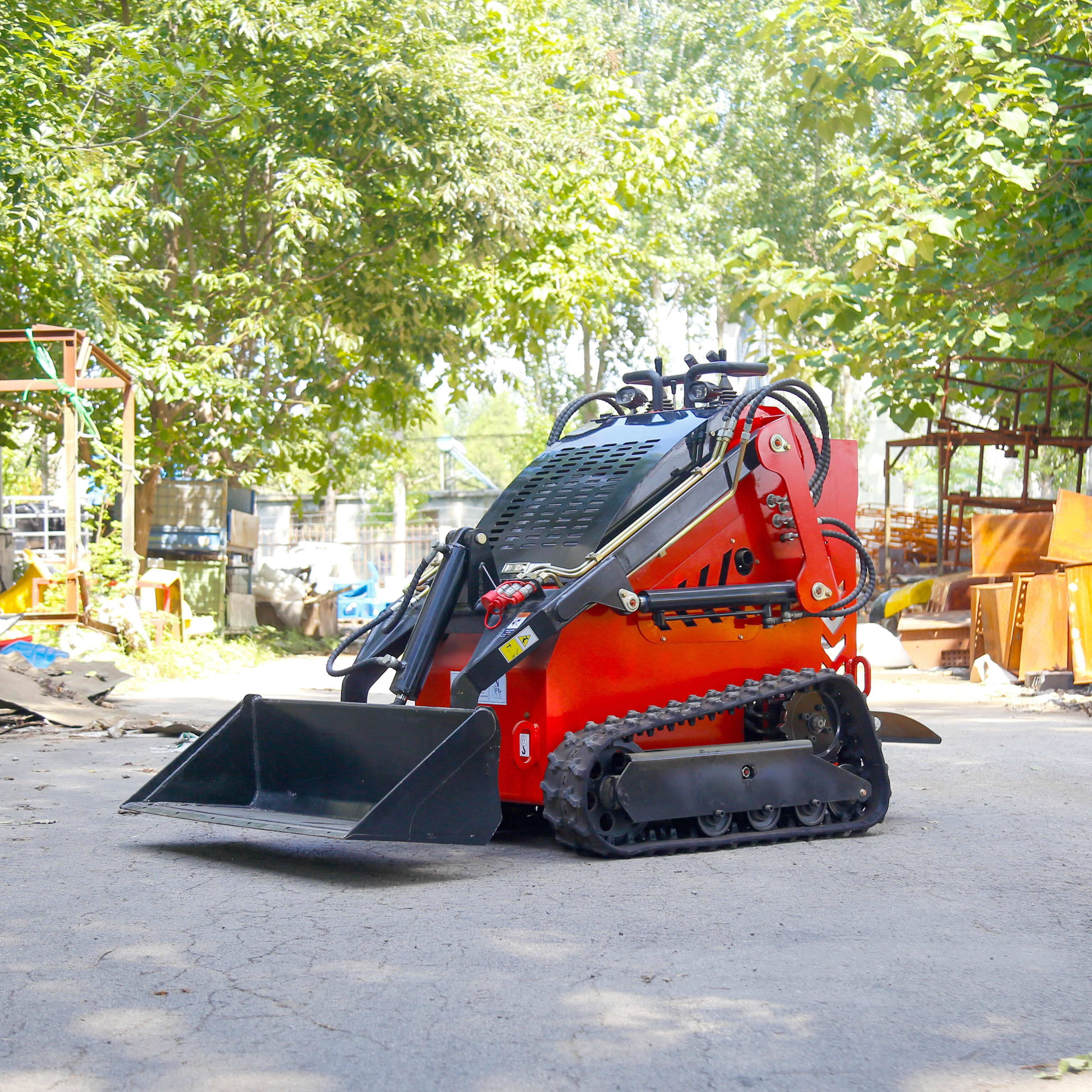
As a project manager responsible for delivery, safety, and cost control on heavy construction and industrial programs, selecting equipment that maximizes uptime and operator productivity is a core responsibility. The strongest skid steer category bridges the gap between compact maneuverability and loader-class capability, offering an unusually high combination of rated operating capacity, engine power, and tipping stability. This analysis examines the operational context for heavy work, provides a focused technical assessment of defining product characteristics, explains how the strongest skid steer contributes measurable advantages on site, and closes with concrete application scenarios that demonstrate return on investment. Throughout the discussion, emphasis is placed on decision criteria that influence procurement, deployment, and asset management for demanding environments.
Heavy-Duty Construction and Industrial Workflows
Heavy construction and industrial workflows are characterized by high material densities, rapid duty cycles, and constrained spatial conditions. Jobs such as foundation backfill, interior demolition, pallet handling in fabrication yards, and aggregate feed to crushers depend on equipment that can move large masses repeatedly without thermal or mechanical derating. In many projects the critical metric is not peak horsepower alone but the volume of material moved per hour and the predictability of machine availability over multiple shifts. Here, the strongest skid steer becomes a tactical choice: its elevated rated operating capacity (ROC) enables fewer load cycles for the same mass moved, reducing both cycle time and fuel consumed per ton. Equally important is stability under lift — tipping incidents or stalled cycles cause cascading delays and safety incidents. The strongest skid steer’s high tipping load expands the safe working envelope for operators handling irregular or dense payloads. From a logistics perspective, compact footprint and zero-radius turning allow the strongest skid steer to work inside confined footprints—warehouse aisles, urban alleyways, and plant yards—where larger wheel loaders or telehandlers cannot operate efficiently. For project managers, this combination of compact access and heavy-duty capability reduces the need to stage specialized machines and simplifies spare-asset planning, creating more predictable schedules and lower contingency costs.
Product Characteristics — In-Depth Technical Assessment
The strongest skid steer is differentiated primarily by three interrelated engineering features: ultra-high ROC, high-horsepower drivetrains, and exceptional tipping-load stability. Each dimension merits detailed analysis because their interactions determine real-world performance metrics.
Rated Operating Capacity (ROC) is a controlled laboratory metric, but for project planning its operational interpretation matters. A strongest skid steer with ROC above 3,000 lb—and in some models exceeding 4,200 lb—permits carriage of denser materials such as broken concrete, metal scrap, or palletized steel. This translates to a practical reduction in the number of passes required to move a given mass, reducing operator fatigue and cycle-related wear. Importantly, when ROC is combined with a correctly optimized center-of-gravity and counterweight strategy, the machine carries loads higher and farther while preserving stability.
Engine performance in the strongest skid steer category is not merely a peak-horsepower headline. Engines in the 75–118 HP range deliver sustained torque curves and thermal resilience under continuous operation. Turbocharged diesel variants with enhanced cooling packages and reinforced drivetrains maintain hydraulic pressure and travel torque during repetitive heavy cycles. For attachments with high flow demand, the engine and pump systems are matched to prevent pressure drops that degrade attachment efficiency. From a maintenance standpoint, engines engineered for continuous heavy loads exhibit longer intervals between major services, improving availability metrics.
Tipping load is a safety and productivity determinant. The strongest skid steer typically achieves tipping loads that exceed twice the ROC, creating a substantially larger margin between rated and failure thresholds. This margin matters in dynamic operations—placing heavy loads at elevation, negotiating grades while loaded, or operating on non-uniform surfaces. Higher tipping loads reduce the incidence of partial-load handling and rework, while enabling operators to maintain steadier cycle rates without conservative derating.
Structural design reinforces these attributes. Reinforced lift arm geometry, gusseted stress points, and hardened pivot assemblies extend fatigue life under shock loading. High-flow hydraulic packages with load-sensing controls preserve attachment performance while guarding against cavitation and thermal overload. Operator systems—ergonomic controls, improved lines of sight, and intuitive load-management interfaces—allow crews to harness the strongest skid steer capability safely and consistently across shifts. Together these specifications explain why the strongest skid steer operates like a compact loader but without the mobility tradeoffs.
How the Strongest Skid Steer Delivers Advantage in Heavy Applications
The real value of the strongest skid steer is realized when engineering capability converts into operational advantage. Four closely related outcomes matter for project managers: throughput improvement, fleet consolidation, predictable availability, and enhanced safety margins.
Throughput improvement is the most direct performance indicator. Because the strongest skid steer carries heavier payloads per cycle, material moved per hour increases even if operator behavior remains constant. Consider a task that requires moving broken concrete: a lighter machine may need three cycles to move a load the strongest skid steer can handle in two. This reduces total machine hours, worker time, and wear-related maintenance events. When scaled across multiple machines and days, these savings compound and noticeably compress schedule risk.
Fleet consolidation is a strategic benefit. The strongest skid steer supports high-flow attachments—breakers, mulchers, trenchers, and high-capacity forks—allowing one platform to perform roles that would otherwise require several specialized machines. For project managers this reduces mobilization costs, lowers parts inventory complexity, and simplifies operator training. The consolidation also reduces site congestion: one versatile unit requires less parking and fewer travel paths than multiple machines, improving site safety and traffic flow.
Predictable availability is essential in continuous operations. Components in the strongest skid steer—engine cooling systems, reinforced hydraulics, and fatigue-resistant structures—are selected to withstand repetitive stress. This engineering focus reduces unscheduled downtime, making maintenance windows more predictable and enabling tighter resource planning. Lower failure rates mean fewer emergency replacements and less dependence on backup units, directly reducing contingency budget needs.
Safety margins increase materially with higher tipping loads. In dynamic lifting or transport tasks, unexpected load shifts or surface irregularities can precipitate tip events. The strongest skid steer’s higher tipping threshold provides a buffer that reduces the frequency of such events, protecting personnel and materials. In addition, improved operator ergonomics and visibility reduce human-error risks during complex maneuvers.
Finally, lifecycle economics favor the strongest skid steer on heavy-duty projects. While initial procurement may be higher than light-duty compacts, total cost of ownership falls because the machine completes tasks in fewer cycles, consolidates attachment fleets, reduces transport requirements, and sustains longer mean time between failures. For project budgets focused on net delivered productivity rather than unit purchase price, the strongest skid steer often represents a superior investment.
Application Cases in Heavy Construction and Industry
Concrete demonstration is instructive. In urban demolition projects, the strongest skid steer removes dense rubble from constrained interiors, feeds hoppers, and operates hydraulic breakers, eliminating the need to move larger loaders into tight access points. In material-handling yards, the strongest skid steer moves palletized steel and heavy coils with fork attachments, reducing crane dependence for short-distance transfers and improving yard flow. In aggregate support roles, the strongest skid steer sustains feeder throughput by loading crushers at consistent rates, its high ROC reducing cycle frequency and stabilizing feed intervals. Across these cases, the common outcome is measurable: fewer cycles, reduced operator handling, and more stable equipment availability. The strongest skid steer thereby reduces project interruptions, shortens critical-path activities, and lowers direct handling costs.
Conclusion
For heavy-duty construction and industrial applications where space is constrained but task intensity remains high, the strongest skid steer provides a balanced solution of compact accessibility, loader-class lifting capacity, and durable operational systems. From a project manager’s perspective, its value is assessed not by a single specification but by how elevated ROC, robust engine performance, and high tipping load convert into higher throughput, simpler fleet logistics, predictable availability, and improved safety. Deploying the strongest skid steer strategically can shorten schedules, lower lifecycle costs, and increase the reliability of heavy-material handling operations.