 EN
EN

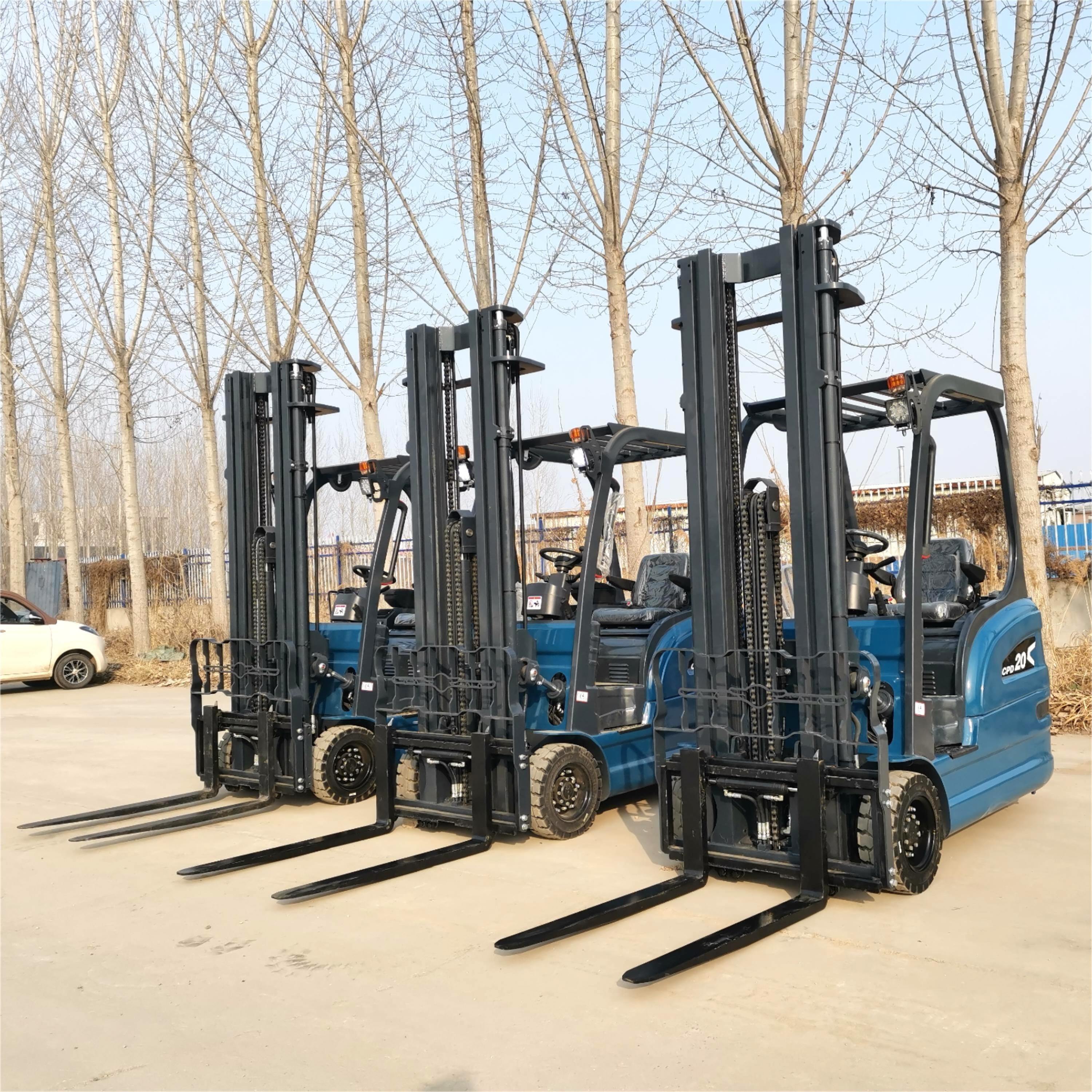
Introduction: From Cost Center to Value Engine — Redefining the Role of Material Handling Equipment
In many legacy warehouses, forklifts are treated primarily as unavoidable capital expenses. Internal combustion units consume fuel continuously, require frequent mechanical servicing, generate emissions that necessitate costly ventilation systems, and introduce noise and vibration that constrain modern high-density operations. Over time, these hidden operating costs accumulate into what many operations managers accurately describe as a “cost sink” within the facility.
The transition toward the electric powered forklift fundamentally changes this equation. Rather than functioning solely as a transportation tool, the electric powered forklift becomes a strategic productivity asset capable of reshaping total operating economics, employee working conditions, and long-term sustainability performance. For distribution centers, manufacturing plants, and omnichannel fulfillment facilities, adopting an electric powered forklift fleet is no longer a symbolic environmental gesture; it is a data-driven operational transformation.
As a warehouse operations strategy consultant, I routinely support large-scale logistics operators and manufacturers in equipment modernization programs. The purpose of this analysis is to move beyond the superficial “zero-emission” narrative and systematically explain how the electric powered forklift drives structural cost reduction, measurable productivity gains, and enterprise-level strategic resilience.
Delivering Structural Operating Cost Reduction
Energy Cost Disruption
Energy consumption represents one of the most predictable and controllable cost variables in warehouse operations. A properly specified electric powered forklift converts electrical energy into motion with significantly higher efficiency than internal combustion systems, where energy losses occur through heat dissipation, idling, and mechanical friction.
Industry energy benchmarking consistently shows that electricity-based material handling typically operates at approximately 30–50 percent of the hourly energy cost of diesel or LPG alternatives under equivalent duty cycles. When facilities integrate lithium battery platforms into the electric powered forklift, opportunity charging enables short top-up sessions during breaks rather than long battery swap cycles, eliminating dedicated battery rooms, ventilation infrastructure, and labor-intensive battery handling procedures.
From a strategic perspective, electricity pricing also demonstrates lower volatility than fuel markets, improving budget forecasting accuracy and reducing exposure to geopolitical energy fluctuations. Over a multi-year planning horizon, this stability significantly enhances financial predictability for fleet operators relying on the electric powered forklift platform.
Structural Maintenance Cost Reduction
Mechanical simplification is a core advantage of the electric powered forklift architecture. Internal combustion forklifts require continuous servicing of engines, filters, oil systems, transmissions, exhaust components, and cooling assemblies. Each subsystem introduces downtime risk, spare parts inventory burden, and technician labor costs.
By contrast, the electric powered forklift eliminates combustion engines entirely. The drivetrain typically consists of electric motors, power electronics, battery management systems, and simplified gear mechanisms. Preventive maintenance focuses primarily on electrical inspection, braking systems, tires, and software diagnostics. In operational practice, this structural simplification reduces annual maintenance expenditure by an estimated 40–60 percent, while simultaneously improving uptime reliability.
Higher availability translates directly into throughput stability. Reduced unplanned stoppages prevent downstream picking delays, shipping congestion, and labor inefficiencies. Over a fleet lifecycle, this reliability advantage compounds into substantial productivity preservation.
Total Cost of Ownership Perspective
When organizations evaluate equipment procurement using a three-to-five-year Total Cost of Ownership (TCO) model, the financial superiority of the electric powered forklift becomes evident. Although acquisition cost may initially exceed comparable combustion units, the cumulative savings in energy, maintenance, and downtime typically recover the price differential within 12–24 months of operation.
Beyond the breakeven point, every subsequent operating year generates positive cash flow advantage. For high-utilization warehouses operating multiple shifts, the financial leverage of the electric powered forklift becomes particularly compelling. Strategic procurement decisions therefore should prioritize lifecycle economics rather than upfront pricing alone.
Enhancing Productivity and Operational Quality
Micro-Level Productivity Drivers
The electric motor delivers instantaneous torque, enabling smooth acceleration, precise low-speed maneuvering, and stable load handling in narrow aisle environments. Operators experience improved responsiveness and reduced physical strain when using the electric powered forklift, which directly enhances cycle time consistency and maneuver accuracy.
Noise reduction is another decisive productivity factor. Lower acoustic output reduces operator fatigue, improves communication clarity on the floor, and contributes to a safer working environment. Combined with lower vibration exposure, operator alertness remains higher across extended shifts, reducing error probability and incident risk.
Macro-Level Environmental Optimization
The zero-emission profile of the electric powered forklift eliminates indoor exhaust contaminants entirely. Facilities can significantly reduce ventilation energy consumption while maintaining air quality compliance. This capability unlocks full-zone operational flexibility in regulated environments such as food processing, pharmaceuticals, electronics manufacturing, and clean logistics operations.
Employee health outcomes also improve as exposure to particulates, nitrogen oxides, and hydrocarbons is eliminated. Improved workforce satisfaction supports retention stability and lowers long-term health-related labor risk.
Enabling Process Redesign
Quiet, emission-free operation enables the electric powered forklift to safely operate alongside picking teams, automated guided vehicles, and robotic subsystems. This compatibility allows warehouses to redesign workflows toward mixed human-machine collaboration zones, shorter travel paths, and higher space utilization density. Operational agility improves without compromising safety or compliance.
Supporting Sustainability and Strategic Compliance
ESG Alignment and Measurable Impact
Deploying an electric powered forklift fleet directly reduces Scope 1 carbon emissions. Energy consumption data can be integrated into sustainability reporting frameworks, supporting transparent ESG disclosures and continuous improvement benchmarking. Sustainability initiatives increasingly influence procurement eligibility, financing access, and brand credibility across global supply chains.
Regulatory and Customer Readiness
Environmental regulations governing indoor emissions, noise exposure, and energy efficiency continue to tighten globally. Early adoption of the electric powered forklift positions organizations ahead of compliance mandates, reducing future retrofit risks and potential operational disruption.
Large enterprise customers increasingly mandate green supply chain certification from logistics partners. Electrification supports compliance with sustainability audits and contractual qualification requirements.
Digitalization and Automation Compatibility
The electric powered forklift integrates naturally with fleet management platforms, telematics systems, energy optimization software, and autonomous navigation architectures. Electrification forms the technological foundation for intelligent warehouse transformation and predictive maintenance strategies.
Selecting the Right Strategic Partner
Understanding these benefits establishes the strategic case. Realizing them requires an implementation partner capable of translating theory into operational performance.
Shandong Nuote Machinery Co., Ltd. delivers comprehensive electric powered forklift solutions designed for industrial reliability, scalable deployment, and lifecycle optimization. Our engineering team supports customers with customized fleet analysis, battery strategy selection, charging infrastructure planning, and operational transition consulting.
Through structured commissioning, operator training programs, preventive maintenance frameworks, and digital fleet monitoring services, we ensure that each electric powered forklift delivers sustained performance value throughout its service life.
Organizations seeking to quantify their electrification potential are encouraged to initiate a data-driven assessment with our technical consultants. Operational simulations, site evaluations, and productivity modeling enable accurate ROI forecasting and implementation planning.
Conclusion
Investing in an electric powered forklift is fundamentally an investment in operational excellence, financial resilience, and long-term competitiveness. Beyond emission reduction, it restructures cost economics, enhances workforce performance, improves facility flexibility, and strengthens strategic sustainability alignment.
Forward-looking warehouse leaders recognize that powertrain transformation is not merely equipment replacement — it is business modernization. Organizations that act proactively secure measurable performance advantages while mitigating future regulatory and market risks.
The optimal moment to reassess your fleet strategy is now. Evaluate value, not just price. Strategic electrification positions your warehouse for sustainable growth and operational leadership.
References
-
International Energy Agency (IEA) – Electric Motor Efficiency and Industrial Energy Use Studies
-
U.S. Department of Energy – Industrial Electric Drive Systems Performance Data
-
Occupational Safety and Health Administration (OSHA) – Indoor Air Quality and Workplace Emissions Guidance
-
ISO 50001 – Energy Management Systems Framework
Table of Contents
- Introduction: From Cost Center to Value Engine — Redefining the Role of Material Handling Equipment
- Delivering Structural Operating Cost Reduction
- Enhancing Productivity and Operational Quality
- Supporting Sustainability and Strategic Compliance
- Selecting the Right Strategic Partner
- Conclusion
- References