 EN
EN

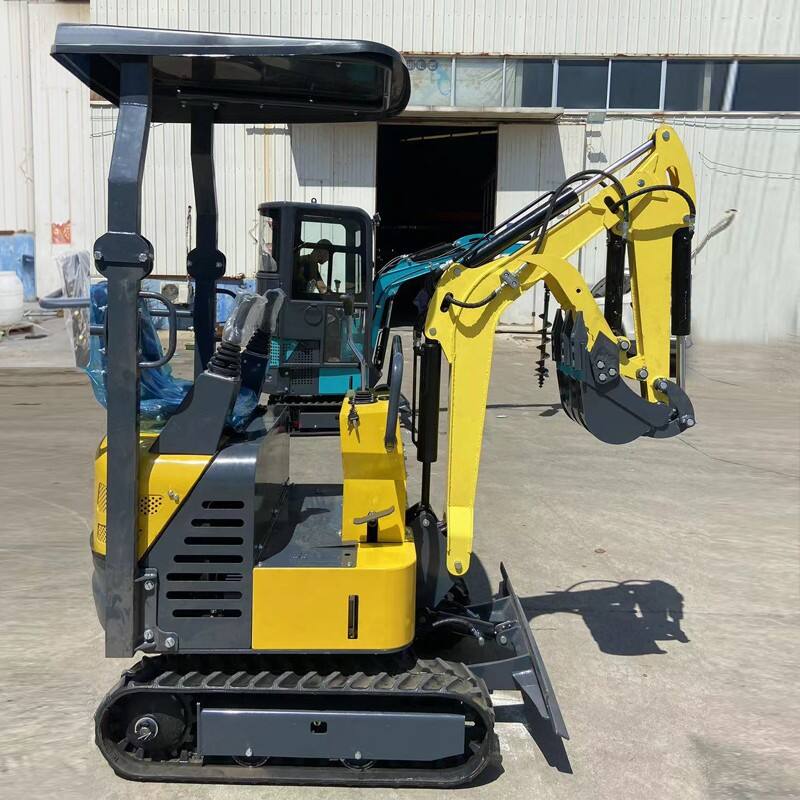
Large-scale construction projects—whether highway corridors, airport expansions, mining overburden removal, or mass urban infrastructure—share three defining characteristics: tight schedules, extreme working conditions, and minimal tolerance for error. On such sites, a single excavator failure can delay an entire section of work, disrupt subcontractor coordination, and erode projected profit margins.
With more than 15 years of experience advising contractors in mining, heavy earthmoving, and large-scale infrastructure development, I have seen firsthand how equipment selection determines not only productivity, but financial outcomes. Choosing the right excavator is not about chasing the highest specification sheet. It is about engineering alignment between machine capability, project demands, and long-term asset value.
At Shandong Nuote Machinery Co., Ltd., we approach excavator manufacturing and export from the perspective of project economics. We understand that for contractors bidding on major works, machine reliability and lifecycle cost are not secondary concerns—they are hidden competitive advantages. This article provides a structured, data-driven framework for selecting the right excavator for large-scale construction projects.
Project Profiling: Matching Machine to Mission
Before discussing horsepower or hydraulic pressure, contractors must clearly define project requirements. Is the project primarily bulk earthmoving with moderate soil density? Is it hard rock excavation requiring hydraulic breakers? Or is it a mixed-application site demanding frequent attachment changes?
Material density and daily output targets should guide initial tonnage selection. For general earthmoving, 30–40 ton class excavators often provide optimal balance between mobility and productivity. For quarry or mining applications, 50–80 ton class machines or higher are more appropriate. In high-production rock environments, insufficient tonnage results in excessive structural stress and premature wear.
Operational intensity also matters. A machine operating in 24/7 shifts requires higher durability margins than one performing intermittent work. As a rule of thumb, contractors should allow a performance buffer of 10–15% above calculated theoretical demand to account for unexpected ground conditions or peak loads.
At Shandong Nuote Machinery Co., Ltd., we assist clients in mapping material type, expected cycle time, and daily production targets to the appropriate excavator class. Proper mission profiling reduces mechanical stress and protects residual value.
The Power of Productivity
The Weight–Power Balance: Stability and Grunt
Operating weight directly influences stability and digging performance. In heavy excavation, greater operating weight enhances ground contact, allowing the machine to fully utilize breakout force without excessive vibration or structural flex.
Two machines may share similar horsepower ratings, yet the one with optimized structural mass distribution will demonstrate superior stability and longer component lifespan. Excessively light machines in demanding conditions often suffer from accelerated wear in swing bearings, undercarriage systems, and boom connections.
Engine power must complement operating weight. High engine output without structural capacity results in stress concentration and fatigue failure. Conversely, oversized engines in underutilized applications increase fuel consumption without productivity gains.
Power reserve is especially critical in high-altitude or high-temperature environments where engine performance can decline. Machines configured for low-speed, high-torque output maintain digging consistency under extreme loads.
Shandong Nuote Machinery Co., Ltd. designs our heavy-duty excavator series with reinforced working equipment and torque-optimized engine calibration. Rather than maximizing peak horsepower alone, we prioritize low-RPM torque delivery—particularly valuable in rock and quarry applications where controlled force matters more than raw speed.
Hydraulic Muscle: Speed Meets Force
Hydraulic performance defines an excavator’s true working capability. Pump flow determines action speed; system pressure determines breakout force. Both must be carefully balanced.
In truck-loading applications, higher pump flow improves cycle time, reducing seconds per loading cycle. In rock-breaking or deep trenching scenarios, higher pressure combined with precise flow modulation ensures effective penetration and controlled force application.
Modern electro-hydraulic systems enable coordinated compound movements—simultaneous boom, arm, and swing operations—without energy waste. Flow control strategy plays a decisive role here. Compared with traditional systems, advanced positive flow control technology improves responsiveness and reduces unnecessary pump displacement.
In optimized configurations, saving just three to five seconds per loading cycle can translate into substantial daily output increases across thousands of cycles. Over the duration of a multi-year project, this efficiency gain directly impacts fuel cost and labor productivity.
Our excavators at Shandong Nuote Machinery Co., Ltd. integrate electronically controlled hydraulic systems engineered for precise compound action coordination. This enhances fuel efficiency and operational smoothness, particularly in high-cycle loading operations.
Built to Last: The Importance of a Heavy-Duty Undercarriage
Large-scale projects subject excavators to continuous ground impact, abrasive surfaces, and torsional stress. The undercarriage absorbs the majority of structural strain and must be engineered accordingly.
Structural Integrity
An X-frame undercarriage design distributes stress evenly across the lower structure, reducing deformation risk. Box-section structures provide additional torsional resistance, critical in uneven terrain or quarry environments.
Enhanced weld quality and stress-relief processes further improve long-term structural integrity.
Components That Matter
The number and configuration of track rollers directly affect load distribution. For example, increasing the number of bottom rollers improves ground contact and reduces localized wear under heavy load conditions.
Track chain durability, shoe thickness, and sealing technology also influence lifespan. Sealed and lubricated track systems reduce friction and extend service intervals.
Shandong Nuote Machinery Co., Ltd. equips our heavy-duty excavator range with reinforced mining-type undercarriage assemblies. Track rollers and carrier rollers incorporate durable sealing systems to minimize contamination and maintenance frequency. Reduced undercarriage downtime translates directly into improved machine availability on demanding job sites.
Durability Under Stress: Armor and Protection
Large construction sites expose equipment to constant risk—falling debris, abrasive rock, and unpredictable terrain.
Critical structural points such as boom-to-arm connections must resist concentrated stress. Cast steel components offer superior load distribution compared to simple welded assemblies, enhancing fatigue resistance. Reinforcement ribs and protective guards shield vulnerable hydraulic lines and structural joints.
Operator safety is equally vital. ROPS and FOPS-certified cabins protect against rollovers and falling objects, meeting international safety standards. Rear-view cameras and improved visibility further reduce on-site risk.
At Shandong Nuote Machinery Co., Ltd., our heavy-duty excavators feature reinforced boom structures and cast steel joint components to enhance durability. Safety-certified cabin designs support secure 24/7 operation in high-risk environments.
Additionally, universal quick coupler systems allow rapid attachment changes—such as switching from bucket to hydraulic breaker—within minutes. This versatility increases machine utilization and enables contractors to adapt quickly to varied tasks.
Total Cost of Ownership: The Contractor’s Math
For B2B decision-makers, the most important metric is total cost of ownership (TCO). TCO includes initial purchase cost, fuel consumption, maintenance expenditure, and residual value at resale.
Fuel efficiency differences of just a few liters per hour can result in significant cost variation over thousands of operating hours annually. Maintenance intervals and filter standardization also influence downtime and service expense.
Residual value is often overlooked. Machines built with durable structural components and proven reliability maintain stronger resale demand in secondary markets.
Shandong Nuote Machinery Co., Ltd. supports clients with five-year lifecycle cost analyses. In many cases, our heavy-duty excavators demonstrate competitive fuel consumption and reduced maintenance downtime, leading to lower overall operating cost compared with average market benchmarks. When resale value is factored in, actual net cost can be substantially lower than expected.
Engineering economics—not just purchase price—should guide procurement.
After-Sales Support: Minimizing Downtime
On large projects, downtime is more expensive than any spare part. Rapid parts supply and skilled technical response are essential.
A reliable spare parts logistics system ensures that critical components are available when needed. Technical support teams capable of remote diagnostics or on-site service further reduce disruption.
Shandong Nuote Machinery Co., Ltd. has established international spare parts distribution channels and service response mechanisms aimed at minimizing downtime. Our commitment includes fast dispatch of key components and technical consultation support for overseas clients.
Availability equals profitability.
Why Choose Us: The Partner Behind the Machine
Selecting an excavator supplier means evaluating manufacturing capability, quality standards, and long-term commitment.
At Shandong Nuote Machinery Co., Ltd., we manufacture excavators using high-strength structural materials and strict quality control processes. Key components are selected based on durability and compatibility with heavy-duty operating conditions. Our production facilities are designed to meet international engineering and safety expectations.
Our excavators have been deployed in demanding infrastructure and quarry projects, where continuous operation and structural reliability are mandatory. These field applications validate our design philosophy: heavy-duty performance built for extreme conditions.
We do not simply deliver machines; we deliver operational confidence.
Conclusion: No Margin for Error in Big Projects
Large-scale construction projects leave no room for equipment miscalculation. Selecting the right excavator is a strategic investment decision that influences productivity, safety, and long-term financial return.
Operating weight must balance engine power. Hydraulic systems must combine speed with force. Undercarriage durability must withstand relentless stress. And lifecycle cost must justify capital investment.
Ready to specify the right machine for your next major project? Download our “Heavy-Duty Excavator Specification Guide” or contact the project consultants at Shandong Nuote Machinery Co., Ltd. for a free machine sizing consultation.
In large-scale construction, foresight in equipment selection is not optional—it is your competitive edge.