 EN
EN
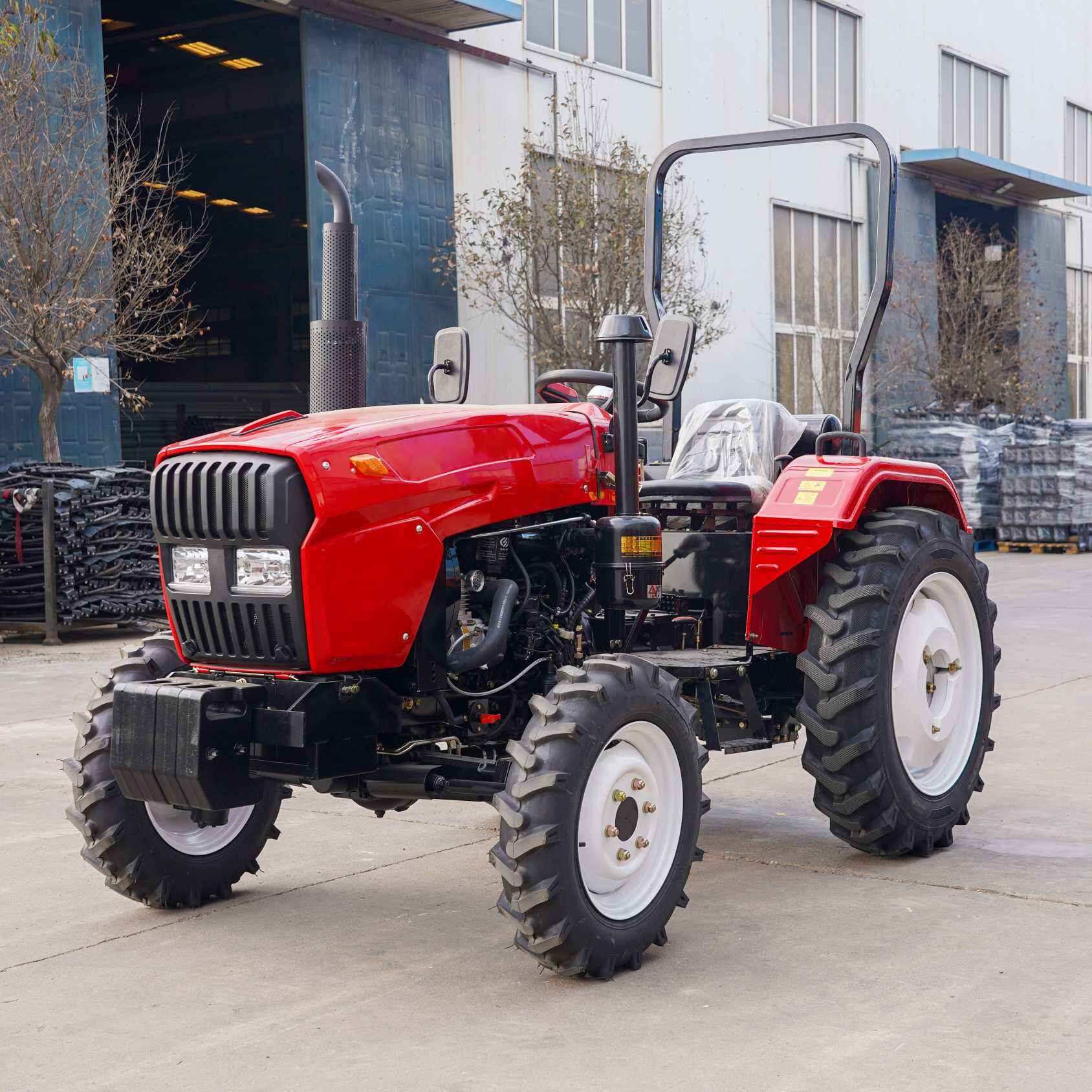
Across Europe and other mature agricultural markets, farm profitability is under continuous pressure. Input costs are rising, environmental regulations are tightening, and commodity prices remain volatile. In this environment, the only sustainable pathway forward is to increase output per hour, per hectare, and per liter of fuel consumed.
As a B2B agricultural machinery efficiency specialist and European market access consultant, I have worked extensively with farms in Germany, France, and the Nordic region. One insight stands out: a high-performance traktor is not defined solely by horsepower. True efficiency is a balanced integration of fuel economy, operational speed, digital precision, ergonomic design, and regulatory compliance. Every drop of diesel, every second of working time, and every square meter of land must generate measurable value.
At Shandong Nuote Machinery Co., Ltd., we approach traktor development not as a simple manufacturing task, but as the engineering of integrated efficiency platforms designed for long-term return on investment.
Defining “Efficiency” in Modern Agriculture
Efficiency in modern agriculture is multidimensional. It includes time efficiency, cost efficiency, and yield efficiency.
Time efficiency refers to how quickly and consistently field operations can be completed within narrow weather windows. In Northern Europe, for example, planting and harvesting windows can be limited to a matter of days. A traktor that maintains stable torque under load and allows seamless speed adjustments directly increases hectares covered per day.
Cost efficiency encompasses fuel consumption, maintenance intervals, and downtime reduction. According to data from European agricultural equipment associations, fuel can represent up to 30–40% of annual operating expenses for high-horsepower tractors. Even a 5% improvement in fuel efficiency can significantly reduce total operating cost over five years.
Yield efficiency is increasingly software-driven. Precision farming technologies reduce overlap, optimize input distribution, and improve per-hectare output. In advanced markets, sustainability and profitability are no longer competing goals; they are interdependent. A traktor that consumes less fuel while meeting strict emission standards is both economically and environmentally efficient.
Efficiency, therefore, is not simply mechanical strength. It is a system-level outcome.
Powertrain Analysis: The Source of Efficient Power
Engine Technology: Beyond Stage V Compliance
In the European market, compliance with EU Stage V emission standards is not optional; it is the entry threshold. However, regulatory compliance alone does not guarantee efficiency.
A modern Stage V-compliant engine integrates advanced combustion control with after-treatment systems such as DOC, DPF, and SCR. The key concern for professional buyers is not only emission reduction, but system reliability. Frequent regeneration cycles or poorly calibrated after-treatment systems can lead to downtime and productivity loss.
An efficient traktor engine must combine low engine speed with high torque output. High torque reserve—often above 30%—allows the machine to maintain working speed under heavy draft loads without frequent downshifting. This reduces fuel spikes and mechanical stress.
At Shandong Nuote Machinery Co., Ltd., our high-efficiency traktor models are engineered to deliver peak torque within the economic RPM range, typically around 1,500 rpm. Operating in this zone allows sustained pulling power while minimizing fuel consumption during long working hours. For European farms where diesel prices are comparatively high, such optimization directly enhances cost control.
In short, compliance is the foundation; intelligent torque management is the advantage.
Transmission Efficiency: Choosing the Right Gear
Transmission architecture significantly influences operational efficiency. Mechanical transmissions remain reliable and cost-effective for stable-speed operations. Power-shift systems improve continuity by enabling gear changes without interrupting torque delivery. However, for operations requiring frequent speed adjustments—such as loader work, headland turning, and transport—CVT (Continuously Variable Transmission) systems provide measurable gains.
A CVT-equipped traktor allows seamless speed variation without fixed gear steps, maintaining optimal engine load and fuel efficiency. During transport tasks, for example, achieving 40 km/h at economic engine speed reduces fuel consumption and mechanical strain.
At Shandong Nuote Machinery Co., Ltd., our CVT solutions are calibrated to balance smooth acceleration, torque stability, and fuel economy. In real-world logistics between fields and storage facilities, reduced shifting time translates into tangible time savings over an entire season.
Transmission efficiency is not a luxury feature; it is a productivity multiplier.
The Digital Backbone: ISOBUS & Telematics
ISOBUS Compatibility: Speaking the Same Language
In efficient agricultural operations, digital integration is essential. ISOBUS (ISO 11783) compatibility allows the traktor to communicate seamlessly with compatible implements, enabling a single terminal to manage multiple tools.
Without ISOBUS, farms may need separate control units for each implement, increasing complexity and cost. With full compatibility, the traktor becomes a universal operational platform. Plug-and-play integration reduces setup time and minimizes configuration errors.
Our traktor models are factory-equipped with ISOBUS interfaces, supporting integration with mainstream implement systems. This ensures immediate usability and avoids redundant investments in control hardware.
Precision farming is no longer optional in Europe—it is a competitive requirement. ISOBUS ensures that data flows efficiently from implement to operator.
Telematics: Data-Driven Efficiency
Telematics systems further enhance efficiency by collecting and analyzing operational data. Fuel consumption, engine load patterns, working hours, and operator behavior can be monitored remotely. Fleet managers can identify inefficiencies, optimize routing, and schedule predictive maintenance.
For multi-machine farms, telematics increases utilization rates by reducing idle time. Over a five-year period, improved fleet coordination can significantly reduce per-hour operating cost.
Shandong Nuote Machinery Co., Ltd. supports telematics integration in our advanced traktor configurations, enabling data-driven decision-making and measurable performance improvement.
Efficiency today is calculated, not assumed.
Operator-Centric Design: Reducing Fatigue, Boosting Output
Cab Design & Ergonomics
A traktor that operates 10–12 hours per day must prioritize human performance. Panoramic windshields, slim engine hood profiles, and optimized mirror placement reduce blind spots and improve safety.
Imagine a scenario where the operator controls implements directly from an integrated armrest console, without repeatedly reaching for separate switches. Reduced hand movement, intuitive layout, and clear digital displays allow continuous focus on the field rather than on control complexity.
Ergonomic efficiency increases working precision and reduces mental fatigue. Over long operating cycles, this translates into higher consistency and fewer errors.
Suspension Systems
Front axle suspension and cab suspension systems significantly improve comfort during high-speed transport and uneven terrain operation. A stable ride reduces vibration-induced fatigue and supports sustained productivity throughout long working days.
Operator endurance is an often-overlooked efficiency factor. A comfortable driver maintains higher concentration levels, improving both safety and output consistency.
Cost of Operation: The True Measure of Efficiency
Ultimately, efficiency must be quantified through Total Cost of Ownership (TCO) and per-hour operating cost.
Fuel consumption rate, service interval duration, spare parts availability, and resale value all contribute to lifecycle economics. Extending engine oil change intervals from 500 hours to 1,000 hours, for example, halves certain maintenance costs and reduces downtime.
At Shandong Nuote Machinery Co., Ltd., we provide comparative lifecycle cost analysis tools to help clients calculate five-year per-hour operating expenses. In many cases, our optimized traktor configurations demonstrate lower cumulative cost than average market benchmarks, even when initial purchase price is slightly higher.
Efficiency must be calculated across years, not months.
European Market Insights: Why Compliance Matters
For buyers targeting the European Union, compliance with Stage V emission standards and CE certification is essential. Non-road mobile machinery regulations require proper documentation, conformity assessment, and technical file management.
We provide complete certification documentation and technical support packages to facilitate smooth customs clearance and registration processes. Compliance is not simply about legal access; it signals engineering quality and environmental responsibility.
A traktor designed for European standards must meet performance expectations and regulatory scrutiny simultaneously.
Partnering for Efficiency: Our Commitment
At Shandong Nuote Machinery Co., Ltd., we position ourselves as an efficiency solution provider rather than a simple equipment exporter. Our manufacturing processes integrate rigorous quality control and component testing aligned with international standards.
For key B2B clients, we offer field efficiency testing services, enabling real-world validation of fuel consumption and operational performance before large-volume procurement. We also support overseas spare parts logistics planning to ensure operational continuity.
Our objective is clear: to help clients achieve more output with optimized investment.
Conclusion: Designed Efficiency, Measured Performance
High efficiency in agricultural operations does not happen by accident. It is engineered through intelligent powertrain design, digital integration, ergonomic refinement, and lifecycle cost optimization.
A well-selected traktor reduces fuel usage, shortens task completion time, and enhances long-term profitability. It meets environmental standards while delivering operational strength.
Ready to calculate your farm’s true efficiency potential? Contact Shandong Nuote Machinery Co., Ltd. to request our Efficiency Calculator Tool or schedule a product demonstration. Discover how a strategically engineered traktor can transform your agricultural performance—efficiently, sustainably, and profitably.
Table of Contents
- Defining “Efficiency” in Modern Agriculture
- Powertrain Analysis: The Source of Efficient Power
- The Digital Backbone: ISOBUS & Telematics
- Operator-Centric Design: Reducing Fatigue, Boosting Output
- Cost of Operation: The True Measure of Efficiency
- European Market Insights: Why Compliance Matters
- Partnering for Efficiency: Our Commitment
- Conclusion: Designed Efficiency, Measured Performance