 EN
EN

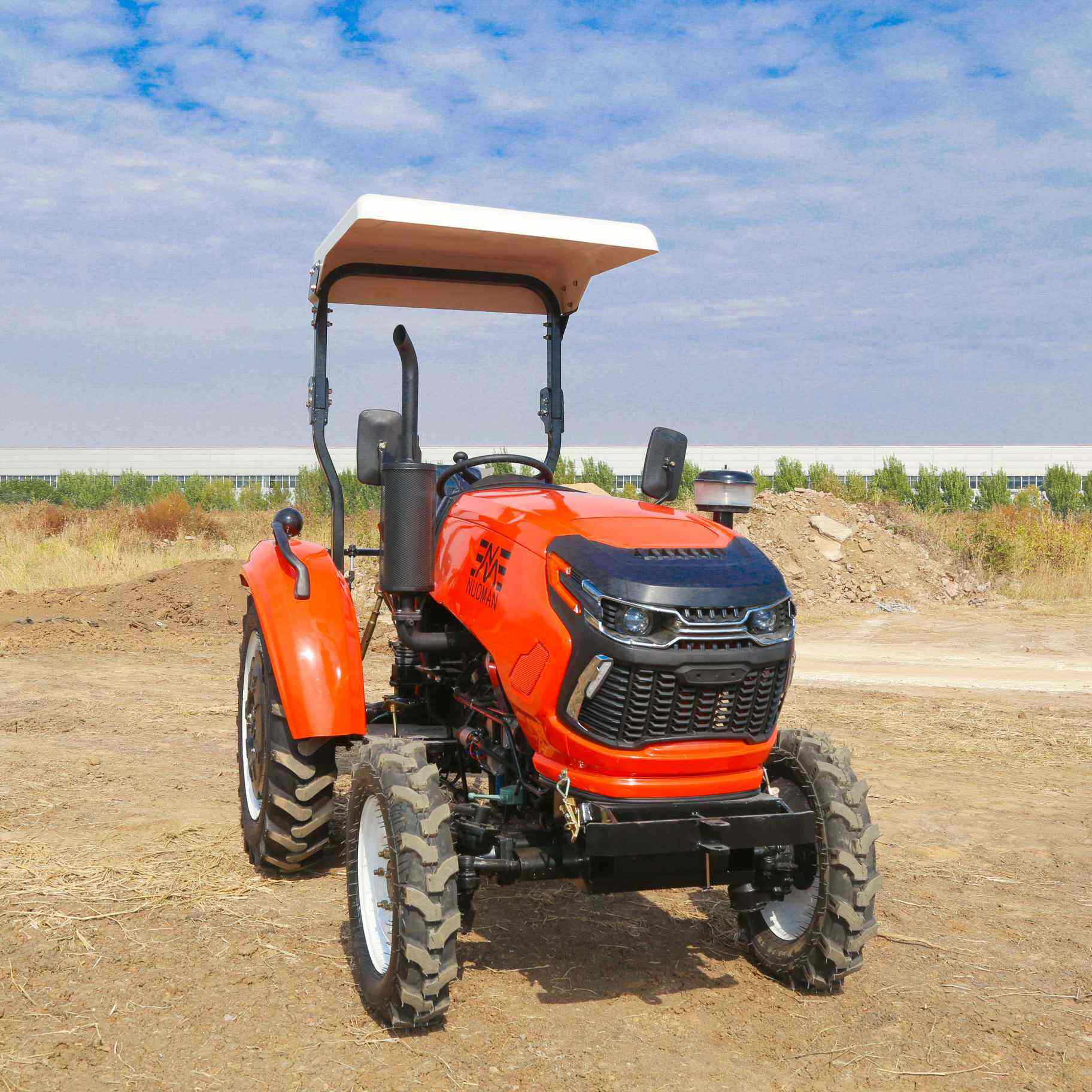
When reviewing tractor quotations from different suppliers, many buyers encounter the same question: Why do two tractors with similar horsepower ratings have significantly different prices? At first glance, the specifications may appear comparable. Yet the numbers on the quotation sheet often vary more than expected.
The reason is simple: a tractor is not a commodity product. Its price tag reflects engineering complexity, regulatory compliance, productivity potential, durability, and long-term resale value. For professional buyers, especially those managing large-scale farms or agricultural contracting businesses, the correct question is not “Which tractor is cheaper?” but “Which tractor generates the highest return on investment?”
As a B2B agricultural machinery cost and value analyst, I have worked with procurement teams across multiple markets. The most profitable decisions are rarely driven by the lowest purchase price. They are driven by a clear understanding of how price is constructed—and how value is realized over time.
This article explains the core factors influencing tractor price and how to maximize your investment with a long-term perspective.
Understanding the Price Spectrum: From Entry-Level to High-Horsepower
The global tractor market typically divides into three broad horsepower segments:
-
Below 50 HP: small farms, orchards, light-duty applications
-
50–100 HP: mixed farming, general-purpose field operations
-
Above 100 HP: large-scale operations, heavy tillage, wide implements
As horsepower increases, price growth is not linear—it is exponential. Higher horsepower machines require stronger drivetrains, larger hydraulic systems, reinforced chassis structures, and more sophisticated transmission systems.
However, in professional agricultural operations, machinery financing costs are often a smaller portion of total operating expenditure than labor and fuel. According to industry studies, fuel and labor can account for over 60% of total operational expenses in large farms. A tractor that improves field efficiency by even 10% may generate far greater economic impact than the marginal savings achieved by selecting a lower upfront price.
The key shift in mindset is this: tractors are profit-generating assets, not static purchases.
The Engine: Compliance Equals Cost
One of the most significant hidden factors affecting tractor price is the engine emission standard.
Tractors compliant with Tier 4 Final or Stage V emission regulations require advanced technologies such as high-pressure common rail injection, diesel oxidation catalysts (DOC), diesel particulate filters (DPF), and selective catalytic reduction (SCR) systems. These components significantly increase manufacturing cost compared to basic emission engines.
For example, engines meeting strict emission standards can cost tens of thousands of dollars more due to additional after-treatment systems and electronic control modules. That higher price is not merely regulatory—it reflects precision fuel injection, optimized combustion efficiency, and cleaner exhaust output.
Importantly, improved combustion efficiency typically results in 10–15% lower fuel consumption compared to older-generation engines. Over a three-year operating period at 800–1,000 hours annually, the fuel savings alone can offset much of the initial price premium.
At Shandong Nuote Machinery Co., Ltd., we offer tractors equipped with emission-compliant engines designed for both regulatory markets and emerging economies. For clients operating in regulated regions, compliance is not optional—it is a market entry requirement. For others, we provide flexible configurations aligned with local standards, ensuring customers pay only for what their market requires.
We also provide fuel-efficiency simulations to demonstrate how initial investment differences can be recovered through operational savings.
Transmission: Paying for Productivity
Transmission type is often the largest cost differentiator after the engine.
Mechanical gear transmissions are the most economical option. They are reliable, simple, and suitable for budget-conscious buyers or light-duty applications.
Synchronized transmissions improve shifting smoothness and operator comfort but increase manufacturing complexity and cost.
PowerShift transmissions allow clutchless shifting under load, enhancing productivity in field operations requiring frequent speed adjustments.
Continuously Variable Transmission (CVT) systems represent the highest-end option. They provide seamless speed variation, precise power delivery, and optimized fuel efficiency. However, they require advanced engineering and significantly increase production cost.
The price difference between a mechanical gearbox and a CVT system reflects more than comfort—it reflects time efficiency and precision. During peak planting or harvesting seasons, saving even one hour of daily operation can directly impact yield outcomes.
At Shandong Nuote Machinery Co., Ltd., our CVT models are designed to reduce shift-related downtime and improve field efficiency. For large-scale farms operating long hours, the productivity gain often justifies the additional upfront investment.
For customers with tighter budgets, we offer modular configuration options. Buyers can select the transmission type aligned with their actual operational intensity rather than overpaying for unused capability.
Hydraulics & Rear Lift Capacity: The Price of Capability
Hydraulic flow rate and rear lift capacity are often overlooked in early purchasing decisions but become critical during real-world operations.
A high-flow closed-center hydraulic system requires larger pumps, precision valves, and reinforced structural components. Similarly, higher rear three-point hitch lift capacity demands stronger steel construction and enhanced chassis reinforcement.
These elements directly increase manufacturing cost.
However, the return is operational capability. For example, a tractor with 6,500 kg rear lift capacity can operate wider, heavier implements than one limited to 5,000 kg. Wider implements reduce the number of passes required per field, saving fuel, labor time, and soil compaction.
In large-scale farming, fewer passes mean faster job completion and lower per-acre cost.
At Shandong Nuote Machinery Co., Ltd., our higher-capacity models are engineered to handle heavy-duty implements while maintaining structural integrity. Buyers should evaluate not only current equipment but future expansion plans before finalizing specifications.
Capability today determines scalability tomorrow.
Brand, Origin, and Resale Value: The Intangible Factors
Beyond mechanical components, price also reflects brand positioning, manufacturing origin, and expected resale value.
Established global brands often command premium pricing based on perceived reliability and long-term stability. Part of this premium reflects engineering maturity; part reflects buyer confidence.
Manufacturing origin influences production cost structures. European-built equipment typically carries higher labor and compliance costs. Emerging manufacturing regions offer competitive pricing due to optimized supply chains and production efficiency.
Modern Chinese manufacturing, including Shandong Nuote Machinery Co., Ltd., combines competitive cost control with increasingly advanced engineering capabilities. The result is a strong value proposition: industrial-grade performance at globally competitive pricing.
Resale value is frequently underestimated in procurement decisions. Yet for B2B buyers, resale value significantly impacts actual ownership cost. A tractor retaining 60–65% of its value after three years dramatically reduces effective operating expense.
When evaluating tractor price, buyers should ask not only, “What does it cost today?” but also, “What will it be worth in five years?”
Features That Add Value, Not Just Cost
Certain features increase upfront cost but generate measurable operational benefits.
Integrated GPS and auto-steering interfaces improve field precision, reduce overlap, and decrease input waste.
Comfortable cabins with air suspension seats and climate control reduce operator fatigue during long working days.
LED work lighting systems extend safe operating hours into nighttime, increasing daily productivity.
These features should not be viewed as luxuries. In high-output agricultural environments, operator endurance and accuracy directly affect productivity and profitability.
At Shandong Nuote Machinery Co., Ltd., we provide modular configuration structures. Clients may choose to install certain systems immediately or reserve compatibility for future upgrades. This ensures buyers invest strategically rather than paying for unused features.
Calculating Total Cost of Ownership (TCO)
To transform “price” into “investment,” buyers must evaluate Total Cost of Ownership:
TCO = Purchase Price + (Fuel Cost × Years) + (Maintenance Cost × Years) – Resale Value
Consider two hypothetical tractors:
-
Model A: Lower purchase price, higher fuel consumption, lower resale value
-
Model B: Higher purchase price, 12% lower fuel use, stronger resale performance
Over five years of operation at 1,000 hours annually, Model B may generate lower overall ownership cost despite its higher initial price.
Fuel savings accumulate annually. Lower breakdown frequency reduces downtime losses. Stronger resale value reduces capital depreciation.
At Shandong Nuote Machinery Co., Ltd., we offer customized TCO analysis tools. By inputting your projected annual hours, fuel costs, and usage patterns, we can provide a data-driven comparison to support your decision-making process.
Smart buyers compare five-year numbers—not just day-one pricing.
Financing and After-Sales Support: The Hidden Price Factors
Flexible financing structures can significantly influence effective tractor price. Leasing, installment plans, and seasonal payment schedules help align cash flow with revenue cycles.
After-sales support has an even greater financial impact. Delayed spare parts delivery can result in costly downtime during critical farming windows. A tractor waiting for a component replacement for several weeks can generate losses exceeding any upfront savings.
Shandong Nuote Machinery Co., Ltd. maintains structured spare parts supply systems and commits to rapid-response service support. Our objective is not merely to sell machinery, but to ensure consistent operational uptime.
Availability equals profitability.
How to Get the Best Price Without Sacrificing Value
Professional buyers should negotiate based on total package value rather than bare machine price.
Instead of focusing solely on discounting the base unit, consider requesting:
-
Extended warranty coverage
-
Complimentary initial maintenance services
-
Operator training programs
-
Spare parts packages included in the deal
These additions often generate more economic value than a marginal price reduction.
Strategic negotiation focuses on lifecycle cost, not headline pricing.
Conclusion: Price Is Temporary, Value Is Long-Term
Tractor price is influenced by emission standards, transmission technology, hydraulic capacity, structural design, brand positioning, and resale strength. Each component reflects engineering depth and long-term economic potential.
The most successful agricultural investors understand that price is a short-term expense, but value defines long-term return.
At Shandong Nuote Machinery Co., Ltd., we position our products not as the cheapest option, but as high-value investment assets engineered for durability, efficiency, and scalability.
Ready to find the perfect balance between price and performance?
Request a detailed quotation with a customized TCO analysis for your farm, or contact our investment advisors to explore tailored financing solutions.
Because in professional agriculture, smart purchasing decisions grow profits year after year.
Table of Contents
- Understanding the Price Spectrum: From Entry-Level to High-Horsepower
- The Engine: Compliance Equals Cost
- Transmission: Paying for Productivity
- Hydraulics & Rear Lift Capacity: The Price of Capability
- Brand, Origin, and Resale Value: The Intangible Factors
- Features That Add Value, Not Just Cost
- Calculating Total Cost of Ownership (TCO)
- Financing and After-Sales Support: The Hidden Price Factors
- How to Get the Best Price Without Sacrificing Value
- Conclusion: Price Is Temporary, Value Is Long-Term