 EN
EN

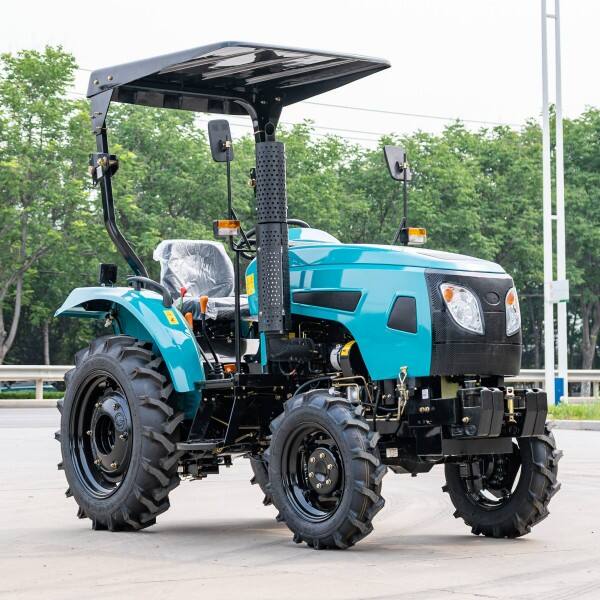
In today’s large-scale agricultural landscape, scale is both an opportunity and a risk. Farms operating 500 hectares, 2,000 hectares, or even 5,000 hectares face increasingly narrow planting and harvesting windows, rising labor costs, and greater pressure to maximize per-hectare output. Under these conditions, selecting the right tractor is not simply about buying a machine. It is about choosing a mobile hydraulic power platform and a long-term productivity partner that will influence operational efficiency for the next decade.
As a B2B agricultural machinery supply chain consultant with over 10 years of experience supporting mechanization projects across diverse farming regions, I have seen one consistent truth: the right tractor reduces cost per hectare, while the wrong one silently increases fuel bills, downtime, and operator fatigue. In this article, I will walk you through a structured decision-making framework tailored specifically for large-scale agricultural operations, drawing from real-world export project experience at Shandong Nuote Machinery Co., Ltd.
Assessing Your Operational Scale & Soil Conditions
Before discussing horsepower or hydraulic flow, the first step is diagnostic clarity. What is the true operational profile of your farm?
A 500-hectare farm with light sandy soil has fundamentally different requirements compared to a 5,000-hectare operation working dense clay with deep subsoiling needs. The draft force required for heavy clay can be 20–30% higher than that for sandy soil under similar working depths. If you plan to pull a 6-meter cultivator or a deep ripper operating at 35–45 cm, the traction demand rises exponentially.
For large-scale agricultural operations, tractors in the 200–300 HP range are typically the baseline. However, the principle I advise procurement managers to follow is simple: choose sufficient power, but reserve 10–15% torque margin. That torque reserve ensures the engine maintains stable RPM under peak resistance, preventing stalling and reducing long-term mechanical stress.
At Shandong Nuote Machinery Co., Ltd., our tractor product line covers a broad horsepower spectrum tailored for international large-scale farms, enabling buyers to match power output precisely to implement width and soil resistance. Our experience in export markets has shown that careful power matching can reduce fuel waste by up to 8–12% annually compared to overpowered or underpowered configurations.
Core Component Analysis: The Heart of Productivity
A tractor designed for large-scale agricultural operations must excel in three integrated systems: the engine, the hydraulic system, and the transmission with PTO. These components directly determine productivity per hour and total cost per hectare.
Engine: Beyond Horsepower
Horsepower is only part of the story. For heavy field operations, torque reserve and fuel efficiency define real-world performance.
Torque reserve, typically expressed as a percentage increase over rated torque, allows the engine to maintain rotational speed when encountering sudden resistance, such as compacted soil layers. A torque reserve of 30–40% is ideal for deep tillage operations. Without it, operators must downshift frequently, increasing fuel consumption and mechanical wear.
Modern high-pressure common rail systems and electronic fuel management play a crucial role in optimizing combustion efficiency. Intelligent fuel mapping ensures precise injection timing and pressure adjustment based on load. In our field evaluations, engines equipped with optimized common rail systems demonstrate measurable fuel savings compared to conventional injection systems, particularly in variable-load conditions.
At Shandong Nuote Machinery Co., Ltd., our high-horsepower tractor series integrates advanced combustion management technology engineered to balance torque output and fuel economy. In multi-season export deployments, customers have reported average fuel savings of approximately 8% under comparable working conditions. Over five years, this translates into significant cost reduction for large-scale agricultural operations.
When you operate 18 hours per day during a 7-day planting window, engine stability is not a feature—it is insurance.
Hydraulic System: The Muscle for Implements
Large-scale farms rarely use lightweight implements. Wide seeders, folding cultivators, heavy-duty subsoilers, and precision sprayers all depend on hydraulic responsiveness and lifting capacity.
Hydraulic flow rate, measured in liters per minute (L/min), directly affects implement response speed. For tractors above 200 HP, a hydraulic flow of at least 110 L/min is recommended. Closed-center load-sensing hydraulic systems provide variable flow based on demand, improving efficiency and reducing unnecessary energy loss compared to open-center systems.
Lift capacity is equally critical. A practical engineering rule is that rear three-point hitch lifting capacity should exceed 1.5 times the weight of the heaviest implement. For example, if your heaviest implement weighs 5,000 kg, the tractor should offer at least 7,500 kg of lift capacity to maintain stability and structural longevity.
Our tractors at Shandong Nuote Machinery Co., Ltd. are engineered with reinforced rear linkages and optimized hydraulic circuits designed for heavy implement compatibility. Detailed hydraulic performance curves and lifting capacity charts are provided to clients during the selection phase to ensure implement matching accuracy.
A mismatch between tractor and implement often results in inefficient field operation, slower folding cycles, and increased downtime. In contrast, a properly specified hydraulic system transforms the tractor into a high-efficiency field platform.
Transmission & PTO: Precision in Motion
In large-scale agricultural operations, time lost during gear shifting accumulates into measurable cost. Power-shift transmissions or continuously variable transmissions (CVT) allow operators to maintain consistent working speed without interrupting torque delivery.
For deep tillage, maintaining stable ground speed ensures uniform soil treatment. For transport tasks, smooth gear transition improves efficiency and safety. Advanced transmission systems reduce operator fatigue, which becomes significant during long working hours.
The PTO (Power Take-Off) system must also deliver stable and responsive power output. Implements such as balers, mowers, and fertilizer spreaders require consistent PTO speed to maintain output quality. PTO responsiveness and speed accuracy directly affect operational results.
Our tractor configurations support multiple PTO speed options and fast engagement systems, ensuring compatibility with diverse agricultural implements used in global markets. Stable PTO performance has proven especially valuable for export customers engaged in forage and precision application tasks.
Durability & Serviceability: The Unseen Costs
Large-scale agricultural operations demand high annual operating hours. Structural integrity and service accessibility are decisive factors.
Reinforced chassis construction and robust transmission housings reduce structural fatigue under continuous heavy loads. High-strength casting and precision machining improve durability in high-torque environments.
However, durability alone is insufficient without serviceability. Downtime cost in large farms can reach thousands of dollars per day during peak seasons. Therefore, maintenance point concentration, standardized components, and accessible service panels are essential.
At Shandong Nuote Machinery Co., Ltd., we maintain an international spare parts logistics network designed to support overseas clients efficiently. Even for export markets, we aim to ensure that critical spare parts can be dispatched within 72 hours. This supply chain reliability reduces operational risk for large-scale agricultural buyers.
Operator Comfort & Technology Integration
In large-scale agricultural operations, tractors often operate 12–20 hours per day. Operator fatigue directly impacts productivity and safety.
Cabin design should minimize noise, optimize visibility, and incorporate ergonomic seating systems. A well-designed control layout reduces repetitive strain and improves operational precision.
Equally important is technology integration. Modern tractors must be compatible with GPS navigation systems and ISOBUS communication protocols, allowing seamless integration with precision farming implements. Precision agriculture technologies reduce overlap, improve input efficiency, and increase yield per hectare.
Our tractors are engineered with ergonomic cabin structures and support dual-mode satellite navigation interfaces, making them ready for precision agriculture deployment across international markets.
Total Cost of Ownership (TCO) Analysis
For B2B procurement decisions, Total Cost of Ownership (TCO) outweighs initial purchase price.
TCO includes four primary components: initial investment, fuel consumption, maintenance cost, and resale value. Fuel expenses alone can represent 30–40% of lifetime operating cost in large-scale agricultural operations.
A tractor that saves 5–10% fuel annually may deliver significantly lower five-year operating cost, even if its purchase price is marginally higher. Similarly, durable construction and stable resale value further enhance lifecycle cost performance.
In our consultation process at Shandong Nuote Machinery Co., Ltd., we assist buyers in constructing simplified TCO projections based on their expected annual working hours and fuel prices. In many cases, tractors optimized for efficiency demonstrate lower five-year total expenditure compared to lower-cost alternatives.
Why Partner with Shandong Nuote Machinery Co., Ltd.?
Selecting the right tractor supplier requires evaluating manufacturing capability, quality control, and export experience.
Shandong Nuote Machinery Co., Ltd. has accumulated extensive experience in tractor manufacturing and international supply. Our production facilities are equipped with advanced machining systems and standardized quality inspection protocols. We provide configuration customization to comply with varying emission standards and regional agricultural requirements.
In overseas projects, our tractors have supported large-scale farms operating under demanding seasonal constraints. Through careful configuration planning and post-sales support, clients have successfully improved operational efficiency while controlling long-term cost.
We do not position ourselves merely as equipment exporters. Our role is to provide mechanization optimization solutions tailored to each farm’s scale, soil condition, and operational objective.
Conclusion: Make the Decision with Data, Not Guesswork
Choosing a tractor for large-scale agricultural operations is a complex engineering and financial decision. It requires systematic analysis of power requirements, hydraulic capacity, transmission efficiency, durability, and total lifecycle cost.
A properly selected tractor becomes a productivity multiplier. A poorly selected one becomes a hidden liability.
If you are planning to upgrade or expand your agricultural fleet, we invite you to contact our agricultural specialists at Shandong Nuote Machinery Co., Ltd. for a tailored consultation. With structured analysis and data-driven planning, your tractor investment can become a long-term competitive advantage in modern agriculture.
Table of Contents
- Assessing Your Operational Scale & Soil Conditions
- Core Component Analysis: The Heart of Productivity
- Durability & Serviceability: The Unseen Costs
- Operator Comfort & Technology Integration
- Total Cost of Ownership (TCO) Analysis
- Why Partner with Shandong Nuote Machinery Co., Ltd.?
- Conclusion: Make the Decision with Data, Not Guesswork