 EN
EN
Choosing the Right Diesel Powered Forklift for Heavy-Duty Industrial Operations
As a heavy industrial equipment consultant working closely with port operators, steel processing plants, timber yards, and large-scale logistics hubs, I consistently observe one common reality: material handling equipment in these environments is exposed to extreme mechanical stress, continuous duty cycles, abrasive dust, humidity, vibration, and heavy payloads that push design limits every day. Under such conditions, selecting a diesel powered forklift is not simply a procurement decision—it is a strategic investment in production continuity, operational safety, and long-term cost efficiency.
A properly selected diesel powered forklift must deliver sustained torque output, structural rigidity, thermal stability, and maintainability across thousands of operating hours. Industry studies indicate that in heavy-duty handling environments, unplanned downtime can reduce effective equipment utilization by 10–15% annually, directly impacting throughput and operating margins. This makes the technical selection of a diesel powered forklift critical for operational resilience rather than short-term cost savings.
At Shandong Nuote Machinery Co., Ltd., we design and manufacture heavy-duty material handling equipment specifically for industrial users who require dependable performance under harsh working conditions. Our engineering team focuses on real-world load cycles, component fatigue, thermal stress, and serviceability when developing each diesel powered forklift platform, ensuring long-term stability rather than superficial specifications.
Diesel Powered Forklift as a Core Productivity Asset in Heavy Environments
In port container yards, a diesel powered forklift may operate continuously for extended shifts moving multi-ton loads under variable weather and surface conditions. In steel plants, a diesel powered forklift handles hot coils, dense billets, and sharp-edged materials that impose high dynamic loads on the mast and chassis. In timber yards, a diesel powered forklift must maintain traction, stability, and hydraulic precision across uneven ground and dust-heavy environments.
In all these scenarios, a diesel powered forklift functions as a primary production asset rather than auxiliary equipment. The evaluation criteria therefore should emphasize continuous output capability, structural durability, environmental tolerance, and total cost of ownership instead of only rated lifting capacity or purchase price.
Continuous Power and Endurance of a Diesel Powered Forklift
The core advantage of a diesel powered forklift lies in its ability to deliver high torque at low engine speeds, enabling confident starts under load, stable climbing on ramps, and consistent performance during long duty cycles. When evaluating a diesel powered forklift, decision-makers should focus on maximum torque curves, torque availability at low RPM, and thermal management capability rather than peak horsepower figures alone.
Low-speed torque determines how effectively a diesel powered forklift accelerates with heavy loads without excessive clutch wear or drivetrain stress. High torque reserves also prevent engine overload during repeated lifting cycles and minimize premature component fatigue. In continuous industrial operations, stable torque output ensures predictable cycle times and reduced mechanical shock across the driveline.
Fuel adaptability and emissions compliance are equally important for a modern diesel powered forklift. Engines optimized for stable combustion across varying fuel quality reduce injector wear and combustion instability. Compliance with local emission standards supports regulatory continuity while maintaining operational efficiency. Well-integrated exhaust treatment systems should preserve power density and reliability without increasing maintenance complexity.
From a productivity standpoint, a diesel powered forklift with adequate torque reserve allows operators to maintain steady handling rhythms, reducing fatigue and improving load control accuracy. Over time, this consistency translates into lower operating stress on hydraulic systems, transmissions, and braking assemblies.
At Shandong Nuote Machinery Co., Ltd., every diesel powered forklift platform undergoes torque-load matching validation, thermal simulation, and endurance testing to confirm sustained power delivery across heavy industrial cycles.
Structural Reinforcement and Load Stability of a Diesel Powered Forklift
A heavy-duty diesel powered forklift must withstand repeated impact loads, torsional stress, and long-term metal fatigue. Structural reinforcement is therefore a fundamental evaluation dimension when selecting a diesel powered forklift for harsh environments.
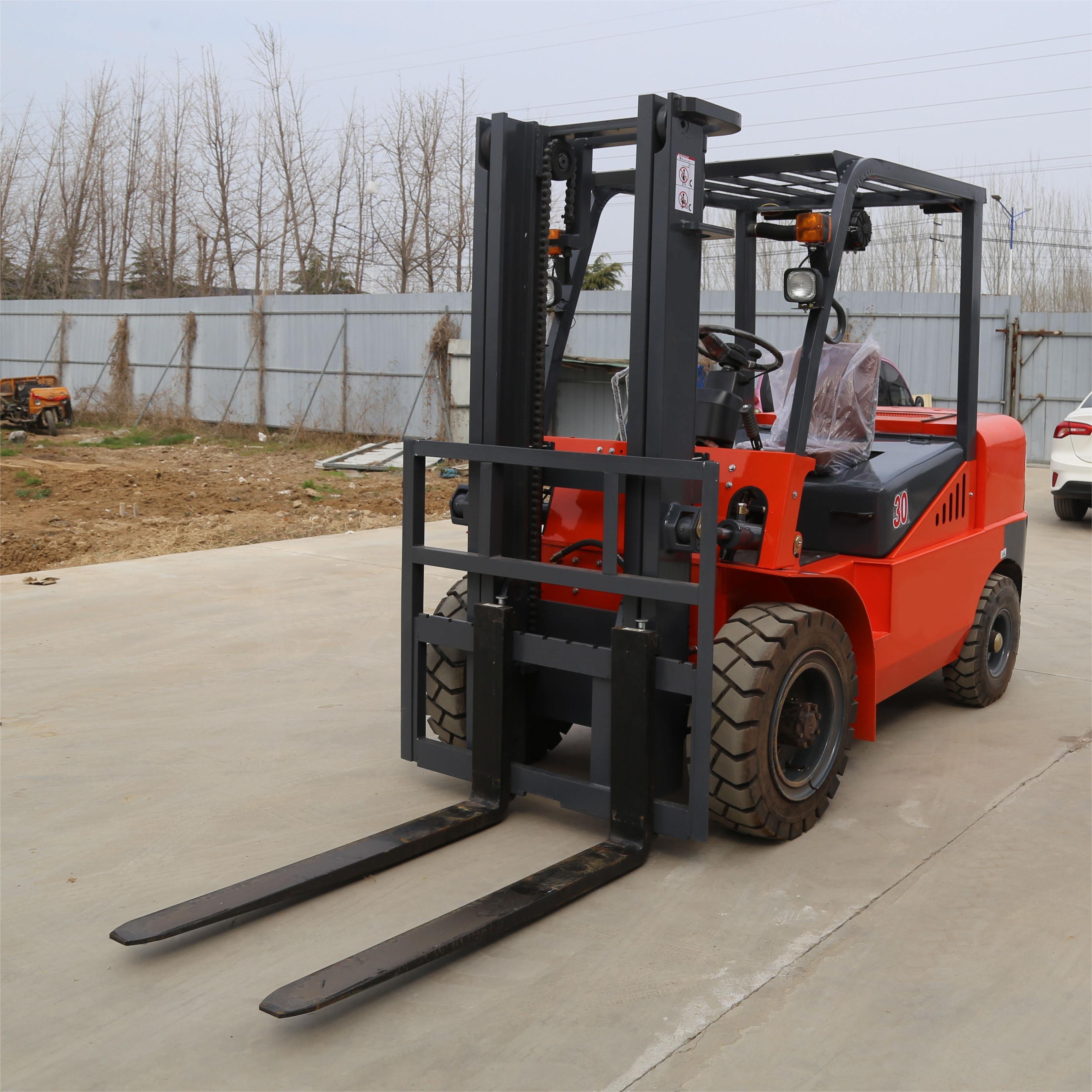
The mast assembly plays a central role in load stability. Thick-section steel profiles, reinforced carriage plates, optimized weld geometry, and controlled deflection characteristics ensure accurate vertical movement and minimal oscillation when handling heavy loads. A well-engineered diesel powered forklift mast reduces stress concentration, preserving alignment accuracy and extending service life.
The drive axle and steering axle must be matched to the maximum load spectrum rather than nominal rated capacity. Heavy-duty bearings, high-strength axle housings, and robust differential structures prevent premature wear under repetitive shock loads. A diesel powered forklift operating in steel handling environments experiences substantial lateral forces during turning and positioning, making axle rigidity a critical safety factor.
The chassis frame provides the mechanical backbone of a diesel powered forklift. Reinforced cross members, stress-relieved welding processes, and optimized load paths distribute forces evenly and minimize fatigue accumulation. Over thousands of cycles, this structural stability prevents micro-cracking and frame distortion that could compromise alignment and operator safety.
From a lifecycle perspective, structural robustness directly influences depreciation rate, resale value, and maintenance expenditure of a diesel powered forklift. A rigid frame reduces secondary failures across hydraulic hoses, electrical routing, and mounting interfaces.
Shandong Nuote Machinery Co., Ltd. integrates finite element analysis and long-cycle fatigue validation into every diesel powered forklift development program to ensure structural reliability under extreme operating conditions.
Reliability and Maintainability in Harsh Operating Conditions
A diesel powered forklift in heavy industry is often exposed to dust, moisture, vibration, corrosive particles, and temperature fluctuations. Electrical protection levels, sealing integrity, and cooling system capacity significantly influence uptime stability.
Critical electrical components should be protected against ingress of dust and water to prevent sensor drift, corrosion, and intermittent failures. Stable electrical reliability reduces diagnostic complexity and prevents unexpected shutdowns in a diesel powered forklift fleet.
Thermal management is another decisive factor. Radiator surface area, airflow optimization, and ease of cleaning determine whether a diesel powered forklift can maintain optimal operating temperatures under continuous heavy load. In dusty environments, quick-access cleaning interfaces help prevent overheating and thermal degradation.
Service accessibility strongly affects operating cost and maintenance compliance. Filters, lubrication points, and inspection ports should be logically arranged for fast daily inspections and routine servicing. A diesel powered forklift designed for maintenance efficiency reduces labor hours, shortens service intervals, and improves asset utilization.
Industry maintenance benchmarks show that simplified service access can reduce annual maintenance labor costs by up to 15–20% in heavy industrial fleets. Over the operational lifespan of a diesel powered forklift, this efficiency directly contributes to improved total cost of ownership.
At Shandong Nuote Machinery Co., Ltd., maintainability engineering is embedded into each diesel powered forklift layout to maximize uptime and service efficiency.
Matching a Diesel Powered Forklift to Your Operating Scenario
Different industrial environments impose different technical priorities on a diesel powered forklift. High-volume port handling favors high torque reserves and ultra-robust axles. Steel processing environments require exceptional structural reinforcement and thermal stability. Recycling and scrap handling demand superior cooling capacity and reinforced mast assemblies to withstand continuous shock loads.
Buyers evaluating a diesel powered forklift should request detailed stability data, structural reinforcement documentation, endurance validation results, and maintenance accessibility designs from suppliers. Understanding how a diesel powered forklift behaves under real operational stress is more valuable than nominal performance ratings.
Load spectrum analysis, duty cycle profiling, and environmental exposure mapping provide practical guidance when selecting a diesel powered forklift platform tailored to specific applications.
Partnering with Shandong Nuote Machinery Co., Ltd. for Heavy-Duty Solutions
Shandong Nuote Machinery Co., Ltd. specializes in the design and manufacturing of heavy-duty industrial equipment with a strong focus on operational reliability, structural integrity, and lifecycle performance. Our diesel powered forklift product portfolio is engineered to support long-duty cycles, high load stability, and simplified maintenance across demanding industrial sectors.
Each diesel powered forklift is configured with reinforced structural components, validated powertrain matching, and environment-adapted protection systems. Our engineering team provides application-specific configuration analysis, attachment integration support, and lifecycle service planning to optimize fleet performance.
Beyond equipment supply, we offer technical consultation, operating parameter optimization, preventive maintenance planning, and total cost of ownership evaluation. This holistic approach ensures that every diesel powered forklift deployed delivers predictable productivity and sustainable economic returns.
Organizations seeking a dependable diesel powered forklift solution can engage our technical specialists to receive customized selection guidance, performance modeling, and long-term support planning.
Conclusion: Investing in the Right Diesel Powered Forklift
Selecting a diesel powered forklift for heavy-duty industrial applications is fundamentally an investment in production stability, safety compliance, and long-term operational efficiency. Decision-makers should evaluate power endurance, structural reinforcement, environmental resilience, and maintainability as integrated performance dimensions rather than isolated specifications.
A properly engineered diesel powered forklift delivers consistent torque output, structural integrity under repeated shock loads, reliable thermal control, and efficient service accessibility. These characteristics collectively determine lifecycle value and operational predictability.
By applying professional evaluation standards and partnering with experienced manufacturers such as Shandong Nuote Machinery Co., Ltd., industrial operators can deploy a diesel powered forklift platform that supports continuous productivity, minimizes downtime risk, and delivers optimized total ownership economics for years of service.
If your operation demands a robust and dependable diesel powered forklift solution tailored to extreme industrial conditions, our engineering team is prepared to support your project with data-driven analysis and application-focused expertise.
Table of Contents
- Choosing the Right Diesel Powered Forklift for Heavy-Duty Industrial Operations
- Diesel Powered Forklift as a Core Productivity Asset in Heavy Environments
- Continuous Power and Endurance of a Diesel Powered Forklift
- Structural Reinforcement and Load Stability of a Diesel Powered Forklift
- Reliability and Maintainability in Harsh Operating Conditions
- Matching a Diesel Powered Forklift to Your Operating Scenario
- Partnering with Shandong Nuote Machinery Co., Ltd. for Heavy-Duty Solutions
- Conclusion: Investing in the Right Diesel Powered Forklift