 EN
EN

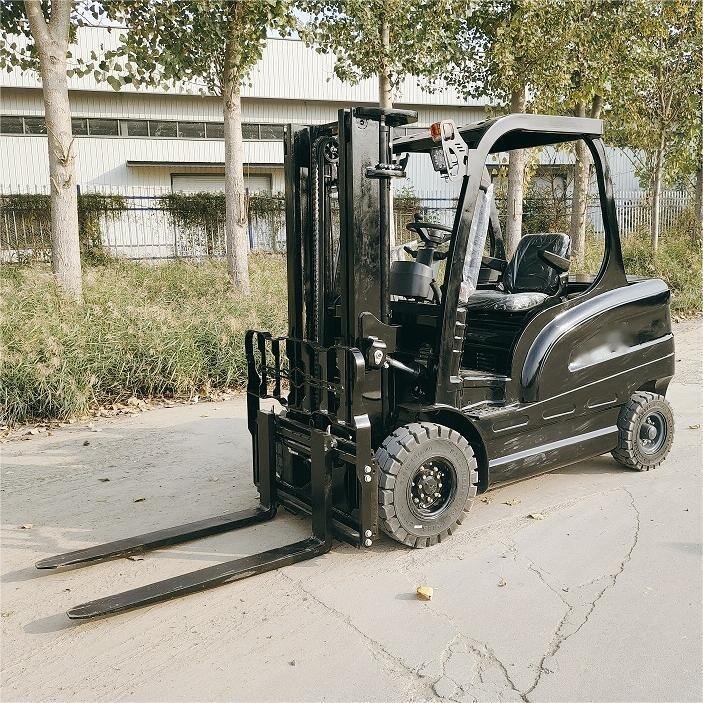
Heavy-Duty Operations as the Ultimate Equipment Test
Heavy industrial environments impose some of the most demanding performance requirements on material handling equipment. In ports, forklifts routinely move fully loaded containers under continuous duty cycles. In steel plants, massive coils and slabs generate extreme point loads and repetitive impact stress. In timber yards, forklifts operate on uneven ground, exposed to dust, moisture, and abrasive debris while stacking heavy logs for extended shifts. These conditions challenge every mechanical system simultaneously—powertrain durability, structural integrity, thermal stability, and long-term serviceability.
Industry safety and logistics organizations consistently report that equipment downtime in heavy-duty material handling environments leads to significant productivity losses and cascading operational delays. This reality underscores that selecting a diesel forklift for these applications is not a routine procurement decision. Instead, it represents an investment in a production-critical asset that must deliver stable power output, structural resilience, and predictable total cost of ownership throughout its operating lifecycle.
From the perspective of a heavy industrial equipment application consultant, the objective is to identify a diesel forklift that can sustain continuous high-load operation without compromising safety, efficiency, or long-term reliability. The evaluation framework should therefore focus on power delivery characteristics, reinforced mechanical architecture, environmental durability, and maintainability rather than headline price alone.
Powertrain Fundamentals and Sustained Output Capability
At the core of any high-performance diesel forklift lies its engine and drivetrain configuration. Heavy-duty lifting and transport tasks demand consistent torque availability, especially during low-speed acceleration, ramp climbing, and load positioning. Peak horsepower figures alone provide limited insight into real-world performance. Instead, procurement teams should evaluate the torque curve profile and engine responsiveness under sustained load.
A well-engineered diesel forklift delivers high torque at lower engine speeds, allowing smooth starts with heavy payloads and reducing mechanical stress on transmission components. Stable combustion efficiency and optimized fuel injection systems contribute to predictable power delivery while controlling fuel consumption and emissions. In modern industrial markets, compliance with advanced emission standards is increasingly required to meet regulatory and workplace safety expectations. A compliant diesel forklift integrates exhaust after-treatment technologies without sacrificing operational reliability or service accessibility.
For heavy-duty applications, the practical value of strong power delivery lies in maintaining consistent cycle times even when handling multi-ton loads. A properly specified diesel forklift prevents performance degradation during long operating shifts, avoids excessive engine strain, and minimizes the risk of overheating or premature wear. This stability directly supports higher throughput and reduced unscheduled maintenance.
Structural Reinforcement and Critical Component Engineering
Beyond engine performance, the structural foundation of a diesel forklift determines its ability to withstand repetitive heavy loading and shock exposure. The mast assembly, drive axle, steering axle, and chassis frame collectively absorb dynamic forces generated during lifting, braking, and cornering with heavy cargo.
High-quality diesel forklift designs incorporate reinforced mast profiles with optimized steel thickness and controlled deflection characteristics. Precise welding processes and stress-distribution geometry enhance long-term rigidity while maintaining lifting accuracy. Drive axles and steering systems must be rated for continuous high-load cycles, providing reliable traction and steering precision under extreme payload conditions. A rigid chassis frame prevents torsional deformation, preserving alignment and extending component lifespan.
In demanding industrial environments, these structural characteristics directly influence operational safety and equipment longevity. A properly reinforced diesel forklift maintains stable load control, reduces fatigue-induced cracking risk, and supports predictable service intervals. Over the full lifecycle, structural robustness protects capital investment and stabilizes fleet planning budgets.
Reliability and Maintainability in Harsh Industrial Environments
Heavy-duty operations frequently expose equipment to dust, humidity, temperature extremes, and corrosive contaminants. In ports and steel facilities, airborne particles and moisture accelerate component wear and compromise electrical systems. In lumber yards, debris accumulation can obstruct cooling airflow and contaminate lubrication pathways.
A reliable diesel forklift incorporates protective sealing, corrosion-resistant materials, and optimized airflow management to maintain stable operation in such environments. Electrical connectors, sensors, and control units should be shielded against moisture ingress and vibration stress. Cooling systems must offer sufficient thermal margin to handle continuous load cycles without overheating while remaining easy to clean and inspect.
Maintainability further determines long-term uptime. Daily inspection points, filter access, lubrication fittings, and diagnostic interfaces should be ergonomically positioned for rapid servicing. A service-friendly diesel forklift reduces maintenance labor time, minimizes human error, and supports predictive maintenance strategies. These factors collectively reduce total cost of ownership and enhance operational predictability.
Matching Diesel Forklift Specifications to Application Profiles
Not all heavy-duty operations impose identical performance priorities. Port logistics environments often require a diesel forklift with exceptionally high torque reserves and heavy-duty axles to sustain continuous container handling. Thermal capacity and braking stability are critical under repeated high-load cycles.
High-altitude or high-temperature regions demand careful evaluation of engine derating characteristics and cooling system redundancy. A properly configured diesel forklift compensates for reduced air density and ambient heat while maintaining safe operating margins.
Corrosive environments such as marine terminals introduce additional material protection considerations. Surface coatings, sealed bearings, and corrosion-resistant fasteners extend service life and preserve mechanical integrity. Aligning a diesel forklift configuration with site-specific operating stress factors ensures optimal reliability and lifecycle economics.
Total Cost of Ownership as a Strategic Evaluation Metric
Procurement decisions should extend beyond acquisition price to include long-term operating economics. Fuel efficiency, maintenance intervals, spare parts availability, component lifespan, and resale value collectively define the true financial impact of a diesel forklift investment.
Independent logistics studies suggest that lifecycle operating cost can exceed initial purchase cost by several multiples over extended service periods. Selecting a high-quality diesel forklift with predictable service performance reduces downtime exposure and stabilizes operational budgets. Consistent uptime improves asset utilization and supports continuous production flow in critical industrial operations.
Partnering with Shandong Nuote Machinery Co., Ltd. for Heavy-Duty Solutions
At Shandong Nuote Machinery Co., Ltd., we specialize in delivering engineered material handling solutions designed for the most demanding industrial environments. Our heavy-duty diesel forklift product lines emphasize reinforced structural architecture, high-torque powertrains, and optimized cooling systems to support continuous high-load operation.
Our engineering team conducts detailed application analysis to match engine configuration, axle rating, mast geometry, and attachment systems to specific customer operating profiles. Each diesel forklift undergoes performance validation and durability testing to ensure compliance with safety standards and long-term reliability expectations.
Beyond equipment supply, Shandong Nuote Machinery Co., Ltd. provides technical consulting, spare parts assurance, maintenance planning support, and operator training services. This integrated solution approach helps customers maximize uptime, control lifecycle cost, and maintain operational consistency across diverse industrial environments.
Customers are invited to request detailed technical documentation, load charts, and customized total cost of ownership analysis. On-site demonstrations and application evaluations can be arranged to validate real-world diesel forklift performance under site-specific conditions.
Conclusion: Building a Reliable Foundation for Heavy Industrial Material Handling
Selecting a diesel forklift for heavy-duty industrial applications is fundamentally an investment in production continuity and operational resilience. Power delivery consistency ensures productivity under extreme loads. Structural reinforcement safeguards long-term mechanical integrity. Environmental durability protects uptime in harsh conditions. Maintainability and lifecycle economics stabilize operational budgets.
By applying professional evaluation standards and collaborating with experienced solution providers such as Shandong Nuote Machinery Co., Ltd., organizations can confidently deploy a diesel forklift that delivers sustained performance, minimized risk exposure, and long-term value for their most critical material handling operations.
Table of Contents
- Heavy-Duty Operations as the Ultimate Equipment Test
- Powertrain Fundamentals and Sustained Output Capability
- Structural Reinforcement and Critical Component Engineering
- Reliability and Maintainability in Harsh Industrial Environments
- Matching Diesel Forklift Specifications to Application Profiles
- Total Cost of Ownership as a Strategic Evaluation Metric
- Partnering with Shandong Nuote Machinery Co., Ltd. for Heavy-Duty Solutions
- Conclusion: Building a Reliable Foundation for Heavy Industrial Material Handling