 EN
EN

Urban Construction as a High-Constraint Operating Environment
Urban construction projects operate under far more complex conditions than traditional infrastructure or open-field developments. Contractors must complete excavation, utility installation, road rehabilitation, landscaping, and maintenance tasks within limited physical space while simultaneously complying with environmental regulations, traffic management policies, and community disturbance controls. Noise restrictions, emission standards, pedestrian safety requirements, and permit limitations are increasingly shaping how projects are planned and executed.
According to publicly available industry research from infrastructure development authorities and construction associations, a substantial percentage of urban project delays stem from inadequate equipment mobility, improper machine sizing, and environmental non-compliance. These challenges highlight that equipment selection is no longer a purely operational choice; it has become a strategic decision affecting schedule reliability, regulatory exposure, and long-term profitability. In this context, selecting the right compact wheeled excavator is essential for contractors seeking consistent performance in dense metropolitan environments.
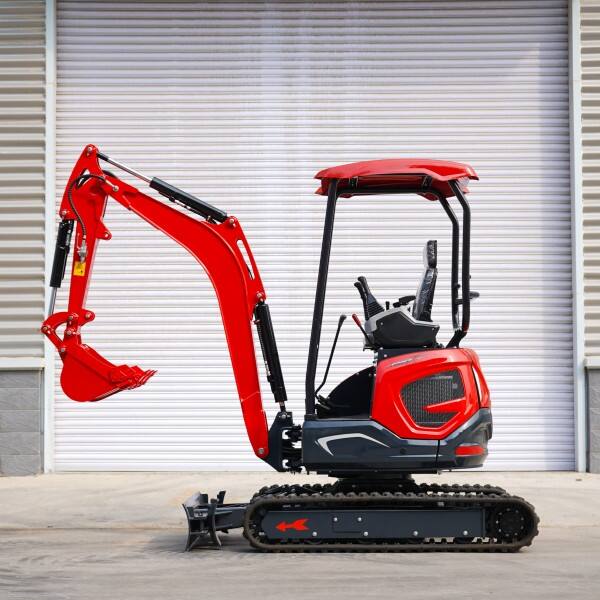
A modern compact wheeled excavator is not simply a downsized version of a conventional excavator. It represents a system-level solution designed to balance maneuverability, environmental responsibility, precision control, and multi-function capability. When properly selected and configured, a compact wheeled excavator enables contractors to deliver projects efficiently while maintaining compliance and minimizing disruption to surrounding communities.
Why Mobility Defines Productivity in Urban Job Sites
Mobility is the first operational pillar when evaluating a compact wheeled excavator. Unlike tracked machines that often require transport trailers and additional permitting, a road-legal compact wheeled excavator can travel directly between work locations. This capability significantly reduces non-productive downtime, especially for municipal service contracts, pipeline repairs, and short-cycle urban assignments where rapid response is critical.
The compact structural design further enhances mobility performance. Optimized machine width allows a compact wheeled excavator to pass through narrow streets, alleyways, and access corridors without requiring additional site preparation. Controlled overall height improves access to underground garages, tunnels, and covered facilities. A short tail swing radius allows stable operation close to walls, fences, and existing buildings, reducing collision risk and improving operator confidence.
In practical urban applications, this level of maneuverability allows a compact wheeled excavator to operate efficiently without occupying excessive public space or disrupting traffic flow. Contractors benefit from faster site setup, improved scheduling flexibility, and higher daily utilization rates. Over the equipment lifecycle, the mobility advantage of a compact wheeled excavator directly contributes to reduced operating costs and stronger asset return.
Managing Environmental Impact and Community Expectations
Environmental performance is an equally critical dimension when selecting a compact wheeled excavator for city-based projects. Municipal authorities enforce strict limits on noise emissions, exhaust pollutants, and vibration levels to protect residents, businesses, and public health. Failure to comply can result in fines, operational restrictions, or project shutdowns.
Modern compact wheeled excavator platforms incorporate low-noise engine architectures, optimized hydraulic systems, and vibration isolation technologies that significantly reduce acoustic output during operation. Lower noise levels enable contractors to work within permitted time windows while minimizing the risk of community complaints. This becomes especially important in residential districts, healthcare facilities, and commercial centers where disturbance tolerance is minimal.
Emission compliance further influences equipment eligibility in urban zones. A compliant compact wheeled excavator that meets advanced emission standards or integrates alternative power options allows contractors to access environmentally sensitive projects and low-emission zones. Reduced exhaust output improves air quality and supports corporate sustainability commitments, which increasingly influence procurement decisions among public-sector and international clients.
From a business perspective, environmentally responsible operation strengthens brand reputation, improves regulatory alignment, and expands project eligibility. Investing in a compliant compact wheeled excavator therefore protects both short-term project continuity and long-term market positioning.
Precision, Versatility, and Operational Efficiency in Dense Infrastructure
Urban construction rarely involves a single repetitive task. Instead, operators must switch between trenching, breaking, lifting, drilling, backfilling, and material handling within constrained spaces and near existing utilities. A well-designed compact wheeled excavator supports this complexity through fast attachment change systems and flexible hydraulic configurations, enabling one machine to perform multiple functions efficiently.
Precision control is equally essential. Advanced hydraulic modulation, proportional joystick control, and load-sensitive systems allow a compact wheeled excavator to execute smooth and accurate movements even in congested underground utility corridors. Accurate positioning reduces the risk of damaging pipelines, cables, and adjacent structures, which can otherwise result in costly repairs and service disruptions.
Operational efficiency emerges from the integration of these capabilities. A versatile compact wheeled excavator reduces the number of machines required on-site, simplifies logistics planning, and lowers overall fleet investment. Contractors can complete tasks faster, with fewer repositioning cycles and reduced safety exposure, improving both productivity and compliance outcomes.
Building a Practical Selection Framework for Procurement Teams
Selecting the right compact wheeled excavator requires a structured evaluation approach rather than reliance on nominal specifications alone. Buyers should assess real operating dimensions, road compliance certification, turning radius, and transport flexibility to ensure compatibility with their typical job sites. Noise emission data and verified environmental certification provide objective insight into regulatory compliance readiness.
Attachment compatibility, hydraulic responsiveness, and operator ergonomics should also be validated through demonstrations or field trials whenever possible. A compact wheeled excavator that performs well in controlled conditions must also demonstrate stable performance in real-world confined environments. Transparent documentation, long-term service support capability, and spare parts availability further influence total lifecycle cost and uptime reliability.
A disciplined procurement methodology reduces operational risk and ensures that the selected compact wheeled excavator aligns with long-term business objectives rather than short-term cost considerations.
Partnering with Shandong Nuote Machinery Co., Ltd. for Urban Equipment Solutions
At Shandong Nuote Machinery Co., Ltd., we focus on delivering professional construction equipment solutions engineered specifically for complex urban operating environments. Our compact wheeled excavator product portfolio covers multiple size classes and configuration options, supporting a wide range of applications from municipal maintenance and landscaping to utility installation and commercial construction.
Our engineering team emphasizes balanced machine geometry, stable hydraulic performance, environmental compliance, and long-term durability. Each compact wheeled excavator is validated through structured testing processes to ensure reliable mobility, precision control, and regulatory alignment. We also provide configuration consulting based on customer project profiles, helping contractors select the most suitable attachment combinations, operating parameters, and service strategies.
Beyond equipment delivery, Shandong Nuote Machinery Co., Ltd. offers technical support, spare parts assurance, and lifecycle service planning to ensure consistent operational availability. Our objective is to build long-term partnerships rather than transactional sales relationships, supporting our clients’ sustainable growth in competitive urban markets.
Contractors are invited to schedule expert consultations to evaluate application scenarios and receive customized equipment recommendations. On-site demonstrations can also be arranged to validate compact wheeled excavator performance under real operating constraints.
Conclusion: Investing in Sustainable Urban Construction Capability
Selecting a compact wheeled excavator for urban construction projects represents a long-term investment in productivity, compliance, and operational resilience. Mobility enables rapid deployment and high utilization. Environmental performance ensures regulatory alignment and community acceptance. Precision and versatility maximize operational efficiency while minimizing risk.
By applying professional evaluation standards and partnering with experienced solution providers such as Shandong Nuote Machinery Co., Ltd., contractors can confidently deploy a compact wheeled excavator that supports consistent project delivery in demanding city environments. As urban infrastructure continues to expand and regulatory expectations intensify, disciplined equipment selection will remain a decisive competitive advantage for forward-looking construction enterprises.
Table of Contents
- Urban Construction as a High-Constraint Operating Environment
- Why Mobility Defines Productivity in Urban Job Sites
- Managing Environmental Impact and Community Expectations
- Precision, Versatility, and Operational Efficiency in Dense Infrastructure
- Building a Practical Selection Framework for Procurement Teams
- Partnering with Shandong Nuote Machinery Co., Ltd. for Urban Equipment Solutions
- Conclusion: Investing in Sustainable Urban Construction Capability