 EN
EN

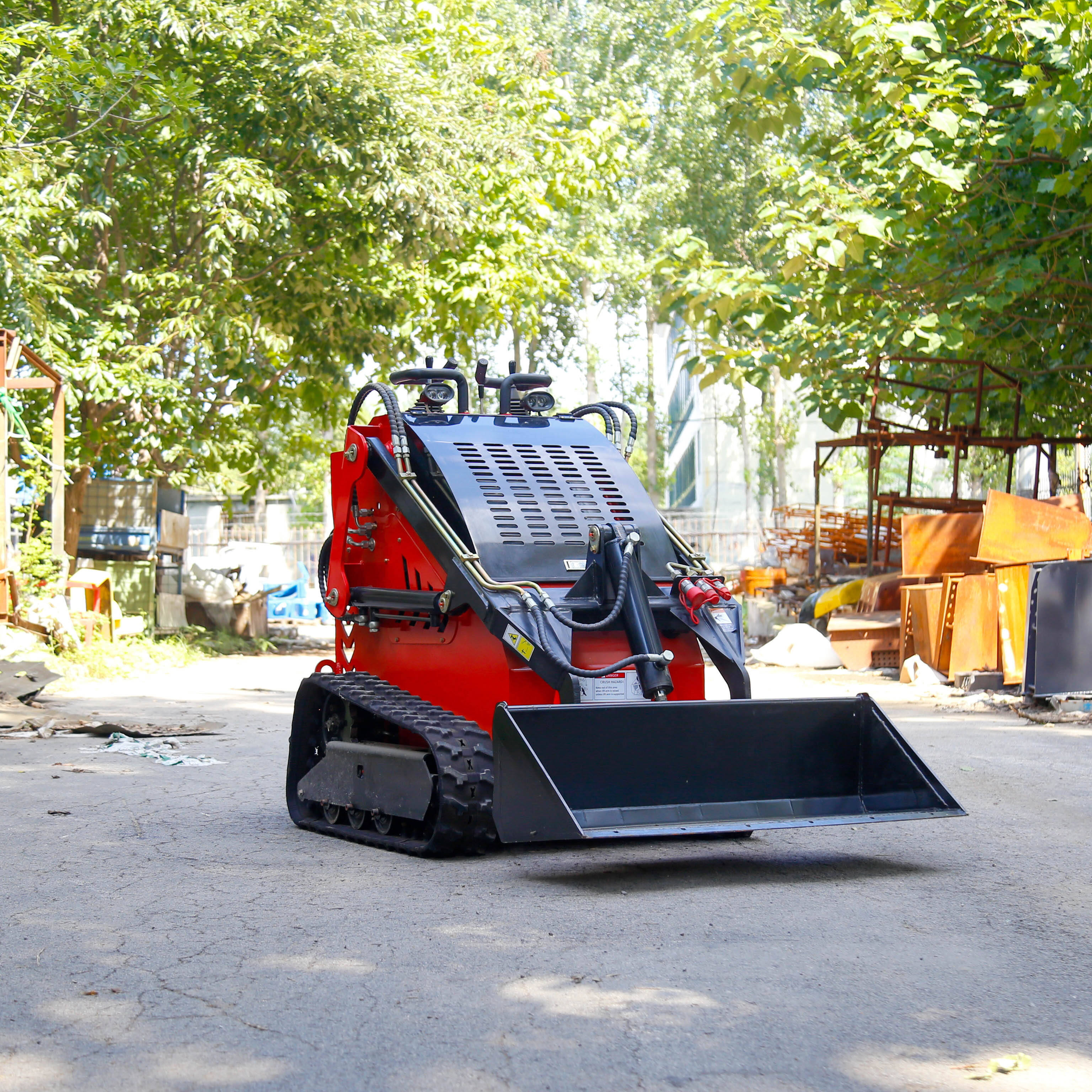
Construction and landscaping projects share a common operational reality: limited space, diverse task requirements, and constantly changing ground conditions. Whether the job involves material handling on a tight construction site, grading soil for landscape preparation, or operating attachments for demolition and trenching, equipment must deliver both flexibility and reliability. In these environments, inefficient machine selection can lead to reduced productivity, increased safety risk, and unnecessary operating costs.
Industry studies published by construction equipment associations indicate that compact equipment utilization continues to grow as urban density increases and project schedules compress. Among compact machines, the skid steer loader remains one of the most versatile platforms for contractors who require a single machine capable of performing multiple tasks across different job phases. However, not every skid steer loader delivers the same level of adaptability, hydraulic performance, or long-term durability.
From the perspective of a project equipment solution consultant, selecting the right skid steer loader requires evaluating how well the machine integrates into real job site conditions and how effectively it expands operational capability through attachments and system design. The objective is not simply to purchase a machine, but to deploy a productivity asset that consistently supports project efficiency and operational continuity.
Size, Power, and Accessibility: Establishing a Strong On-Site Foundation
The first critical dimension when evaluating a skid steer loader is its physical compatibility with the job site. Many construction and landscaping environments impose strict access limitations, such as narrow gates, low-clearance structures, and confined maneuvering areas. A properly sized skid steer loader must pass through standard access points without requiring additional site modification or dismantling of temporary barriers.
Machine width and overall height directly influence transport flexibility and indoor usability. Contractors who frequently work inside warehouses, parking facilities, or residential compounds benefit from a compact skid steer loader that maintains sufficient lifting capacity while preserving low clearance capability. At the same time, weight distribution and wheelbase design influence stability when lifting heavy loads or operating on uneven surfaces.
Power matching is equally important. A skid steer loader must deliver sufficient engine output and hydraulic flow to support both base machine functions and auxiliary attachment operation. Applications such as cold planing, hydraulic drilling, or heavy material handling demand higher hydraulic throughput and stable pressure control. Selecting an underpowered skid steer loader often results in slow cycle times, premature component wear, and reduced attachment effectiveness.
Ground condition adaptability further differentiates performance. Wheeled configurations typically provide faster travel speed and lower rolling resistance on paved or compacted surfaces, making them suitable for concrete yards and hardscape projects. Track-based configurations offer improved traction and reduced ground pressure, enabling a skid steer loader to operate efficiently on muddy terrain, turf surfaces, and sensitive landscaping environments where surface preservation is critical. Matching undercarriage type to primary job conditions ensures consistent productivity and minimizes surface damage.
Attachment Ecosystem and Quick-Coupling Capability: Unlocking Core Productivity
The true value of a skid steer loader lies in its ability to function as a multi-purpose tool carrier rather than a single-task machine. A strong attachment ecosystem transforms a skid steer loader into a platform capable of excavation, grading, material handling, snow removal, drilling, and demolition—all within a compact footprint.
Compatibility with widely adopted quick-coupling standards ensures investment flexibility and protects long-term asset value. A skid steer loader that supports standardized attachment interfaces allows contractors to expand functionality without being locked into proprietary systems. This interoperability simplifies fleet planning and reduces total cost of ownership over the machine lifecycle.
Hydraulic integration plays a decisive role in attachment performance. Heavy-duty tools such as hydraulic breakers, trenchers, augers, and mulchers require stable auxiliary flow rates and responsive pressure control. A well-engineered skid steer loader provides balanced hydraulic output that maintains attachment efficiency while preserving system longevity. Inadequate hydraulic matching can limit attachment effectiveness and increase maintenance burden.
Equally important is the availability of attachment supply and technical support. Reliable access to quality attachments, spare parts, and configuration guidance ensures that a skid steer loader remains productive across evolving project requirements. Strategic attachment planning enhances operational scalability and strengthens overall fleet utilization efficiency.
Operator Control, Comfort, and Maintainability: Sustaining Daily Productivity
Operator performance directly impacts equipment productivity and safety. A modern skid steer loader should provide excellent visibility, intuitive control layout, and ergonomic seating to reduce fatigue during extended operating hours. Clear sightlines to the attachment and surrounding workspace improve precision and reduce collision risk, especially in congested job sites.
Cabin sealing, climate control, and vibration isolation contribute to operator comfort and long-term health protection. Comfortable operators maintain higher concentration levels and deliver more consistent operational accuracy. Over the lifespan of a skid steer loader, ergonomic quality significantly influences workforce retention and overall project efficiency.
Maintainability is another essential dimension. Daily inspection points such as engine oil, hydraulic filters, cooling systems, and grease fittings should be easily accessible without extensive disassembly. Simplified maintenance procedures improve uptime and reduce service labor cost. A skid steer loader designed for serviceability supports higher fleet availability and predictable operating budgets.
Practical Selection Strategies for Construction and Landscaping Applications
Construction environments typically place higher emphasis on lifting capacity, hydraulic output, structural durability, and protective features. A construction-oriented skid steer loader must withstand repetitive heavy loading cycles, attachment-intensive operation, and abrasive material exposure while maintaining stable performance.
Landscaping applications prioritize surface protection, precision maneuverability, and attachment compatibility for soil preparation, turf maintenance, and material placement. A compact, well-balanced skid steer loader with appropriate undercarriage configuration minimizes ground disturbance while delivering accurate control in finished landscapes.
Understanding the dominant operating profile allows buyers to optimize specification selection rather than overinvesting in unnecessary capacity or compromising essential functionality. A properly matched skid steer loader delivers higher utilization and stronger return on investment across both sectors.
The Value of Partnering with a Professional Equipment Supplier
Successful equipment deployment extends beyond the initial purchase transaction. Professional suppliers provide comprehensive support covering application analysis, configuration optimization, operator training, spare parts supply, and lifecycle service planning. This integrated approach reduces operational risk and improves long-term asset reliability.
At Shandong Nuote Machinery Co., Ltd., we specialize in delivering construction equipment solutions designed to meet diverse project demands. Our skid steer loader portfolio supports multiple capacity ranges and configuration options suitable for both construction and landscaping applications. Each skid steer loader undergoes systematic performance validation to ensure durability, hydraulic stability, and operational safety.
Our technical team works closely with customers to analyze application scenarios, recommend optimized attachment combinations, and provide ongoing technical support. Beyond equipment supply, Shandong Nuote Machinery Co., Ltd. offers spare parts assurance and service coordination to maintain consistent equipment uptime throughout the operational lifecycle.
Contractors are encouraged to engage our specialists for customized equipment evaluation and on-site demonstrations to verify how a skid steer loader performs under real working conditions.
Conclusion: Building Sustainable Productivity Through Smart Equipment Selection
Selecting the right skid steer loader is a strategic investment in operational efficiency, workforce safety, and long-term project competitiveness. Evaluating size compatibility, power matching, attachment scalability, operator ergonomics, and supplier support ensures that the selected skid steer loader delivers consistent performance across diverse job site conditions.
By adopting a structured selection methodology and partnering with experienced solution providers such as Shandong Nuote Machinery Co., Ltd., contractors can confidently deploy a skid steer loader that maximizes productivity, minimizes operational risk, and supports sustainable business growth in both construction and landscaping markets.
Table of Contents
- Size, Power, and Accessibility: Establishing a Strong On-Site Foundation
- Attachment Ecosystem and Quick-Coupling Capability: Unlocking Core Productivity
- Operator Control, Comfort, and Maintainability: Sustaining Daily Productivity
- Practical Selection Strategies for Construction and Landscaping Applications
- The Value of Partnering with a Professional Equipment Supplier
- Conclusion: Building Sustainable Productivity Through Smart Equipment Selection