 EN
EN

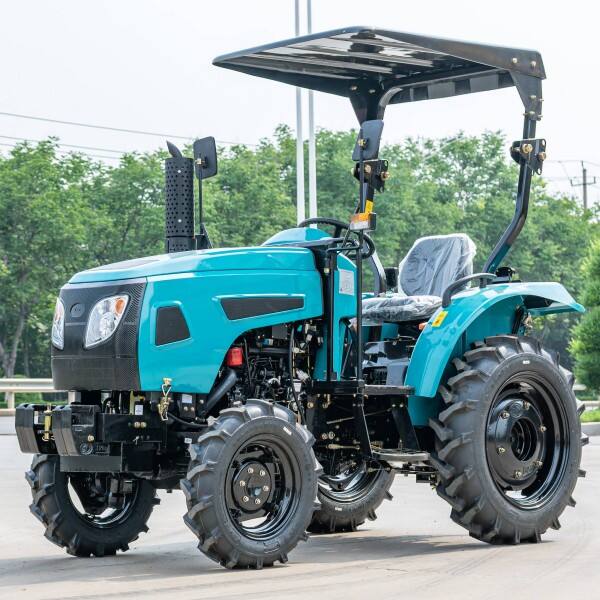
A tractor’s horsepower rating may look impressive on paper, but horsepower alone does not produce results in the field. Every unit of engine power must ultimately be transferred to the soil through the wheels. If the tractor wheel system is improperly selected, traction is lost, fuel is wasted, soil structure is damaged, and operational efficiency declines.
After more than a decade working specifically with agricultural chassis systems and wheel-hub matching technology, one conclusion remains consistent: choosing the wrong wheels is equivalent to wasting engine power.
This article explains how tractor wheels influence agricultural efficiency and durability, and what professional buyers should evaluate when selecting rim and tire configurations for long-term performance.
Why Wheels Matter: The Ground Connection
Tractor wheels influence three measurable performance indicators: traction efficiency, soil compaction, and fuel consumption.
When slip ratio exceeds optimal levels—typically recommended at around 8–15% for field operations—fuel efficiency decreases sharply. Industry research indicates that reducing wheel slip by just 5% can improve fuel efficiency by several percentage points, depending on soil condition and implement load. Over a full planting or harvesting season, that efficiency gain translates into significant cost savings.
Excessive slip not only wastes diesel; it accelerates tire wear and increases mechanical stress on driveline components. At the same time, improper tire width or inflation pressure can cause excessive soil compaction. Compacted soil restricts root growth and water infiltration, negatively affecting long-term yield.
In short, tractor wheels are not passive components—they directly determine how effectively power is converted into forward motion and sustainable productivity.
At Shandong Nuote Machinery Co., Ltd., we regularly assist clients in evaluating whether their current wheel configurations are optimized for their soil and workload conditions. In many cases, proper rim and tire selection can unlock measurable fuel savings without changing the tractor itself.
Rim Construction: The Backbone of Durability
The wheel rim carries the entire static and dynamic load of the tractor, including implement weight and shock loads from uneven terrain. Rim construction is therefore foundational to durability.
Material Strength and Load Resistance
High-strength steel rims offer significantly greater resistance to deformation compared to standard-grade steel. Under heavy draft operations—such as deep plowing or subsoiling—rims endure repeated torsional stress and impact forces. Inferior materials can lead to micro-cracking, weld fatigue, or permanent deformation.
Over time, even slight rim deformation can disrupt wheel alignment, increase tire wear, and compromise safety.
At Shandong Nuote Machinery Co., Ltd., our rims are manufactured using high-tensile structural steel engineered specifically for agricultural load cycles. Load-bearing capacity is validated through stress and fatigue testing to ensure long-term structural integrity under heavy-duty conditions.
Manufacturing Precision and Welding Technology
Construction method is equally critical. Automated robotic welding systems provide consistent penetration depth and structural uniformity. In contrast, inconsistent manual welding may lead to weak points that fail under repeated stress.
Precision manufacturing also affects dynamic balance. Poorly balanced rims cause vibration at transport speeds, increasing wear on hubs, bearings, and suspension components.
Our production lines utilize automated welding and strict quality control protocols to maintain structural consistency and balance accuracy across every rim batch.
Tubeless Rim Advantages
Modern tubeless rims improve heat dissipation and reduce maintenance frequency. In the event of puncture, air leakage is slower compared to tube-type configurations, minimizing sudden pressure loss and downtime.
For high-hour operations, tubeless configurations often represent a superior long-term investment due to reduced maintenance intervention and enhanced safety.
Tire Selection: Tuning Traction and Efficiency
If the rim provides structure, the tire defines soil interaction. Selecting the correct tire type and tread pattern directly influences traction performance and soil preservation.
Tread Pattern and Application Matching
Different tread patterns serve different operational environments.
R-1 tread designs are standard agricultural tires suitable for general fieldwork.
R-1W deep-lug variants are engineered for wet or clay-heavy soils, offering improved penetration and grip.
R-3 turf tires prioritize minimal ground disturbance, making them suitable for grassland or specialty operations.
R-4 industrial patterns provide balanced performance between field and construction use.
Choosing the wrong tread type increases slip rate or unnecessarily compacts soil. Deep-lug tires in sandy soil may create excessive disturbance, while shallow patterns in clay soil can result in traction loss.
When consulting clients, we always request soil type, dominant crop system, and implement weight to ensure proper tread recommendation.
Radial vs. Bias Construction
Tire structure also matters. Radial tires offer larger contact patches and more flexible sidewalls, distributing weight more evenly and reducing soil compaction. They typically provide longer service life and improved fuel efficiency due to lower rolling resistance.
Bias-ply tires are generally less expensive and structurally robust for certain applications but may generate higher soil pressure and shorter tread life under heavy load.
For large-scale commercial farms prioritizing yield optimization and long-term soil health, radial configurations often provide measurable economic benefits despite higher upfront cost.
At Shandong Nuote Machinery Co., Ltd., we provide configuration guidance to ensure tire structure aligns with the operational intensity and soil preservation strategy of each farm.
Dual Wheels: Doubling Down on Performance
In large-scale farming, dual wheel configurations are widely adopted to increase traction while reducing soil compaction.
By effectively doubling the contact surface area, dual wheels lower ground pressure and improve draft force transmission. This configuration is particularly beneficial for deep tillage, pre-plant soil preparation, and heavy seeding operations.
However, dual setups require proper engineering support. High-strength extended bolts and reinforced hubs are mandatory to ensure safe load distribution. Improper installation or inadequate hardware can result in loosening, structural fatigue, or catastrophic failure.
Shandong Nuote Machinery Co., Ltd. provides engineered dual-wheel-compatible rim systems designed to maintain stability under sustained heavy load. For customers considering dual retrofits, we offer full technical guidance to ensure safe installation and compliance with load specifications.
Dual wheels should never be an improvised modification—they must be a structurally validated upgrade.
The Value Proposition: Why Invest in Quality Wheels
Wheel systems represent a relatively small portion of total tractor purchase price but exert disproportionate influence on operational cost.
A high-quality wheel assembly may require higher initial expenditure. However, benefits accumulate through:
-
Reduced fuel consumption via optimized traction
-
Lower slip-induced tire wear
-
Reduced mechanical stress on drivetrain components
-
Extended service intervals
-
Improved soil structure preservation
Soil compaction deserves particular attention. Agricultural soil is a long-term productivity asset. Compacted soil layers can reduce yield potential for multiple seasons. Investing in optimized wheel and tire configurations contributes not only to short-term efficiency but also to sustained land productivity.
From a Total Cost of Ownership perspective, superior wheel systems often reduce cumulative cost over multiple seasons.
At Shandong Nuote Machinery Co., Ltd., we can assist clients with simple ROI modeling to quantify how improved traction efficiency and reduced compaction can translate into measurable savings.
Getting the Right Fit: Ensuring Compatibility
Even the best wheel system delivers value only if it fits precisely.
Critical compatibility parameters include:
-
Bolt pattern (PCD)
-
Center bore diameter
-
Offset (ET value)
-
Load rating and hub interface specifications
Incorrect fitment can lead to vibration, uneven wear, and safety hazards.
The most efficient ordering process is straightforward: provide your tractor brand, model, production year, and—if available—the original equipment part number. With this information, our technical team can verify compatibility and propose an optimized rim and tire configuration within 24 hours.
Precision fitment ensures structural safety and operational efficiency.
Get the Right Wheels for Your Ground Conditions
Engine power means nothing if it cannot be efficiently transferred to the soil. The right tractor wheel system maximizes traction, protects your land, reduces fuel consumption, and extends equipment life.
Shandong Nuote Machinery Co., Ltd. specializes in agricultural wheel and chassis solutions engineered for durability and efficiency. We do not simply supply rims and tires—we deliver matched systems designed to optimize performance under real working conditions.Do not let the wrong wheels waste your tractor’s power. Let expertise guide your ground connection.
Table of Contents
- Why Wheels Matter: The Ground Connection
- Rim Construction: The Backbone of Durability
- Tire Selection: Tuning Traction and Efficiency
- Dual Wheels: Doubling Down on Performance
- The Value Proposition: Why Invest in Quality Wheels
- Getting the Right Fit: Ensuring Compatibility
- Get the Right Wheels for Your Ground Conditions