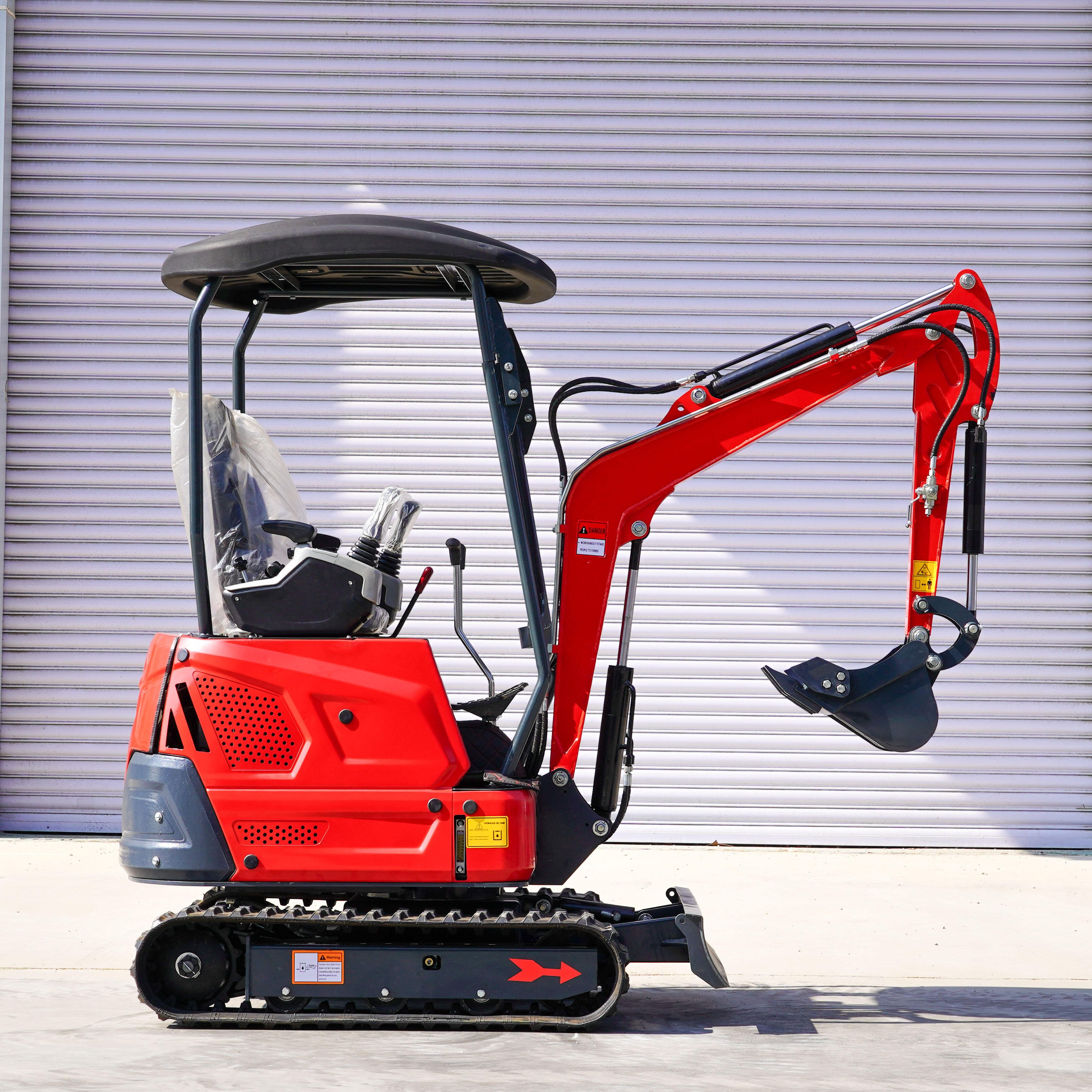
Profitable Mini Excavator Business Opportunities Guide

All Categories

Get a Free Quote

Our representative will contact you soon.
Email
Name
Mobile
Company Name
Message
0/1000
Profitable Mini Excavator Business Opportunities and Strategies

Profitable Mini Excavator Business Opportunities and Strategies

Building a successful mini excavator business requires comprehensive understanding of market dynamics, equipment selection, and operational management strategies. This complete guide explores profitable mini excavator business models, investment considerations, and growth strategies for entrepreneurs and established companies. Discover how to leverage mini excavator versatility, operational efficiency, and market demand to create sustainable business ventures in construction, landscaping, rental services, and specialized excavation sectors.
Get A Quote

4 Key Advantages of Mini Excavator Business Ventures

Establishing a mini excavator business delivers significant competitive advantages through equipment versatility, operational flexibility, and strong market demand. These business ventures provide excellent return potential with manageable investment requirements and multiple revenue stream opportunities.

Strong Mini Excavator Business Market Demand

The mini excavator business benefits from consistent market demand across multiple industries including construction, landscaping, utility services, and property maintenance. This mini excavator business model serves residential contractors, commercial developers, municipal authorities, and individual homeowners requiring compact excavation solutions. The diverse mini excavator business customer base ensures stable revenue streams through economic cycles, while the equipment versatility enables service expansion into adjacent markets and specialized applications as business growth opportunities.

Excellent Mini Excavator Business ROI Potential

A well-managed mini excavator business delivers attractive return on investment through multiple revenue generation channels and efficient equipment utilization. The mini excavator business model supports equipment rental services, contract excavation work, and specialized service offerings that maximize revenue per machine. The relatively low mini excavator business operating costs, minimal transportation requirements, and flexible staffing models contribute to strong profit margins, while the equipment durability and strong residual values protect capital investment and support long-term business sustainability.

Operational Flexibility in Mini Excavator Business

The mini excavator business offers exceptional operational flexibility through compact equipment that accesses diverse job sites and adapts to changing market conditions. This mini excavator business advantage enables rapid response to customer needs, efficient service delivery in confined spaces, and minimal setup requirements between projects. The mini excavator business operational model supports both localized service areas and regional coverage strategies, while the equipment compatibility with numerous attachments allows service diversification without significant additional investment in specialized machinery.

Scalable Mini Excavator Business Growth Path

Starting a mini excavator business provides clear scalability options through gradual equipment acquisition, targeted service expansion, and strategic market development. The initial mini excavator business establishment requires manageable capital investment while offering multiple pathways for growth including additional equipment purchases, geographic expansion, service specialization, and rental fleet development. This mini excavator business scalability enables entrepreneurs to start with single machines and systematically build comprehensive excavation service companies through reinvested earnings and strategic planning.

Strategic Equipment Selection for Mini Excavator Business Success

Selecting the right equipment portfolio is crucial for mini excavator business profitability and operational effectiveness. Our comprehensive mini excavator business equipment solutions include multiple machine sizes, attachment options, and support services designed specifically for business applications. The mini excavator business product range encompasses compact models for residential services, mid-size machines for commercial projects, and specialized configurations for unique market opportunities, all supported by business-focused service packages and technical support resources.

Establishing and operating a successful mini excavator business requires strategic planning, market awareness, and operational excellence across multiple business dimensions. The mini excavator business landscape offers numerous opportunities for entrepreneurs and established companies seeking to capitalize on the growing demand for compact excavation services across residential, commercial, and municipal sectors. A well-structured mini excavator business combines equipment expertise with business acumen to deliver valuable services while maintaining profitable operations and sustainable growth trajectories. Understanding the mini excavator business fundamentals enables owners to make informed decisions about equipment investments, market positioning, and service development.

The mini excavator business equipment selection process involves careful consideration of target markets, service offerings, and operational requirements to optimize investment returns. Different mini excavator business models may prioritize various machine specifications including operating weight, hydraulic performance, attachment compatibility, and transportability based on their specific business strategies. A residential-focused mini excavator business typically requires compact models with minimal dimensions for backyard access and homeowner sensitivity, while a commercial mini excavator business may need larger machines with enhanced capabilities for construction sites and development projects. The attachment selection for a mini excavator business significantly impacts service versatility and revenue potential, making strategic accessory investment crucial for business success.

The mini excavator business market analysis should identify specific opportunities within local and regional service areas, considering competition, customer needs, and pricing structures. A comprehensive mini excavator business plan examines residential construction trends, commercial development activity, municipal budgeting, and landscaping industry dynamics to determine optimal service focus and marketing approaches. Successful mini excavator business operators typically develop specialized expertise in specific applications such as pool excavation, foundation digging, utility installation, or landscape construction to differentiate their services and command premium pricing. The mini excavator business customer relationship management emphasizes reliability, quality workmanship, and responsive service to build recurring revenue streams and referral business.

The mini excavator business financial management requires careful attention to equipment financing, operational costing, pricing strategies, and cash flow management to ensure profitability and sustainability. A well-managed mini excavator business maintains accurate cost tracking for fuel, maintenance, transportation, insurance, and labor to establish appropriate pricing that generates adequate margins while remaining competitive. The mini excavator business equipment utilization rate directly impacts financial performance, making scheduling efficiency and preventive maintenance essential operational priorities. Many successful mini excavator business operators develop mixed revenue models combining hourly rental services, project-based contracting, and specialized service packages to optimize equipment utilization and income stability throughout seasonal variations and economic cycles.

Mini Excavator Business Operational Questions

What are the initial investment requirements and startup considerations for a mini excavator business?

Starting a mini excavator business requires careful planning and adequate capital investment covering equipment acquisition, operational resources, and initial operating expenses. The mini excavator business startup costs typically include machine purchases or financing down payments, attachment acquisitions, transportation equipment, insurance coverage, tools and supplies, marketing materials, and working capital to cover initial operating expenses. A comprehensive mini excavator business plan should address equipment selection based on target markets, legal structure establishment, insurance requirement identification, licensing and permit acquisition, and marketing strategy development. The mini excavator business startup phase often begins with a focused service offering and limited geographic coverage to validate the business concept and refine operations before expanding equipment inventory and service areas.
Strategic equipment selection is crucial for mini excavator business success and should align with specific service offerings, target markets, and growth objectives. The mini excavator business equipment evaluation process considers machine size, performance specifications, attachment compatibility, operating costs, and reliability factors to determine optimal configurations. Most mini excavator business operators start with versatile mid-size models that handle diverse applications, then expand into specialized machines as business volume justifies additional investment. The mini excavator business fleet planning should anticipate growth requirements while maintaining equipment utilization rates that support financial objectives, with careful consideration of attachment investments that expand service capabilities without requiring additional base machines.
Successful mini excavator business management requires addressing several operational challenges including equipment maintenance, seasonal demand variations, competitive pricing pressure, and skilled operator availability. The mini excavator business equipment reliability is paramount, making preventive maintenance programs and quick repair response essential for service delivery and customer satisfaction. Seasonal mini excavator business planning addresses weather impacts on construction activity and develops complementary services or rental options to maintain revenue during slower periods. The mini excavator business pricing strategy must balance competitive positioning with adequate margin generation, while operator recruitment and retention initiatives ensure consistent service quality and operational efficiency.

Related Articles

What to Look for When Choosing Excavator Companies for Large-Scale Construction Projects?

05

Dec

What to Look for When Choosing Excavator Companies for Large-Scale Construction Projects?

Selecting the right excavator partner for large-scale construction projects is a decision that directly impacts project efficiency, timelines, and overall costs. As a sales manager at Shandong Nuote Machinery Co., Ltd., I have observed that construct...
View More
What Are the Key Performance Advantages of Tracked Excavators for Heavy Construction Projects?

05

Dec

What Are the Key Performance Advantages of Tracked Excavators for Heavy Construction Projects?

Introduction In the modern construction industry, heavy-duty projects demand equipment that combines durability, efficiency, and operational precision. Among such machinery, the tracked excavator stands out as a pivotal asset for construction manager...
View More
What Are the Key Benefits of Using Small Excavators for Urban Construction Projects?

05

Dec

What Are the Key Benefits of Using Small Excavators for Urban Construction Projects?

1.Introduction Urban construction projects increasingly demand machinery that is compact, efficient, and versatile. Small excavators have emerged as a critical solution for contractors, offering the ability to perform a wide range of tasks in confine...
View More
What to Look for When Choosing Forklift Manufacturers for Your Industrial Fleet?

05

Dec

What to Look for When Choosing Forklift Manufacturers for Your Industrial Fleet?

Selecting the right forklift manufacturers is a critical decision for industrial operations that rely on efficient material handling. From warehouses to manufacturing plants, forklifts are a core component of daily operations, affecting productivity,...
View More

Mini Excavator Business Success Stories

Michael Thompson

"Building our mini excavator business from a single machine operation to a multi-unit fleet required strategic planning and consistent execution. The mini excavator business versatility enabled us to serve diverse customers including homeowners, contractors, and municipal agencies with varying excavation needs. Our mini excavator business growth strategy focused on reliable service delivery, equipment maintenance excellence, and targeted marketing to specific customer segments. The mini excavator business scalability allowed gradual expansion through reinvested earnings, with additional machines added as demand justified increased capacity. The comprehensive mini excavator business support from equipment manufacturers ensured operational reliability and technical assistance when needed."

Sarah Johnson

"Our specialized mini excavator business focusing on residential landscape excavation has delivered excellent financial returns and customer satisfaction. The mini excavator business model capitalizes on compact equipment advantages for backyard access and minimal property disruption. Our mini excavator business service differentiation emphasizes precision work, clean job sites, and responsive scheduling that residential clients value. The mini excavator business attachment versatility enables comprehensive service offerings from basic digging to specialized landscape features using various implements. The mini excavator business operational efficiency through proper equipment maintenance and optimized scheduling has maintained strong profit margins despite competitive market conditions."

Robert Williams

"Our equipment rental company added mini excavator business services to complement existing tool and equipment offerings, creating valuable synergies and new revenue streams. The mini excavator business integration required additional operator training, service documentation, and maintenance protocols but quickly became a significant profit center. The mini excavator business rental model serves both DIY homeowners and professional contractors needing temporary equipment access for specific projects. Our mini excavator business success stems from reliable equipment maintenance, clear rental agreements, and comprehensive customer orientation for safe operation. The mini excavator business has enhanced overall rental fleet utilization and customer loyalty through added service convenience."

Get a Free Quote

Our representative will contact you soon.
Email
Name
Mobile
Company Name
Message
0/1000
Strategic Mini Excavator Business Market Positioning

Strategic Mini Excavator Business Market Positioning

Successful mini excavator business operators develop clear market positioning strategies that differentiate their services and target specific customer segments effectively. This mini excavator business approach involves comprehensive market analysis, competitor assessment, and service gap identification to establish unique value propositions. The mini excavator business branding, marketing communications, and customer service standards should align with target market expectations, whether focusing on premium residential services, efficient commercial projects, or specialized municipal work. A well-defined mini excavator business positioning enables focused equipment investment, targeted marketing expenditure, and appropriate staffing decisions that maximize return on business development efforts and build sustainable competitive advantages.
Optimized Mini Excavator Business Equipment Management

Optimized Mini Excavator Business Equipment Management

Professional mini excavator business operations implement systematic equipment management protocols that maximize machine availability, performance, and lifespan while controlling operating costs. This mini excavator business practice includes preventive maintenance scheduling, regular equipment inspections, prompt repair services, and comprehensive record keeping for each machine in the fleet. The mini excavator business equipment utilization tracking ensures optimal scheduling and identifies underperforming assets, while maintenance history analysis supports replacement planning and investment decisions. Efficient mini excavator business equipment management directly impacts service reliability, operational costs, and customer satisfaction, making it a critical component of profitable business operations and long-term sustainability.
Effective Mini Excavator Business Marketing Approach

Effective Mini Excavator Business Marketing Approach

Building a successful mini excavator business requires strategic marketing initiatives that generate qualified leads, establish brand recognition, and support premium pricing strategies. The mini excavator business marketing mix typically combines digital presence through professional websites and social media, traditional advertising in local publications, targeted direct marketing to specific customer segments, and referral generation through satisfied clients and industry partnerships. A professional mini excavator business presentation including branded equipment, uniformed operators, and organized documentation reinforces quality perceptions and justifies pricing premiums. The most successful mini excavator business marketing strategies emphasize specialized capabilities, reliability assurances, and customer convenience factors that differentiate from competitor offerings.
Comprehensive Mini Excavator Business Financial Planning

Comprehensive Mini Excavator Business Financial Planning

Sustainable mini excavator business operations require thorough financial planning, accurate costing models, and proactive cash flow management to ensure profitability and support growth objectives. This mini excavator business discipline includes detailed equipment investment analysis, operational expense forecasting, revenue projection, and profit margin targets that guide business decisions and performance monitoring. The mini excavator business financial planning process should address equipment financing options, tax considerations, insurance requirements, and contingency planning for seasonal variations or economic downturns. Regular mini excavator business financial review enables timely pricing adjustments, cost control initiatives, and strategic investment decisions that maintain healthy cash flow and support planned business expansion.
Newsletter
Please Leave A Message With Us