 EN
EN

1. Market and Product Development Trends
The landscape for large tractors in both agriculture and construction is evolving rapidly. As mechanisation intensifies, the average size, power and complexity of machines increases, driving up what one might consider the big tractor price. Global data indicates sizeable growth: the agricultural tractor market was valued at around USD 60,079.2 million in 2024, and is projected to grow at a CAGR of 6.5 % through 2032. In parallel, infrastructure and construction activity in many regions is stimulating demand for heavy‑duty machines, which in turn pushes up the specification and cost of large tractors used for mixed agricultural/construction purposes.
With this trend, the big tractor price becomes not just a purchase cost but a barometer of capability. Larger tractors now often include advanced features such as multi‑mode hydraulics, operator comfort enhancements, telematics, transmission cooling systems and multi‑drive modes. From a purchasing strategy viewpoint, understanding the upward pressure on the big tractor price is critical. Raw material costs, supply chain constraints, emission compliance, and the inclusion of premium features all contribute to what buyers are ultimately paying. For procurement managers, aligning the specification of a large tractor with the acceptable big tractor price involves analysing both market trends and internal productivity gains.
Consider also that the market base is shifting: Asia‑Pacific accounts for a major share of global tractor demand, driving volume, but also increasing the pressure on large‑tractor pricing as imports and exports impose additional cost layers. As the big tractor price increases, the decision becomes one of balancing cost against durability, feature set and service life.
2. Product Features – Key Attributes on High‑Spec Tractors
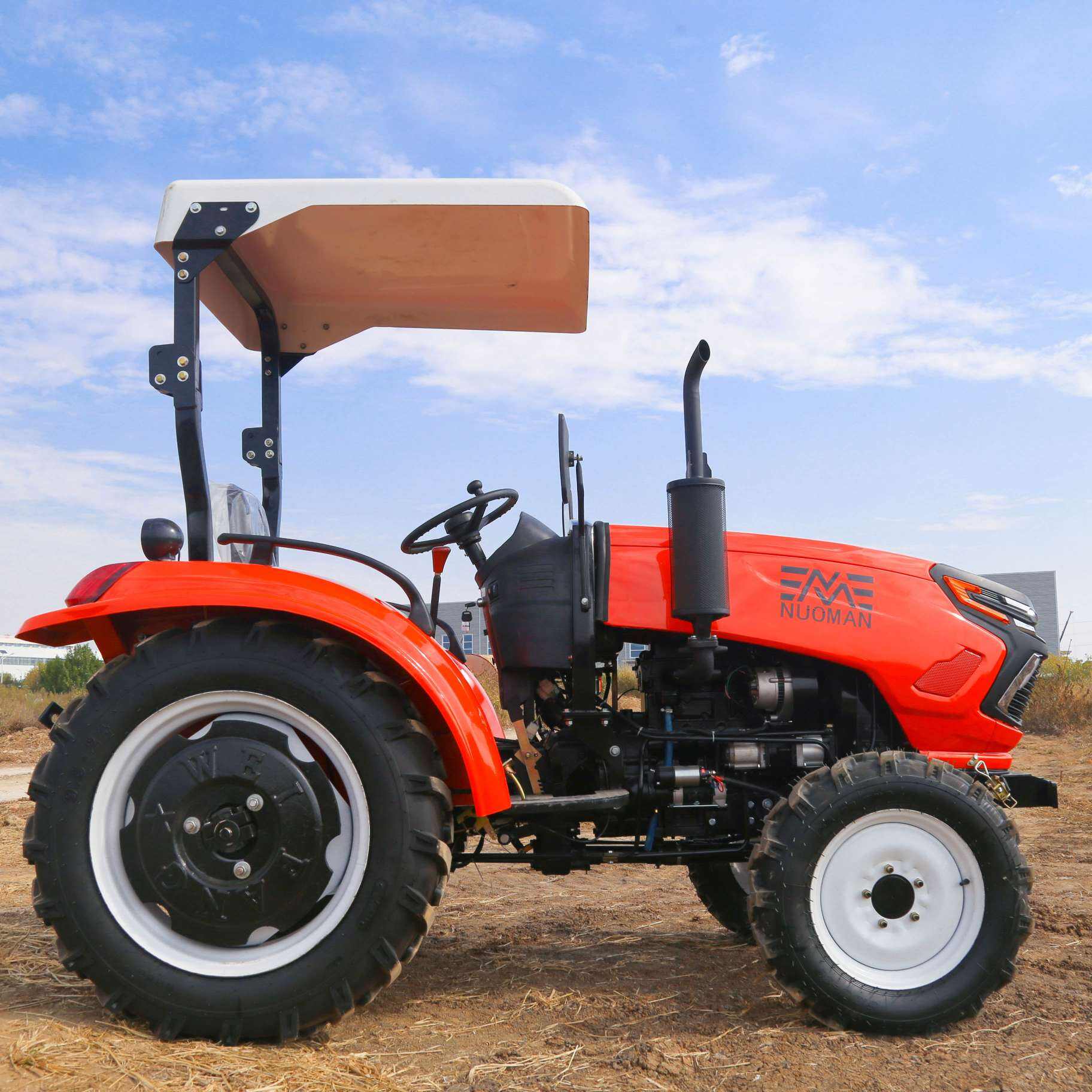
When analysing what drives the big tractor price, it’s essential to understand the functional features that elevate performance and reliability in large tractors. At Shandong Nuote Machinery Co., Ltd., our high‑spec models include several design innovations that correlate directly with higher pricing—and more importantly, higher value.
First, the inclusion of a transmission oil‑cooler is critical. Large tractors commonly operate under heavy loads and extended duty cycles—whether tilling deep soils or hauling construction attachments. The oil‑cooler ensures the gearbox remains at optimal temperature, reducing wear, improving reliability, and extending service life. These benefits justify a higher big tractor price, because buying a cheaper machine without such thermal management may lead to excessive maintenance and downtime.
Second, the transfer‑case offering multiple drive modes provides adaptability. In agricultural use you might select two‑wheel drive for light field work, and four‑wheel or full‑power mode for heavier terrain or grading tasks. In construction settings, the need to switch between traction modes is even greater. The presence of such a transfer‑case increases the engineering complexity and hence contributes to the big tractor price. But it also enables one investment in a single machine to cover more scenarios, improving operational ROI.
Third, the battery‑disconnect switch (or battery‑power cut‑off) is one of the often‑overlooked features. For large tractors that may be idle between seasons (in mixed large‑farm/construction use), a simple yet reliable battery isolation switch prevents parasitic battery drain, reduces starter‑motor failure risk, and improves machine readiness. Including this safety and storage‑friendly feature raises manufacturing cost—and thus the big tractor price—but enhances durability and lowers lifecycle risk.
Finally, you’ll typically see additional supporting features in tractors commanding higher big tractor price: spacious toolboxes and storage compartments (for attachments, spares and operator gear), overhead sun‑visors and skylights improving operator comfort for long hours, and heavy‑duty hydraulics with higher output valves to support multiple complex implements. Each of these contributes to the machine’s specification and the big tractor price, yet they also advance operator productivity, reduce fatigue, and minimise unplanned downtime.
3. Evaluating Large Tractors for Agricultural and Construction Use – Key Considerations
From the viewpoint of an industry analyst or procurement manager, selecting a large tractor requires a disciplined assessment of how the big tractor price aligns with operational needs, durability, and long-term value.
Matching Power & Duty to Price
Firstly, ensure the horsepower, torque and transmission capability are matched to the tasks. If you’re buying a tractor meant for heavy tillage plus construction-grade attachments, then paying a higher big tractor price is warranted. A lower-cost machine may underperform or fail prematurely. Investigate how manufacturers allocate cost into stronger frames, cooling systems, and drive components—these raise the big tractor price but also reduce total cost of ownership.
Lifecycle costing and durability
The big tractor price is just upfront cost. You must consider fuel efficiency, maintenance schedules, wear-parts availability, and resale value. A tractor with advanced features (oil-cooler, multi-drive transfer case, battery disconnect) commands a higher big tractor price, but may cost far less over 8–10 years than a cheaper alternative. Mechanised farms with high-quality equipment cut downtimes and increase output by 20–30%.
Versatility across agriculture and construction
If you plan to use the machine for both farming and construction, versatility becomes essential. A tractor that supports multiple drive modes, various attachments, and stays compliant in both sectors will attract a higher big tractor price. But that price must be justified by covering a broader range of tasks. Ask how many hours per year each mode will be used, and whether the premium in big tractor price can be amortised over those hours.
Operator comfort & safety
Large tractors often run in mixed-use settings with long shifts. Features like sun-visors, skylights, ergonomically designed cabins, tool-boxes, and storage space may seem secondary—but they enhance productivity and reduce errors. These features push up the big tractor price, yet their impact on operator retention and operational safety is significant. A tractor with better ergonomics may allow one operator to handle more tonnage safely, improving output per hour.
Market pricing and timing
It helps to understand the typical big tractor price range in your region for similar spec machines—and what premium features justify extra cost. Tractor demand is growing steadily, but equipment surpluses in some markets may push pricing downward. Knowing this helps you negotiate better and avoid paying “market high” when supply is strong.
Supplier, warranty & service network
Even the best-spec tractor still fails to deliver if support is weak. The big tractor price should include warranty, service infrastructure, access to spares, and timely maintenance. A cheaper machine lacking these costs more in unplanned downtime. So, when you evaluate your investment, ensure you factor the service network into how you interpret the big tractor price.
4. Price Impact and Reference Ranges for Big Tractors
Understanding how the big tractor price influences investment decisions is key for managers and analysts. Large tractors used in agriculture and construction may span a wide price range—from mid-tier models to premium flagships. For example, a standard 200–250 HP agricultural/industrial tractor might fall into one price band, while a 400 HP plus fully spec’d machine with cooling systems, multi-drive transfer cases and full-comfort cabins will command a significantly higher big tractor price.
In referencing price ranges, one must look at regional market conditions (currency, import duties, subsidies), specification levels (engine, transmission, cooling, cabin, hydraulics), and volume discounts. Because the big tractor price often rises sharply with each extra feature, incremental cost vs. incremental value must be carefully analysed. If a tractor costs 30–40 % more because of premium features, you must estimate whether the productivity gains, reduced downtime, and longer lifespan will offset that higher price.
From an investment perspective, an elevated big tractor price is justifiable when it leads to higher utilisation, reduced labor or machine count, and lower servicing costs. For instance, if a premium large tractor replaces two lower-cost machines across both agricultural and construction tasks, the effective cost per hour may actually decrease. Conversely, paying for features you rarely use will inflate your big tractor price without delivering commensurate returns.
In summary, evaluate the big tractor price not in isolation but in the context of lifetime hours, tasks performed, service costs, and resale value. A well-judged investment in a large tractor from a reliable supplier like Shandong Nuote Machinery Co., Ltd. ensures that the initial price leads to sustained efficiency, reliability, and long-term value.
Conclusion
Choosing a large tractor for agriculture and construction use requires a deep understanding of market trends, feature relevance, and price-performance dynamics. The big tractor price reflects not just machine cost but embedded capability, durability and future productivity. By focusing on high-value features (oil-cooler gearbox, multi-drive transfer case, battery disconnect, operator comfort), aligning specification to task, and assessing total cost of ownership, procurement and investment decisions can lead to strong operational results. Partnering with a trusted manufacturer ensures that the big tractor price you pay converts into reliable performance, lower downtime, and measurable return on investment.