 EN
EN
1. Introduction: The Strategic Role of Forklift Companies
In today’s fast-paced logistics landscape, choosing the right forklift companies is not simply a purchasing decision—it’s a long-term strategic investment that directly determines warehouse productivity and operational stability. Many buyers focus too narrowly on product specifications or price tags, overlooking crucial elements such as after-sales reliability, component availability, and service response times.
From a product manager’s perspective, warehouse efficiency is built on consistency, not peak performance. The true test for forklift companies lies in whether their products can deliver predictable output hour after hour, even under varying workloads and challenging environments. A forklift’s capability is only as strong as the supplier’s commitment to maintain it.
At Shandong Nuote Machinery Co., Ltd., we believe that selecting a forklift partner should begin with one key question: Can this company convert equipment performance into measurable operational results? Evaluating forklift companies must therefore go beyond technical parameters—it requires understanding their engineering philosophy, maintenance ecosystem, and ability to adapt to your specific logistics model. This article explores how industrial buyers can make data-driven decisions when comparing forklift companies, how to match product capabilities with operational demands, and how to secure long-term value through supplier collaboration.
2. Understanding Warehouse Operations and Forklift Integration
When assessing forklift companies, buyers must start with an accurate understanding of their warehouse ecosystem. Every warehouse—whether a dense vertical storage center, a high-throughput distribution hub, or a manufacturing supply node—has a distinct set of operational rhythms.
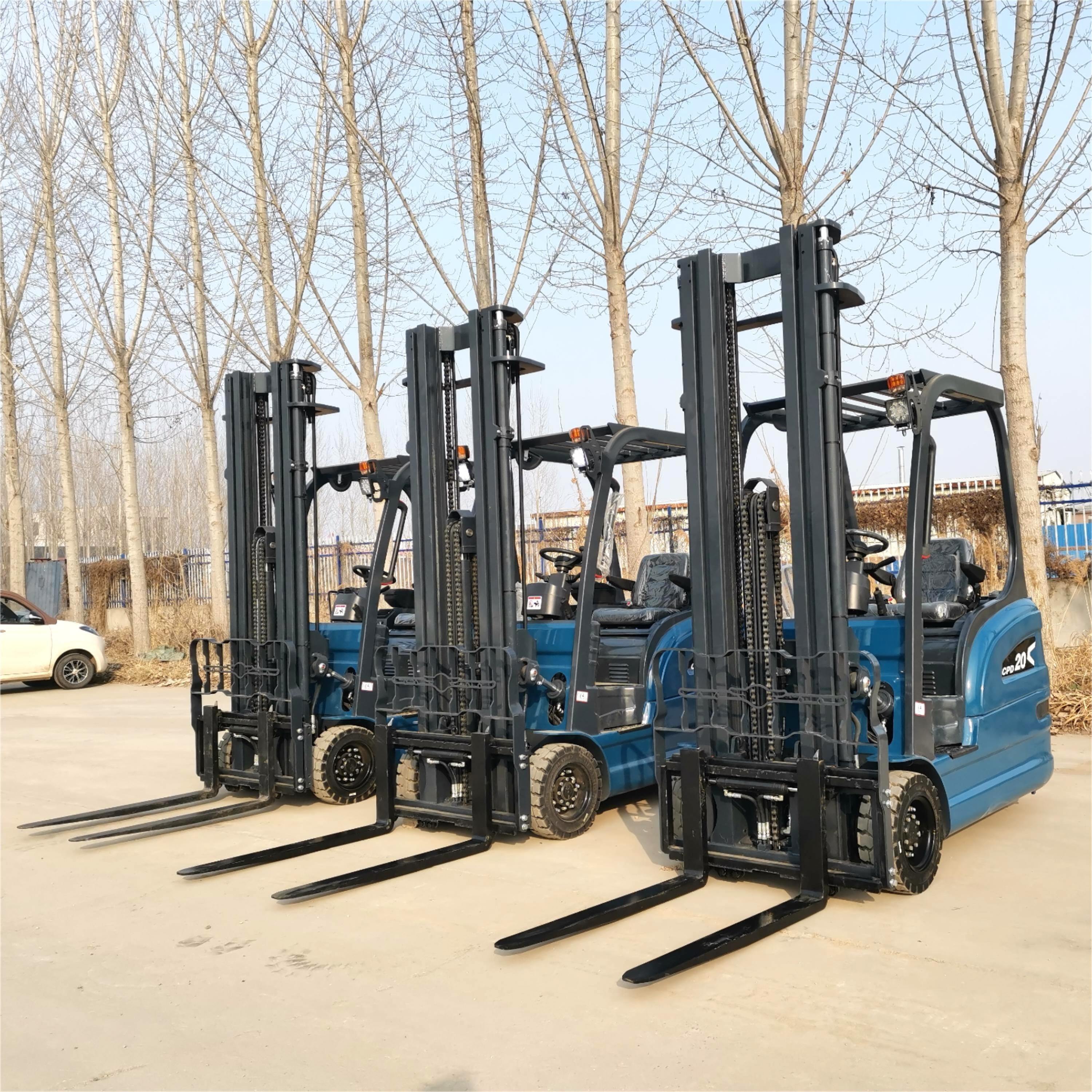
In high-density storage facilities, adjustable forks and precise lifting stability play a decisive role in ensuring safe handling of varied pallet sizes. Here, superior fork adjustability from leading forklift companies minimizes manual intervention, improving changeover time and throughput efficiency. For sorting or cross-docking operations, responsiveness and turning precision matter more than lifting power. This is where the electronic steering systems and chassis protection design provided by Shandong Nuote Machinery Co., Ltd. help maintain smooth operation in tight spaces without the risk of debris intrusion.
Ground surface conditions also influence the ideal forklift choice. Uneven or debris-prone floors can damage undercarriages if the chassis lacks proper shielding. Reliable forklift companies therefore design protective housings that reduce dust intake and prevent operational downtime.
Finally, operator comfort and control precision must not be underestimated. Electronic steering, when properly tuned, reduces fatigue and minimizes micro-adjustment errors—two hidden costs that often erode warehouse productivity. The best forklift companies don’t just sell machines; they engineer operator-centered ecosystems that combine ergonomics, safety, and performance optimization. In short, choosing the right partner requires aligning technological features with your warehouse’s exact workflow dynamics, rather than relying on generic specifications.
3. Key Product Features That Influence Efficiency
To accurately compare forklift companies, one must evaluate the functional innovations that directly impact total cost of ownership (TCO) and uptime. Three critical features should always be assessed: adjustable forks, electronic steering, and chassis protection.
Adjustable forks go far beyond the convenience of fitting multiple pallet sizes—they determine real productivity in time-sensitive operations. Quick-adjust systems allow seamless handling of diverse loads, eliminating the need for frequent tool changes or secondary equipment. The most advanced forklift companies now integrate smart fork calibration systems that enable operators to switch pallet standards within seconds, optimizing the truck’s versatility and warehouse utilization rates.
Electronic steering systems have evolved from comfort enhancements into essential precision tools. Modern forklifts from leading forklift companies feature variable-assist steering that automatically adjusts resistance based on speed, load, and turning angle. This technology prevents oversteer during high-speed travel and improves alignment accuracy during stacking. In confined aisles, this difference can save seconds per maneuver—adding up to hours of cumulative time savings over a single shift.
Chassis protection represents a less visible but equally important efficiency factor. Forklifts often operate in environments filled with packaging debris, dust, and fluids. Without adequate undercarriage sealing, these elements can infiltrate the drivetrain or hydraulic systems, leading to costly breakdowns. Trusted forklift companies use sealed bearing assemblies, reinforced panels, and drainage channels to extend service intervals and minimize maintenance downtime.
Moreover, fleet buyers should evaluate the supplier’s ecosystem—specifically, how easily replacement parts can be obtained and how quickly service can be deployed. A high-quality forklift loses its advantage if the supplier lacks a regional support network. Reliable forklift companies combine robust engineering with logistical agility: local warehouses, quick-response service teams, and predictive maintenance platforms that minimize idle time.
In short, choosing a supplier is not about comparing a few specifications—it’s about selecting an engineering philosophy. Companies like Shandong Nuote Machinery Co., Ltd. emphasize long-term sustainability and measurable productivity gains, aligning product reliability with operational demands.
4. How to Choose Among Forklift Companies for Sustainable Partnership
Selecting among multiple forklift companies should follow a structured, data-driven process. Start by requesting on-site pilot testing within your actual warehouse conditions. Measure quantifiable KPIs—such as hourly handling rate, fault frequency, and refueling or charging intervals—and use these metrics as performance guarantees in your contract.
Next, assess each supplier’s parts logistics and after-sales capability. The best forklift companies provide not only technical service but also transparent component availability and clear lead times. This ensures minimal downtime during high-demand periods.
Consider negotiating performance-linked service clauses, where a portion of payments is tied to uptime or service response commitments. This approach aligns the supplier’s incentives with your operational success. Finally, prioritize training and knowledge transfer. Leading forklift companies provide on-site operator training, efficiency audits, and ongoing consultation—ensuring that your fleet continues to evolve as your operations scale.
Ultimately, your choice of forklift companies determines whether your warehouse runs reactively or proactively. By partnering with a manufacturer that designs for real-world conditions, supports your maintenance ecosystem, and values long-term cooperation, you transform forklifts from static equipment into strategic assets that drive measurable business outcomes.
Conclusion
The modern warehouse requires more than just capable equipment—it demands reliable partnerships. Evaluating forklift companies means identifying which ones can deliver technical excellence, operational consistency, and service resilience under pressure. At Shandong Nuote Machinery Co., Ltd., our mission is to help global warehouse operators achieve these goals through intelligent engineering, operator-focused design, and lifelong service support.
Choosing the right forklift companies is not just about price; it’s about aligning technology, service, and reliability to ensure every lift contributes to your long-term success.