 EN
EN

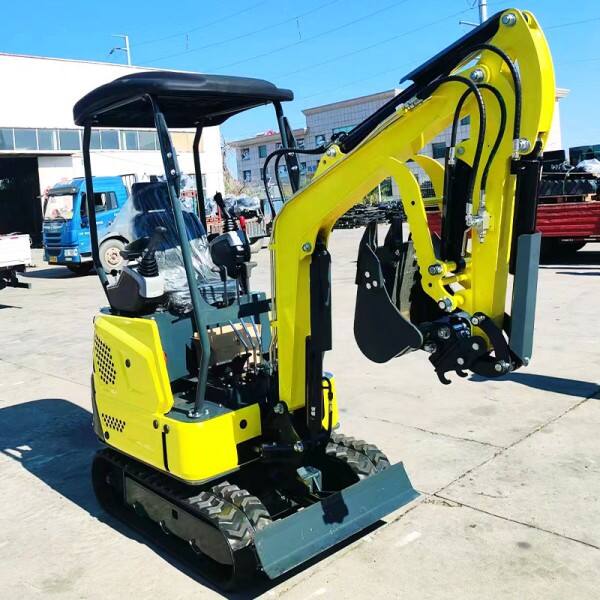
1. Market Overview of Mini Excavators for Landscaping
In recent years, the landscaping industry has experienced significant growth driven by urban development, commercial property expansion, and increased residential landscaping projects. The demand for efficient, versatile, and compact earthmoving machinery has surged, making mini excavators a preferred choice for landscaping professionals. These machines are particularly valued for their ability to operate in confined spaces, perform precise digging, and handle a variety of attachments suitable for landscaping tasks.
According to industry reports, the global mini excavator market is projected to grow steadily, with landscaping and small-scale construction accounting for a significant share of sales. Contractors and landscape architects are increasingly prioritizing machines that combine operational efficiency with durability and advanced technology. For instance, mini excavators for landscaping allow operators to execute excavation, trenching, grading, and planting operations with minimal disturbance to surrounding areas, which is critical in both residential and commercial landscaping projects.
At Shandong Nuote Machinery Co., Ltd., we recognize the evolving needs of landscaping professionals. Our mini excavators for landscaping are engineered to provide high performance, intelligent operation, and seamless compatibility with various attachments. With features such as optimized power management, high lifting capacity, and readiness for autonomous operation, these machines address both current industry demands and future technological trends. Choosing the right mini excavator for landscaping projects is therefore not only a matter of selecting compact machinery but also aligning with innovations that improve productivity, safety, and long-term operational value.
2. Product Features of Mini Excavators for Landscaping
Mini excavators for landscaping are designed to maximize operational efficiency, precision, and versatility. Shandong Nuote Machinery Co., Ltd. emphasizes three core features that differentiate our machines in the market:
Intelligent Navigation and Autonomous Operation Readiness
Modern mini excavators come equipped with intelligent navigation systems that support precise movements in tight and complex landscaping environments. These systems allow operators to pre-program digging paths and execute automated sequences, reducing human error and increasing overall productivity. The autonomous operation readiness ensures that the excavator can integrate with future digital solutions, including GPS-assisted grading and site mapping technologies. This capability is particularly valuable for large landscaping projects that require consistent precision across multiple zones.
Engine Management System for Optimized Power and Fuel Efficiency
Our mini excavators feature advanced engine management systems that automatically adjust power output based on load and operational demands. This optimization enhances fuel efficiency, reduces operating costs, and ensures the machine delivers maximum performance during demanding landscaping tasks. For example, when lifting heavy soil or handling dense vegetation, the system intelligently balances hydraulic power and engine output to maintain steady operation without overconsumption of fuel.
High Lifting Capacity and Attachment Compatibility
A mini excavator for landscaping must be able to lift and manipulate heavy tools and attachments, such as grading buckets, augers, and hydraulic breakers. Our models feature reinforced lifting mechanisms capable of handling heavier implements, allowing operators to perform diverse tasks without switching machines. The versatility provided by high lifting capacity significantly improves project efficiency and reduces downtime associated with changing equipment.
By combining these advanced features, our mini excavators for landscaping offer superior control, safety, and operational efficiency. They allow landscape professionals to work faster, more accurately, and with reduced environmental impact, particularly in sensitive residential or commercial areas.
3. Essential Characteristics for Choosing a Mini Excavator for Landscaping
Selecting the right mini excavator for landscaping involves evaluating several critical characteristics to ensure productivity, safety, and cost-effectiveness.
Compact Size and Maneuverability
Landscaping projects often involve tight spaces, such as gardens, courtyards, and residential backyards. A mini excavator for landscaping must have a small footprint and a tight turning radius, enabling it to navigate confined areas without damaging existing structures or vegetation. Tracked models further enhance mobility on uneven or soft ground, minimizing soil compaction and preserving landscape integrity.
Precision and Control
Precision is paramount in landscaping tasks, whether digging trenches for irrigation, planting trees, or grading soil. Mini excavators with responsive hydraulic systems, proportional controls, and adjustable arm configurations allow operators to perform delicate tasks with high accuracy. Machines with stability enhancements, such as counterweights and low center-of-gravity designs, maintain balance during precise movements, ensuring consistent results.
Power and Efficiency
Despite their compact size, mini excavators must deliver sufficient digging force and lifting capacity to handle landscaping materials like soil, gravel, and sod. The integration of advanced engine management systems and hydraulic optimization ensures that mini excavators for landscaping maintain energy efficiency while delivering high performance. Efficient fuel consumption also reduces operational costs over time, an important factor for contractors managing multiple projects.
Attachment Versatility
A key consideration is the ability to accommodate a wide range of attachments. Landscapers often require digging buckets, grading blades, hydraulic hammers, and augers to complete diverse tasks. Mini excavators designed with universal mounting systems allow quick attachment changes, increasing project flexibility and reducing downtime.
Safety and Operator Comfort
Landscaping projects can involve working in residential areas with pedestrian traffic or delicate structures. Mini excavators for landscaping must include safety features such as reinforced cabins, visibility enhancements, and emergency stop systems. Comfortable operator environments with ergonomic controls reduce fatigue, allowing for longer, safer, and more productive workdays.
Technological Integration
Modern landscaping increasingly relies on digital solutions for site planning and management. Mini excavators equipped for GPS integration, autonomous operation readiness, and remote monitoring facilitate efficient project execution and maintenance. These technological capabilities can significantly improve workflow, reduce errors, and enhance project quality.
By prioritizing these characteristics, contractors and project managers can ensure that their chosen mini excavator for landscaping delivers optimal performance, efficiency, and adaptability across varied landscapes and project requirements.
4. Case Analysis: Application of Mini Excavators in Landscaping Projects
One illustrative case involved a residential landscaping company tasked with renovating a large urban garden. The project required precise trenching for irrigation, planting of trees, and soil grading across multiple zones. By employing a mini excavator for landscaping from Shandong Nuote Machinery Co., Ltd., the team achieved remarkable efficiency and accuracy.
The intelligent navigation system allowed the operator to predefine trenching paths, reducing errors and manual labor. The engine management system optimized fuel consumption, even during continuous lifting and digging tasks with heavy attachments. Additionally, the mini excavator’s compact dimensions and low ground pressure minimized damage to existing lawn areas, preserving the aesthetic integrity of the property.
Another case involved a commercial landscape renovation project with constrained urban spaces. The high lifting capacity and attachment versatility of our mini excavator enabled rapid switching between grading, trenching, and planting tasks. This adaptability not only reduced project completion time but also lowered operational costs by eliminating the need for multiple machines.
These cases highlight the value of selecting a mini excavator for landscaping with the right combination of compactness, precision, power, and technological integration. By carefully evaluating features and capabilities, landscape professionals can enhance project outcomes, improve ROI, and maintain high safety and quality standards.
Conclusion
Mini excavators for landscaping are indispensable tools in modern landscaping projects, combining compact design, operational precision, and versatile functionality. By understanding market trends, evaluating advanced product features, and selecting machines with essential characteristics like maneuverability, power efficiency, and attachment versatility, project managers can ensure optimal performance. The cases demonstrate that investing in the right mini excavator for landscaping improves project efficiency, safety, and overall quality, reinforcing the importance of informed selection in the competitive landscaping industry.