 EN
EN

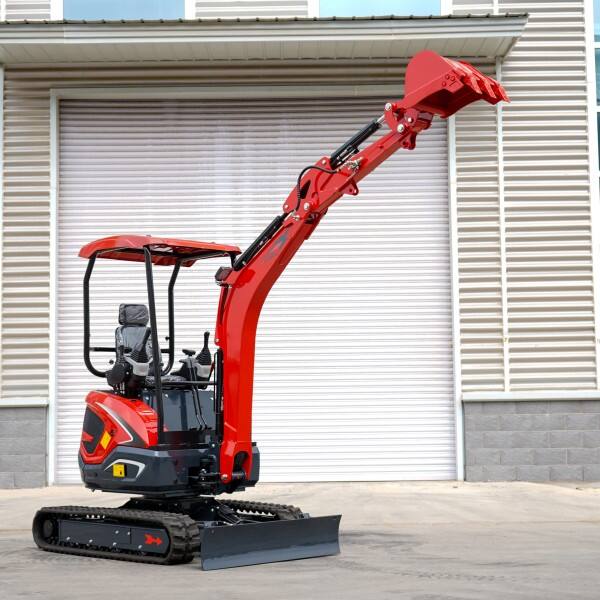
1. Market environment for mini excavator economics
Contractors evaluating fleet economics increasingly focus on the mini excavator cost per hour as a core metric for bid formulation and margin control. The mini excavator occupies a unique place in construction: compact enough for tight urban sites, yet powerful enough for many earthmoving tasks. For this reason the mini excavator cost per hour is not a static number — it is a function of machine specification, duty cycle, and local operating conditions. A realistic assessment of mini excavator cost per hour allows contractors to price jobs competitively while protecting profitability.
Market pressure on equipment owners and hirers also affects mini excavator cost per hour. In regions with high demand for short-term rental, hourly rates rise; in markets with abundant used machines, capital recovery assumptions change and the mini excavator cost per hour can fall. Contractors must therefore model mini excavator cost per hour using real utilization rates rather than list prices. Accurate modeling accounts for idle time, repositioning between sites, and the seasonal variability inherent in construction work.
Shandong Nuote Machinery Co., Ltd. emphasizes that machine features influence the mini excavator cost per hour materially. For example, a high-performance air prefilter reduces air ingestion and filters maintenance frequency in dusty environments, thereby lowering diesel consumption and filter replacement costs — two inputs that directly affect the mini excavator cost per hour. Similarly, designs that provide emergency gearbox drive capability and hydraulic steering backup reduce the risk of prolonged site immobilization, which otherwise inflates the mini excavator cost per hour through towing and lost productive hours.
A disciplined, data-driven approach to mini excavator cost per hour becomes a competitive advantage: contractors who understand the full cost picture are better able to optimize fleet mix and bid with confidence.
2. Product characteristics that alter operating costs
Product architecture and component choices drive many of the line items captured in the mini excavator cost per hour. Three design elements — high-performance air prefilter, gearbox emergency drive, and hydraulic steering manual backup — have outsized effects on operating economics.
High-performance air prefilters protect the engine and turbocharger by trapping solid particulates before they reach secondary filters. In dusty construction environments, a robust prefilter reduces frequency of primary and secondary element changes and protects injectors from abrasive wear. Fewer filter changes and less premature injector wear mean lower parts consumption and less downtime — both of which reduce the mini excavator cost per hour. When contractors operate multiple machines across dusty sites, cumulative savings in consumables and reduced maintenance labor become substantial.
A gearbox emergency drive function permits the mini excavator to be driven slowly even when the main transmission experiences failure. This capability reduces recovery costs; instead of paying for a tow truck and losing a day of revenue, the contractor can reposition the machine to a secure location or low-cost repair depot. The presence of an emergency drive thus lowers the expected downtime portion of the mini excavator cost per hour and dampens the volatility of hourly cost when failures occur.
Hydraulic steering systems are standard in modern mini excavators for precision and agility. However, providing a manual steering backup allows continued operation at reduced speed in the event of hydraulic failure. The manual steering backup reduces the risk of full-site immobilization and keeps work progressing, albeit at a lower rate. When this contingency reduces emergency service calls and urgent part shipments, it directly trims the mini excavator cost per hour by lowering unplanned expenditures.
Other product traits that influence the mini excavator cost per hour include fuel-efficient engines, easy-access service points that shorten scheduled maintenance windows, and telematics-ready electronics that support preventive maintenance. Collectively, these features reduce consumable spend, labor hours for service, and unscheduled downtime — all key inputs to the mini excavator cost per hour calculation.
3. Detailed analysis — factors shaping mini excavator cost per hour for contractors
A comprehensive calculation of mini excavator cost per hour combines capital recovery, variable operating expense, and overhead allocation. Below are the principal components and how each influences the mini excavator cost per hour.
-
Depreciation and capital recovery. The purchase price or financed value of a machine, amortized over expected service life and utilization hours, forms the baseline hourly capital charge. Higher-spec machines with advanced features often command higher purchase prices but can lower operating expense; contractors must calculate whether the incremental capital increases or decreases the mini excavator cost per hour after accounting for fuel and maintenance savings.
-
Fuel consumption. Fuel is a major variable cost. Engine efficiency, machine idling behavior, and site duty cycles determine hourly fuel burn. Machines with good air filtration and tuned engine management present lower consumption per cycle, reducing mini excavator cost per hour. Idle control and operator training further decrease fuel-related costs.
-
Maintenance and consumables. Scheduled maintenance (oil, filters, belts) and unscheduled repairs (hydraulics, undercarriage, electronics) are crucial. A higher mean time between failures reduces average repair spend per hour. Features such as high-performance prefilters and accessible service points reduce both parts and labor time, lowering the mini excavator cost per hour.
-
Downtime and recovery. Downtime costs are often understated. Every hour a machine is immobile represents lost productive time plus potential tow and emergency repair costs. Design elements like gearbox emergency drive and hydraulic steering backup reduce the incidence and impact of immobilizing faults, thereby improving the denominator (productive hours) in the mini excavator cost per hour equation.
-
Operator cost and productivity. Skilled operators improve cycle times and reduce fuel burn; however, operator wages are a substantial per-hour cost. Training to reduce idle time and optimize digging cycles increases hourly output and lowers effective mini excavator cost per hour per unit of work.
-
Transport and logistics. Hauling the mini excavator between job sites consumes fuel, labor, and trailer wear, contributing to cost per operating hour. Efficient scheduling and multi-site routing minimize repositioning and reduce the mini excavator cost per hour attributable to transport.
-
Insurance, licensing, and overhead. Insurance premiums, permits, and allocated office overhead must be apportioned to each machine’s hourly cost. High-utilization machines spread overhead across more productive hours, achieving a lower mini excavator cost per hour.
-
Attachment utilization and versatility. Attachments increase value per hour but also add wear and require additional maintenance. When attachments are well-matched to tasks and protected by robust couplers, they increase revenue per hour and improve the mini excavator cost per hour metric.
-
Resale value and market conditions. Residual value assumptions affect depreciation per hour. Strong secondary markets reduce the per-hour capital charge, lowering mini excavator cost per hour; conversely, depressed resale markets raise it.
-
Site conditions and duty cycles. Intensive rock excavation or long-distance trenching will increase wear and fuel consumption relative to light landscaping, affecting mini excavator cost per hour materially. Accurate bucket selection and matching machine class to task avoid overloading and high per-hour costs.
Contractors should model mini excavator cost per hour under conservative utilization assumptions and then test sensitivity to changes in fuel price, parts costs, and downtime frequency. This helps bid accurately and identify priorities for cost reduction.
4. Strategies to reduce and optimize mini excavator cost per hour
Contractors can implement several practical measures to lower the mini excavator cost per hour without sacrificing capability.
-
Preventive maintenance and condition monitoring. Use telematics and scheduled inspections to spot wear early. Preventive replacement of filters and timely hydraulic checks reduce unexpected failures, lowering the mini excavator cost per hour through reduced emergency repairs.
-
Operator training and standardized procedures. Teach efficient digging cycles, transport protocols, and idling discipline. Trained operators reduce fuel burn and improve daily output, decreasing mini excavator cost per hour on a per-task basis.
-
Spec machines to match site conditions. Select machines with high-performance air prefilters for dusty sites and ensure emergency drive and manual steering backup for remote locations to minimize immobilization risk. Appropriate specification reduces downtime components of the mini excavator cost per hour.
-
Optimize fleet utilization. Schedule jobs to maximize machine productive hours. Consolidate tasks by location and avoid unnecessary repositioning that inflates mini excavator cost per hour through transport costs.
-
Careful attachment management. Use the right bucket and hydraulic implement for specific tasks to reduce cycle times and wear. Centralize attachment inventory to avoid unnecessary purchases and to maintain attachments in good condition, improving revenue per hour and lowering mini excavator cost per hour.
-
Parts sourcing and supplier relationships. Long-term agreements for consumables and prioritized service SLAs reduce parts lead times and emergency service charges, improving uptime and lowering mini excavator cost per hour.
-
Data-driven bidding and lifecycle planning. Model scenarios with variable fuel and parts costs to set margins that protect profitability even when inputs fluctuate, ensuring sustainable mini excavator cost per hour management.
By combining robust machine selection—favoring features that prevent downtime—with disciplined operations and maintenance, contractors materially reduce the mini excavator cost per hour and improve overall project margins.
Conclusion
Understanding and managing the mini excavator cost per hour requires a holistic view: capital recovery, fuel and maintenance, downtime risk, and utilization. Design features such as high-performance air prefilters, gearbox emergency drive, and hydraulic steering manual backup materially reduce operating volatility and lower the mini excavator cost per hour over the machine’s lifecycle. Shandong Nuote Machinery Co., Ltd. advocates a systems approach—matching specification to duty cycle, enforcing preventive maintenance, and training operators—to optimize cost per hour and protect contractor profitability.