 EN
EN

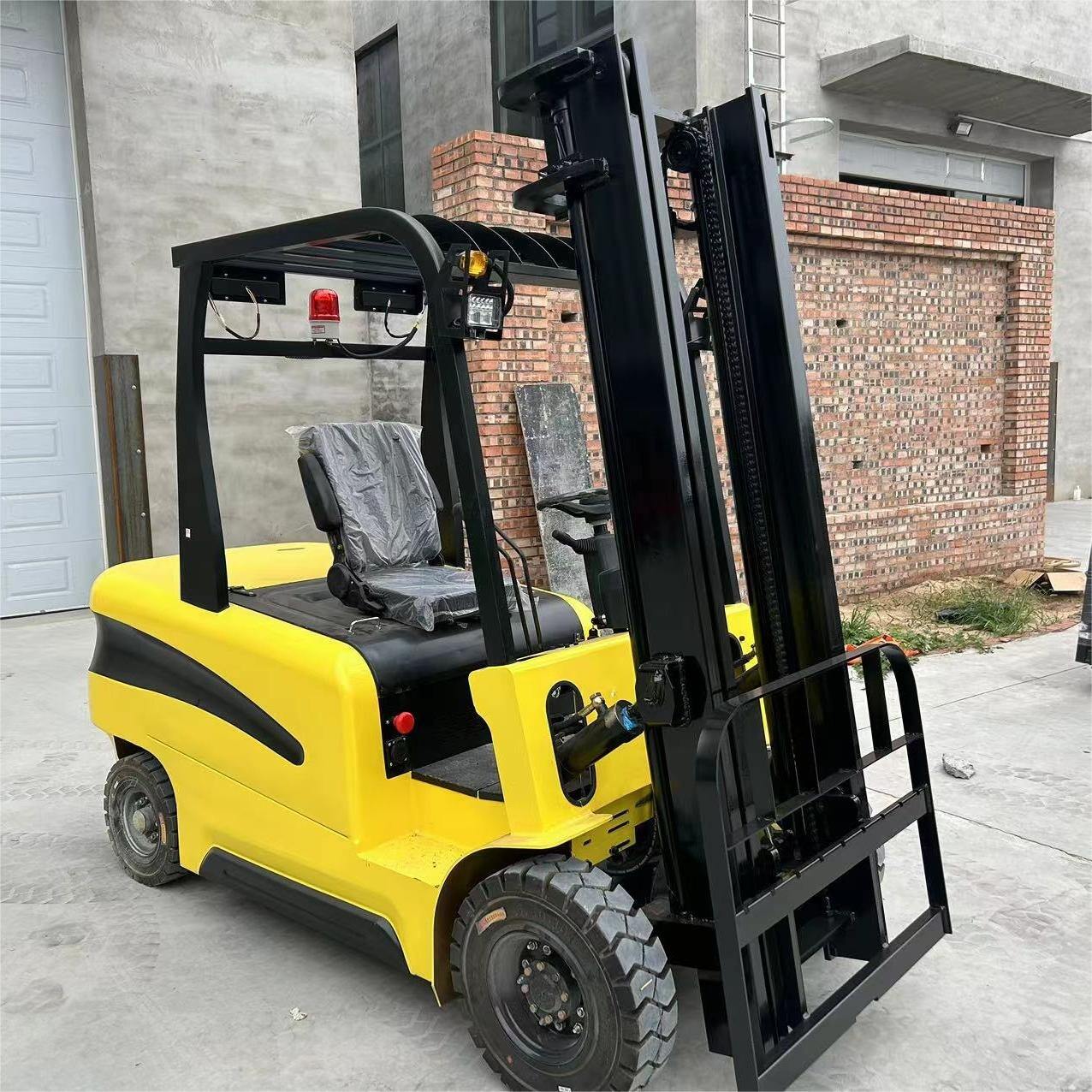
1. Product Overview — Why the Electric Side Loader Forklift Matters
The electric side loader forklift is a purpose-built machine designed to address two intrinsic tensions in modern warehousing: the demand for higher storage density and the need to handle long or bulky loads safely and efficiently. Unlike conventional front-loading forklifts, the electric side loader forklift loads from the side and travels parallel to racking, which fundamentally changes how space is used and workflows are organized. From a project manager’s perspective, the strategic value of deploying an electric side loader forklift lies in its capacity to convert vertical storage potential into real operational throughput without requiring costly warehouse expansion.
When evaluating an electric side loader forklift, it is essential to view it as a systems investment rather than a simple equipment buy. The machine’s compact chassis, small turning radius, and lateral load-handling capability directly influence aisle width design, racking configuration, and throughput metrics. An optimized layout with electric side loader forklifts can increase pallet positions per square meter by a substantial margin, often allowing businesses to defer capital expenditure on new facilities. Furthermore, the electric side loader forklift’s electric drivetrain and side battery replacement design align with modern sustainability and uptime objectives: quieter operation, zero local emissions, and minimal downtime for battery swaps. For procurement and operations planning, these attributes result in lower operating costs, smoother labor scheduling, and predictable maintenance cycles—outcomes that compound benefits over a multi-year asset life.
2. Deep Analysis of Core Product Characteristics
To understand why the electric side loader forklift outperforms alternatives in narrow-aisle and long-load scenarios, examine three interdependent product characteristics in depth: compact maneuverability, mast strength and visibility, and modular energy management.
Compact maneuverability (chassis geometry and handling): The electric side loader forklift’s tight geometry is not merely a smaller footprint—its design changes the degrees of freedom available to operators. Because the carriage is aligned lengthwise, the vehicle reduces the need for wide turning clearances and eliminates repeated repositioning when handling long loads. This has a measurable operational impact: travel times per pallet move decrease, collision risk with racking is reduced, and the frequency of manual load adjustments drops. From an engineering standpoint, optimized wheelbase-to-length ratios and steering kinematics reduce lateral sway during transport, enabling stable high-speed transits in aisles where conventional forklifts must crawl.
High-strength mast with fast lift and wide visibility: The electric side loader forklift must combine rapid vertical motion with exceptional rigidity. A high-strength mast minimizes flex under load, preserving stacking precision at height and reducing microscopic shocks that can cause pallet misalignment. The wide-vision mast architecture further improves operator judgment when positioning loads in tall racks. For project managers, this equates to fewer damaging mis-stacks, lower rework rates, and higher safe lift heights per square meter—direct contributors to throughput and asset utilization.
Side battery replacement and modular energy strategy: The side-mounted battery concept transforms shift scheduling and total cost of ownership. Quick-exchange batteries, especially when paired with lithium-ion options, convert downtime from charging into planned short-duration swaps, enabling near-continuous operation across multiple shifts. Beyond uptime, an energy management system on the electric side loader forklift (battery monitoring, regenerative braking, and thermal control) reduces degradation and extends battery life cycles—lowering lifecycle cost and improving predictability of replacement budgets. For procurement, this modular energy approach reduces the number of spare units required on-site, simplifies charging infrastructure, and improves return on capital.
3. In-Depth Benefits for Narrow Aisle Warehouses
Deploying an electric side loader forklift in narrow aisle environments generates compounded operational advantages across space utilization, worker safety, throughput consistency, and lifecycle cost controls.
Space utilization and layout economics: Because the electric side loader forklift enables side-loading, aisle widths can be narrowed without sacrificing access, allowing redesigns that increase racking density. The impact is both immediate and strategic: immediate increases in pallet slots and strategic deferral of facility expansion. Project managers should quantify this via density-to-throughput models—simulating how an electric side loader forklift affects pick/put cycle times versus conventional fleets. In many cases, the density gains pay back equipment costs within a few years when factoring avoided real estate expense.
Throughput reliability and process simplification: The predictable, parallel travel patterns of an electric side loader forklift reduce stop-and-turn maneuvers, leading to smoother material flow. This predictability simplifies task scheduling, reduces congestion, and improves multi-order consolidation rates. For high-mix warehouses where long materials (pipe, timber, sheet goods) represent a significant SKU subset, the electric side loader forklift eliminates the need for special handling lanes or manual escorting—cutting labor touchpoints and error rates.
Safety and ergonomic advantages: Side loading reduces blind maneuvers and awkward load overhangs seen with traditional front-loading. Combined with a wide-vision mast and stable chassis geometry, the electric side loader forklift decreases the probability of rack strikes and tipping incidents. Operator ergonomics—clear sightlines, lower steering effort, and reduced repetitive repositioning—translate into fewer injuries, lower absenteeism, and improved operator retention. These human factors should be quantified in deployment business cases as avoided injury claims and reduced overtime.
Total cost of ownership (TCO) improvements: Electric propulsion and simplified mechanical systems reduce routine maintenance compared to internal combustion alternatives. The side battery replacement design further reduces capital tied to charging infrastructure and shortens fleet downtime. When modeling TCO, include battery lifecycle, energy cost per operating hour, spare part lead times, and depreciation schedules. Often, the electric side loader forklift demonstrates superior TCO when projected across expected utilization curves for dense-aisle operations.
4. Application Scenarios and Implementation Considerations
The electric side loader forklift is especially suited to sectors and warehouse types where long loads, high-density racks, and multi-shift operations coincide: timber and panel distribution, metal fabrication warehouses, door/window manufacturing logistics, and specialty distribution centers handling long SKUs. Implementation success requires cross-functional planning: racking adjustment, floor-loading path redesign, operator training tailored to lateral handling dynamics, and battery logistics for quick exchanges.
From a rollout perspective, pilots with measured KPIs (moves per hour, aisle throughput, damage incidents) are essential. Integrate the electric side loader forklift into Warehouse Management System workflows to optimize task assignment and minimize travel. Finally, supplier collaboration—covering battery lifecycle programs, preventive maintenance schedules, and spare-part SLAs—ensures the electric side loader forklift achieves its intended ROI and operational resilience.
Conclusion
An electric side loader forklift is a strategic asset for any facility pursuing higher density, safer handling of long loads, and lower lifetime operating costs. When assessed through the lenses of maneuverability, structural performance, and energy management, the electric side loader forklift becomes more than a piece of equipment—it is a lever that transforms warehouse economics. For project managers planning modern, high-density operations, careful selection and integration of the electric side loader forklift will yield measurable gains in throughput, safety, and total cost of ownership.