 EN
EN

1.why correct operation matters
As compact earthmoving tools become ubiquitous on urban and confined-site projects, driving mini digger correctly is a core competency that separates efficient sites from problem-prone ones. Mini diggers combine impressive digging power with exceptional maneuverability, and their proliferation has been driven by contractors seeking machines that can operate in tight footprints while delivering predictable productivity. However, the same compactness that makes these machines valuable also increases the consequences of operator error: damage to utilities, rack-mounted structures, and costly machine downtime.
From a factory manager’s point of view, the lifecycle cost of each machine depends heavily on how crews operate it. Proper driving mini digger techniques reduce excessive wear on the reinforced undercarriage and the slewing bearings of the heavy rotary platform; they also protect hydraulics and attachments from shock loads. Industry data indicates that improper use accounts for a large share of premature component failures, translating into spares consumption and lost hire days. Therefore, investing in operator training for driving mini digger tasks is as important as investing in machine specification.
At Shandong Nuote Machinery Co., Ltd., we manufacture mini diggers with robust rotation platforms, strengthened track undercarriages, and a broad range of attachments. Yet those design advantages deliver full value only when operators apply best practices in driving mini digger—pre-start checks, controlled maneuvering, intelligent attachment use, and routine maintenance. The following sections analyze those practices in depth so procurement, site managers, and operators can maximize safety, uptime, and productivity.
2. how features influence driving technique
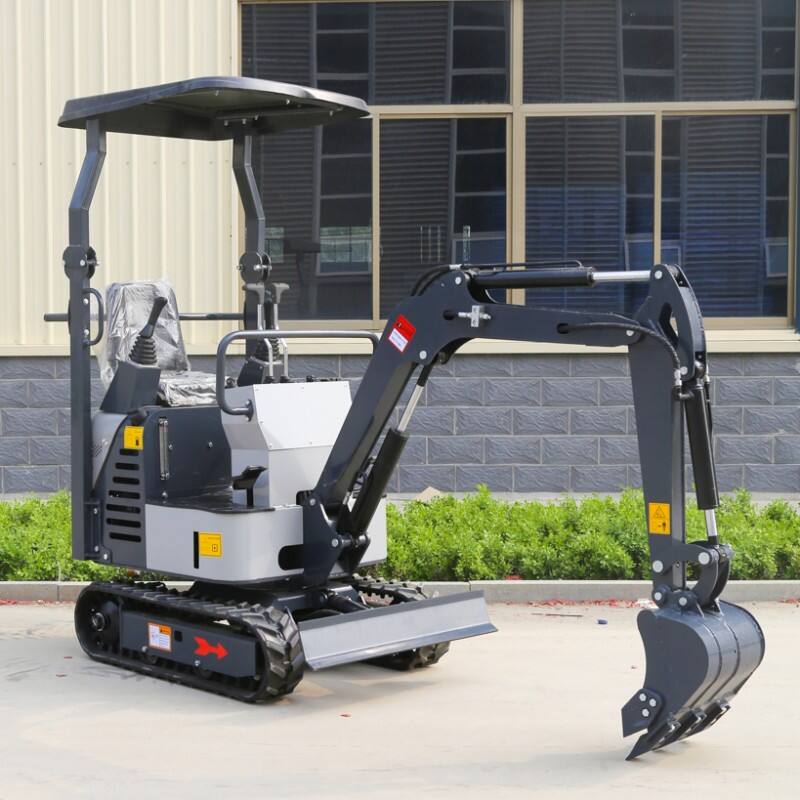
Understanding machine design is essential to mastering driving mini digger safely and efficiently. Three product attributes demand specific operational approaches: the solid rotary platform, the reinforced tracked undercarriage, and the multi-attachment capability.
Solid rotary platform and stable rotation: A heavy, well-engineered rotary platform gives the mini digger higher load-bearing capacity and smoother slewing. When driving mini digger, operators must be aware that inertia from a loaded boom amplifies during swing motions; abrupt slewing while carrying material transmits shock to the slew ring and hydraulic motors. Best practice: enter and exit swing arcs at reduced swing speeds, and avoid carrying maximum loads during rapid direction changes. Smooth, anticipatory joystick inputs reduce cyclic stress on the slewing system and extend bearing life.
Reinforced tracked chassis and low ground pressure: Strengthened tracks and lower ground contact pressures improve traction and reduce ground compaction. For driving mini digger on soft substrates, operators should use lower travel speeds with higher torque settings rather than rapid gear changes; this avoids track slippage and excessive track tensioning. On hard surfaces, minimize high-speed turns—the reinforced chassis tolerates them, but repeated abrasive turns accelerate undercarriage wear. Proper tensioning and regular inspection of track shoes, rollers, and sprockets are critical maintenance complements to correct driving mini digger habits.
Attachment versatility and operational matching: A mini digger’s utility depends on matching attachment to task—standard buckets, grading buckets, hydraulic breakers, and augers each impose different load profiles. When driving mini digger with impact attachments (e.g., breakers), the operator should prioritize stable stance—deploy stabilizers if available, and keep engine RPMs within recommended bands to ensure hydraulic flow consistency. With long-reach or heavy buckets, maintain shorter boom extensions while slewing to reduce overturn risks.
In practical terms, the machine’s characteristics necessitate calibrated operator inputs. A trained operator who can modulate hydraulic flow, understand load centers, and sequence motions effectively will extract maximum productivity from the machine while preventing costly component fatigue.
3. How to safely and efficiently drive a mini digger on construction sites — detailed operational guidance
This section provides an action-oriented, deeply practical guide to driving mini digger in real-world site conditions. Each recommendation targets common failure modes and productivity bottlenecks.
Pre-start and site reconnaissance: Before driving mini digger, conduct a methodical site walk. Verify utility maps, mark underground services, and identify soft patches or unstable slopes. Check the machine: fluid levels, track tension, slew lubrication, attachment pins, and safety systems. A pre-start checklist reduces the probability of in-service failures that stem from overlooked defects.
Mounting, controls familiarization, and neutral checks: Enter the cab using three-point contact. With the engine running, review gauges and alarms. Familiarize yourself with emergency cut-off, auxiliary hydraulic flow rates, and the attachment locking mechanism. When driving mini digger, start with slow neutral controls to sense the machine’s responsiveness—every machine’s joystick feel is unique.
Stable digging cycles and motion sequencing: Efficient driving mini digger relies on smooth, repeatable cycles. Adopt a sequence: position → bite → lift → slew → dump → return. Avoid mixing aggressive slewing with extended reach; this combination increases stress on slew components. Optimize bucket fill by using controlled approach angles and matching bucket size to task—overloading increases cycle time through sluggish swing and increases fuel consumption.
Ground and slope management: When driving mini digger near slopes, keep the boom low and the counterweight upslope where possible. Never cross slopes laterally when carrying a full bucket; instead, traverse slopes facing uphill or downhill depending on task. Use track steering to distribute weight evenly and avoid one-track slip. For soft ground, reduce ground pressure by widening track gauge where adjustable, and minimize travel over fragile substrates.
Attachment-specific protocols: When driving mini digger with breakers, ensure hydraulic flow settings match breaker specs; operate breakers perpendicular to surfaces and manage heat build-up by periodic work/rest cycles. For augers, always stabilize the machine, and use low-speed, high-torque settings—rapid RPM changes increase driveline stress. For forks or long attachments, increase caution during travel and consider outriggers or counterweights if available.
Traffic management and communication: In busy sites, driving mini digger requires a clear communication protocol. Use banksmen for blind lifts and designate safe travel corridors. Sound alarms for movement and maintain visibility with mirrors and cameras if fitted. Time-of-day planning can reduce interruptions—schedule high-movement tasks during low-traffic windows.
Fuel and eco-driving: Minimize idle time; engage auto-idle functions where available. Smooth throttle control and avoiding full-throttle reversals reduce fuel burn. Proper driving mini digger technique can save measurable fuel across a season and reduce thermal loads on the engine and hydraulics.
Post-shift shutdown and documentation: After operation, clean the undercarriage, check for leaks, record hours and any anomalies, and secure attachments. Systematic logs of driving mini digger incidents and maintenance feed back into training programs and spare parts forecasting, improving overall fleet availability.
4. what to monitor
Even with excellent technique, attention to cautionary details preserves safety and machine life when driving mini digger.
Prevent overloading and respect load charts: Always consult the machine’s load chart. Exceeding rated capacities—especially with extended boom positions—creates tipping hazards and structural fatigue. Conservative operating margins reduce risk and prolong component life.
Avoid hydraulic shock and rapid directional changes: Hydraulic spikes occur when controls are snapped. When driving mini digger, use progressive inputs; allow pressure equalization between circuits. Shock loads accelerate seal failure and pump wear.
Monitor thermal envelopes: Extended heavy work increases oil and coolant temperatures. Use recommended oil grades and monitor gauges while driving mini digger in hot climates; controlled work/rest cycles protect pumps and engines.
Track and undercarriage inspections: Regularly inspect track pads, rollers, and sprockets for abnormal wear. Small misalignments during driving mini digger create exponential wear rates; early corrective maintenance is far cheaper than full undercarriage replacement.
Attachment pin and hose checks: Pins that secure buckets and adapters must be checked daily; hydraulic hoses need inspection for abrasion and leaks. When driving mini digger, a sudden attachment release or hose burst can be catastrophic.
Operator competency and refresher training: The human factor is the controlling variable. Establish documented competency standards and periodic refresher courses on driving mini digger to reinforce safe sequences, emergency responses, and fuel-efficient habits.
Conclusion
Mastering driving mini digger is a blend of machine knowledge, disciplined technique, and proactive maintenance. From pre-start checks to attachment-specific protocols, disciplined operations dramatically lower lifecycle costs while increasing productivity. Shandong Nuote Machinery Co., Ltd. builds machines with features that support safe operation—solid rotation platforms, strengthened tracked undercarriages, and versatile attachments—but it is disciplined driving mini digger practices that unlock their full value on construction sites.