 EN
EN

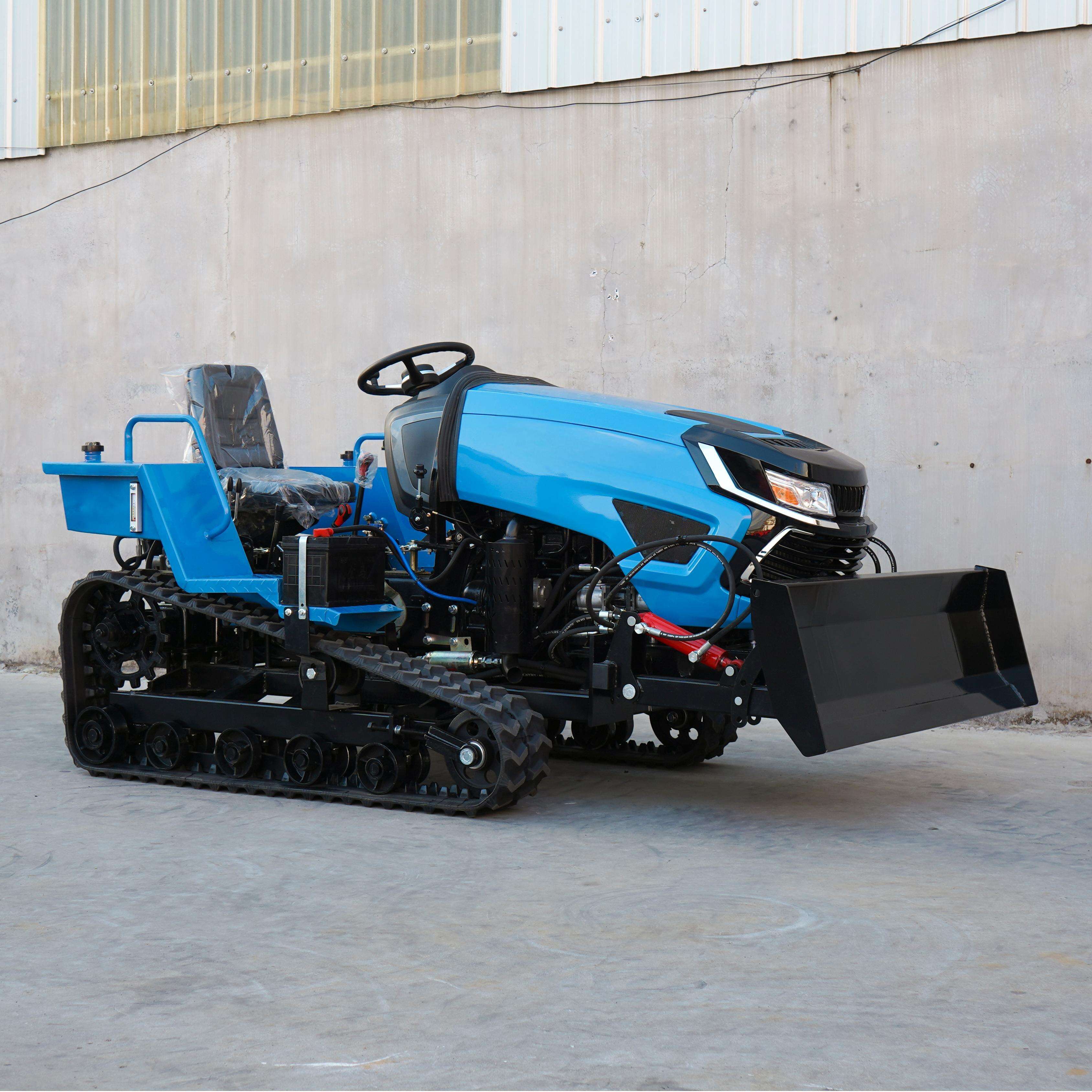
1.Why compact diesel tractors matter for small farms
Small-scale farms and diversified holdings form a vital segment of global agriculture. These operations demand machinery that balances power, maneuverability, economy, and regulatory compliance. Compact diesel tractors have emerged as the preferred platform for smallholders because they deliver diesel-grade torque in a smaller footprint, enabling a broad set of field operations without the expense or complexity of large tractors. Compared with either hand tools or oversized machines, compact diesel tractors provide the most pragmatic route to mechanization: they improve labor productivity, allow timely fieldwork, and support multiple implements for seasonal tasks.
The rise of compact diesel tractors is driven by several structural factors. Land parcelization and the rise of specialty crops favor machines that can operate in narrow rows and tight beds. At the same time, emission rules and operator comfort expectations have migrated into even the small-farm segment, so modern compact diesel tractors now include aftertreatment systems and ergonomic controls. For procurement planners and farm managers, compact diesel tractors represent an investment that scales with farm needs: they are small enough to navigate confined plots yet robust enough for plowing, seeding, spraying, and towing.
Shandong Nuote Machinery Co., Ltd. has focused on delivering compact diesel tractors that integrate practical features—adjustable steering for diverse operators, pneumatic braking systems to safely tow trailers, and diesel exhaust aftertreatment to meet emissions requirements—while keeping acquisition and operating costs aligned with small-farm budgets. In short, compact diesel tractors close the gap between manual labor and full mechanization, offering measurable gains in productivity and sustainability for small-scale agriculture.
2. Technical features that define modern compact diesel tractors
The latest generation of compact diesel tractors combines robust mechanical design with operator-centric ergonomics and emissions control. Several product characteristics set them apart and underlie their effectiveness on small farms.
Adjustable steering and operator interface are central to usability. Compact diesel tractors are often used by multiple operators with varying statures; a telescoping, adjustable steering column and configurable seat positions reduce fatigue and improve control precision. This adaptability increases operational hours per shift while reducing errors during delicate tasks, such as transplanting or precision spraying.
Braking and trailer control are another differentiator. Many compact diesel tractors include pneumatic or assisted braking systems to safely manage towed trailers laden with produce or inputs. This feature not only improves on-farm logistics but also permits safe road transit between fields. A reliable pneumatic brake system ensures that compact diesel tractors can undertake multi-purpose roles without compromising safety.
Emissions and aftertreatment systems in modern compact diesel tractors now routinely include diesel oxidation catalysts and particulate capture to meet regional standards. Integrating exhaust aftertreatment in compact diesel tractors protects air quality and allows farms to comply with regulations without sacrificing engine performance. Properly engineered aftertreatment also reduces maintenance impacts on particulate filters and simplifies long-term service planning.
Other important characteristics include high low-end torque for draft work, modular hydraulics for quick implement changes, and compact chassis geometry for minimal soil compaction. The modular service design common to contemporary compact diesel tractors facilitates rapid access to filters, batteries, and hydraulic couplers—reducing downtime and simplifying routine maintenance in the field.
Shandong Nuote Machinery Co., Ltd. configures compact diesel tractors to balance these attributes: operator-friendly controls, pneumatic braking for trailer safety, and exhaust aftertreatment to meet emissions targets—delivering a package that is versatile, durable, and cost-effective for small-scale producers.
3. Implementing compact diesel tractors on a mixed small farm
To illustrate the practical value of compact diesel tractors, consider a mixed small-scale farm that combines vegetable plots, a small orchard, and a two-acre field used for rotational grains. Historically, the farm relied on a mix of manual labor, a rented medium tractor for heavy work, and trailer shuttles between plots. The farm manager elected to acquire two compact diesel tractors to consolidate operations, improve timeliness, and reduce rental costs.
Deployment strategy focused on matching tractor capability to farm tasks. One compact diesel tractor was fitted with a front loader and rotary tiller to handle soil preparation, manure spreading, and loading duties. The second compact diesel tractor was optimized for precision work: it carried a mountable transplanter, a rear bale spike, and a sprayer with flow control. Both machines used the adjustable steering feature to accommodate different operators—senior staff preferred a more reclined seating posture while temporary labor favored a more upright position. This small ergonomic investment translated into reduced operator fatigue and fewer handling errors across eight-hour shifts.
The pneumatic braking system proved critical when the farm began transporting harvested produce to a consolidation point on a public road. Previously, braking loads and trailer sway were a concern. With a compact diesel tractor equipped with a pneumatic brake interface, towed trailers behaved predictably, enabling safer transit and faster turnaround times. Notably, the farm began making multiple daily trips without increasing risk, which improved market responsiveness for perishable crops.
Environmental compliance and maintenance were also improved. The compact diesel tractors’ diesel exhaust aftertreatment systems prevented local particulate spikes during high-activity periods and reduced visible smoke—an important factor when operating near residential neighbors. Scheduled maintenance intervals were simplified by the tractors’ modular layouts; filters and batteries were changeable in under an hour, and the fault-reporting systems allowed for preemptive part replacement. Fuel efficiency on the compact diesel tractors was higher than the previous rental model due to better matching of engine power to task duty cycles, generating measurable fuel cost savings over the season.
Economically, the farm recouped a significant portion of the capital cost within two seasons. Savings derived from reduced rental fees, lower fuel consumption, improved labor productivity, and fewer crop losses tied to delayed fieldwork. Operationally, the compact diesel tractors enabled tighter scheduling—seeding and spraying occurred within optimal windows, improving germination rates and pest control effectiveness. Socially, the quieter, cleaner running tractors helped maintain good relations with neighboring properties, supporting longer working hours when needed.
This real-world example highlights how compact diesel tractors, when chosen and deployed intelligently, transform small-scale farm operations: they offer a balance of power, control, economy, and compliance that is difficult to achieve via ad hoc mechanization strategies.
4. Key advantages of compact diesel tractors in the case and beyond
The case demonstrates several core advantages of compact diesel tractors for small-scale agriculture. First, versatility: compact diesel tractors handle a wide implement range—from loaders to transplanters—making them a single-platform solution that reduces fleet complexity. Second, efficiency: appropriately sized engines and duty-matched hydraulics deliver better fuel economy and reduced wear compared with oversized machines operated at light loads.
Third, safety and logistics: pneumatic braking systems enable safe towing and road transit, broadening the farm’s logistical options. Fourth, operator performance: adjustable steering and ergonomic layouts reduce fatigue, improving precision and reducing labor errors that can cost yield. Fifth, regulatory and environmental alignment: exhaust aftertreatment systems in compact diesel tractors allow farms to meet emissions standards, avoiding penalties and reducing neighborhood impacts.
From a financial perspective, compact diesel tractors lower total cost of ownership for small operations. They reduce rental dependence, compress labor requirements, and permit tighter field scheduling—advantages that compound into higher yield per hectare and stronger market responsiveness. Maintenance is simplified by modular service points, and the overall lifecycle cost is optimised when serviceability and parts availability are considered in purchase decisions.
In conclusion, for small and diversified farms seeking mechanization that is practical, compliant, and cost-effective, compact diesel tractors provide a compelling value proposition. Shandong Nuote Machinery Co., Ltd. designs these tractors to deliver the precise mix of ergonomics, safety, emissions control, and implement compatibility that modern small farms need to increase productivity while managing costs and environmental impact.