 EN
EN

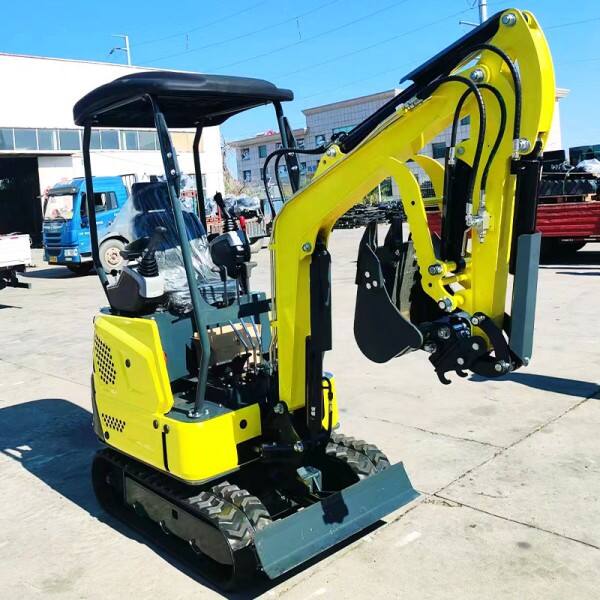
1. Background — why innovation matters in the excavator world
The excavator world sits at the intersection of heavy engineering, digital control systems, and evolving end-user demands. Over recent decades, excavators have shifted from purely mechanical diggers to sophisticated platforms that integrate hydraulics, electronics, and modular attachments. This transition reflects broader changes across construction, mining, agriculture, and infrastructure: projects demand higher productivity, lower operating cost, tighter emissions control, and improved safety. Consequently, innovations in the excavator world now determine competitive advantage for manufacturers and operators alike.
For fleet managers and project planners, the imperative is clear: deploy machines that reduce cycle times, minimize downtime, and adapt to multi-task workflows. The excavator world responds with continuous improvements in powertrain efficiency, control precision, and attachment versatility. These improvements are not incremental alone; many are systemic, rethinking the machine as an integrated system rather than a collection of parts. As an example, the integration of modular interfaces—enabling a front loader and a rear excavator to share hydraulic and control resources—exemplifies how the excavator world is converging toward multi-functionality.
Shandong Nuote Machinery Co., Ltd. observes that clients increasingly value machines that can be repurposed across seasons and sites. In the excavator world, this drives demand for standardized coupling systems, side power take-offs for specialized agricultural attachments, and automated implement control that reduces operator training time. The objective is straightforward: enable one machine to perform more tasks, more reliably, and with demonstrable lifecycle economics. Understanding these market forces is the first step in analyzing the innovations that will shape the next generation of excavators.
2. Product characteristics — current innovations and engineered solutions
Contemporary innovations in the excavator world cluster around integration, control, and durability. Three product characteristics are especially influential: integrated front-loader/rear-excavator interfaces, side-mounted power outputs, and automated three-point hitch control. Each of these trends materially changes how machines are specified and deployed.
Integrated front-loader and rear-excavator interfaces convert a single platform into a truly bi-functional machine. In the excavator world, this integration requires harmonizing hydraulic flow, electronic control logic, and structural load paths so the front loader and rear excavator do not interfere with each other’s performance. The result is a machine that can load, transport, and excavate with minimal reconfiguration time. For project managers, that capability translates into fewer machine moves, lower capital outlay, and faster job completion.
Side-mounted power take-offs (PTOs) are another key innovation. The excavator world traditionally reserved PTOs for tractors and specialized equipment, but adding a lateral power output enables excavators to drive specialized agricultural or industrial implements—augers, winches, or hydraulic motors—without external power packs. This change broadens use cases for excavators across seasonally mixed operations, amplifying return on investment.
Automated three-point hitch systems with active leveling and position control further expand versatility. In the excavator world, automation of linkage geometry allows precise positioning of mounted implements, compensating for terrain slope and machine pitch. This improves implement effectiveness—important for grading, seeding, or precision trenching—and reduces operator skill requirements. Combined with sensor inputs and closed-loop control, these systems enhance repeatability and quality of work.
Underpinning these features are robust sensor networks and modular electronics that enable diagnostics, predictive maintenance, and machine-to-machine coordination. The excavator world increasingly sees embedded telematics and edge compute as standard, allowing remote monitoring of hydraulic health, usage patterns, and performance anomalies. Such visibility reduces unscheduled downtime and supports data-driven procurement and maintenance decisions.
3. Future trends — where the excavator world is heading
Looking forward, the excavator world will evolve along several converging trajectories: electrification and hybrid powertrains, autonomy and assisted operation, modularity and multi-task platforms, and ecosystem integration through software and services.
Electrification is altering the power architecture in the excavator world. Battery-electric and hybrid excavators reduce local emissions and noise, making them suitable for urban and indoor worksites. For the excavator world, the primary engineering challenge is delivering equivalent torque and hydraulic power from electric drivetrains while managing thermal loads and weight distribution. Advances in high-density batteries, liquid cooling, and electrified hydraulic pumps are making electric excavators viable for a growing set of tasks. Hybrid systems—combining diesel generators with electric drives—offer an intermediate path, improving fuel economy and enabling regenerative energy capture during boom lowering cycles.
Autonomy and assisted operation will reshape labor dynamics in the excavator world. Semi-autonomous assisted digging, auto-grade control, and tele-operation increase productivity and safety, especially on repetitive tasks. The excavator world is moving toward higher levels of autonomy for constrained tasks—trench digging, pit excavation, and demolition segmenting—while retaining human oversight for variable conditions. Machine learning applied to sensor arrays enables predictive adjustments to hydraulic curves and tool paths, reducing cycle times and improving consistency.
Modularity and multi-task platforms expand the business case for excavators across industries. In the excavator world, standardizing mechanical and electronic interfaces allows rapid swapping between front loaders, back hoes, sweepers, and agrarian implements. This modularity reduces idle time and equipment count on multi-discipline sites, providing fleet managers with the flexibility to allocate capital more efficiently.
Software and data services are the connective tissue of the future excavator world. Telematics, fleet management platforms, and predictive maintenance services move the industry from reactive repair toward condition-based maintenance. Data enables optimization of fuel maps, implement selection, and operator training, and it provides financiers with quantifiable asset utilization—critical when large tractors and excavators represent significant capital expenditures.
Sustainability and lifecycle thinking will also influence the excavator world. Manufacturers will be judged not only on initial performance and the big tractor price equivalent of excavators but on total lifecycle impact—energy consumption, recyclability, and emission profiles. This trend encourages designs that are repairable, upgradable, and compatible with alternative power sources.
Finally, human-machine interaction will remain central. Even as automation increases, the excavator world must ensure intuitive controls, augmented reality guidance, and operator assist systems that reduce cognitive load while preserving situational awareness. The best designs will integrate autonomy while amplifying human decision-making.
4. Analysis — priorities for future innovation in the excavator world
Synthesizing these trends, the excavator world should prioritize a few strategic innovation areas. First, energy-efficient hydraulic electrification that preserves peak torque while reducing operating cost and emissions. Second, robust modular interfaces that standardize mechanical, hydraulic, and electronic connections across attachments to enable rapid role changes. Third, layered autonomy that pairs tele-operation with task-level autonomy for safe, high-productivity execution.
From a product roadmap perspective, manufacturers must invest in multi-discipline validation: proving that integrated front loader/rear excavator configurations operate safely under combined load cases, that side PTOs deliver reliable power to specialty implements, and that automated three-point systems maintain accuracy across variable terrain. The excavator world benefits when these features are coupled with strong telematics, remote diagnostics, and service networks that reduce lifecycle cost and downtime.
For Shandong Nuote Machinery Co., Ltd. and peers in the excavator world, success will come from systems thinking: designing machines as software-enabled platforms, offering hardware that is durable and modular, and providing services that translate data into operational improvements. The future excavator world will be defined by machines that are more versatile, cleaner, and smarter—delivering measurable productivity gains while reducing environmental and social impacts.
Conclusion
Innovation in the excavator world is accelerating—driven by electrification, autonomy, modularity, and data. These developments change what excavators do, how they are maintained, and how they are integrated into projects. For stakeholders across construction, mining, and agriculture, the strategic imperative is to adopt platforms that combine these innovations with proven reliability. Shandong Nuote Machinery Co., Ltd. remains committed to advancing practical, serviceable solutions that position clients to benefit from the next generation of excavator capabilities in the evolving excavator world.